
Organic Curves in Interior Design: The Mistake Everyone Makes


For ten years, interior design was obsessed with the box. We built modern farmhouses with harsh right angles, installed severe rectangular kitchen islands, and bought sharp-edged sofas that looked like shipping containers. It was clean. It was orderly. It was also incredibly sterile.
That fatigue is exactly why organic curves took over.
But the reaction has swung too far. People are throwing wavy mirrors, crescent sofas, and circular rugs into square rooms without thinking about the structural geometry. They assume a round coffee table solves the problem of a rigid floor plan. It doesn't. The old way was rigid, but the new way is often chaotic.
1. The Problem with the Box
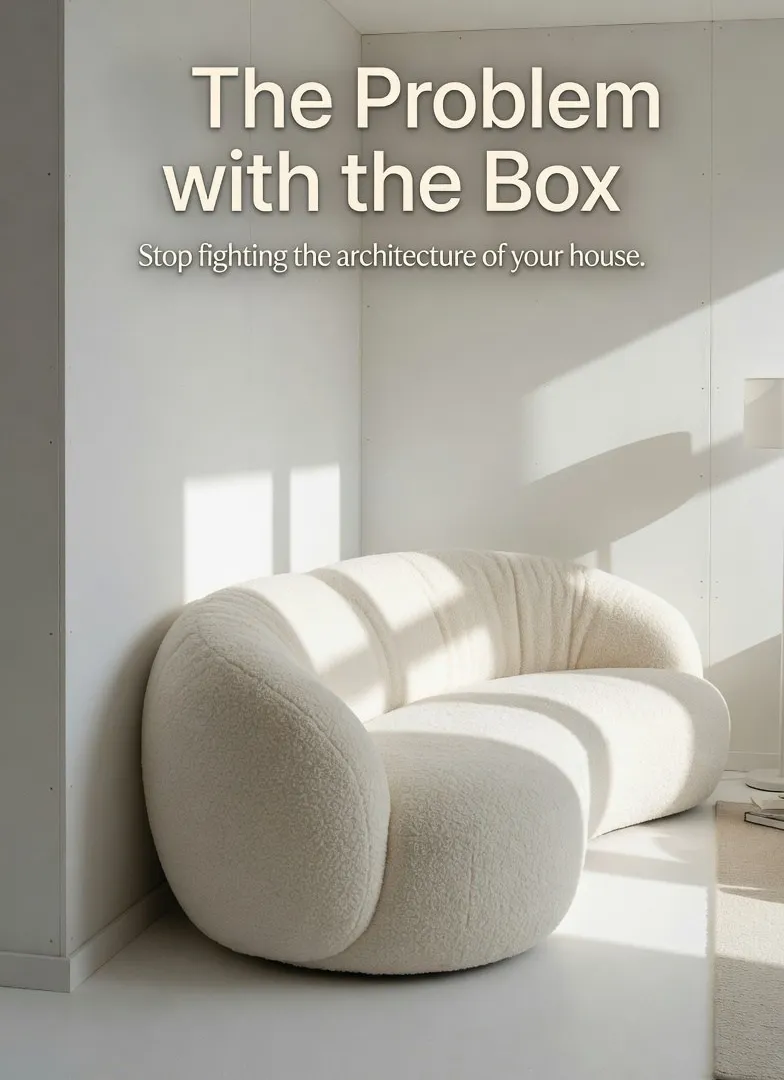
Stop fighting the architecture of your house. If you live in a standard builder-grade home, your rooms are cubes.
You cannot completely erase that geometry by purchasing round furniture. Why does it look so wrong? When you place a highly organic, kidney-bean-shaped sofa directly against a flat, drywalled corner, the tension is visually aggressive. The sofa wants to float, but the wall forces it into a grid. This is the fundamental misunderstanding of the curve trend. It isn't about replacing straight lines. It is about creating a deliberate, high-contrast relationship between the two.
A room needs the discipline of a straight line. That structure makes the curve feel like a relief rather than an accident.
2. The "Funhouse" Mistake
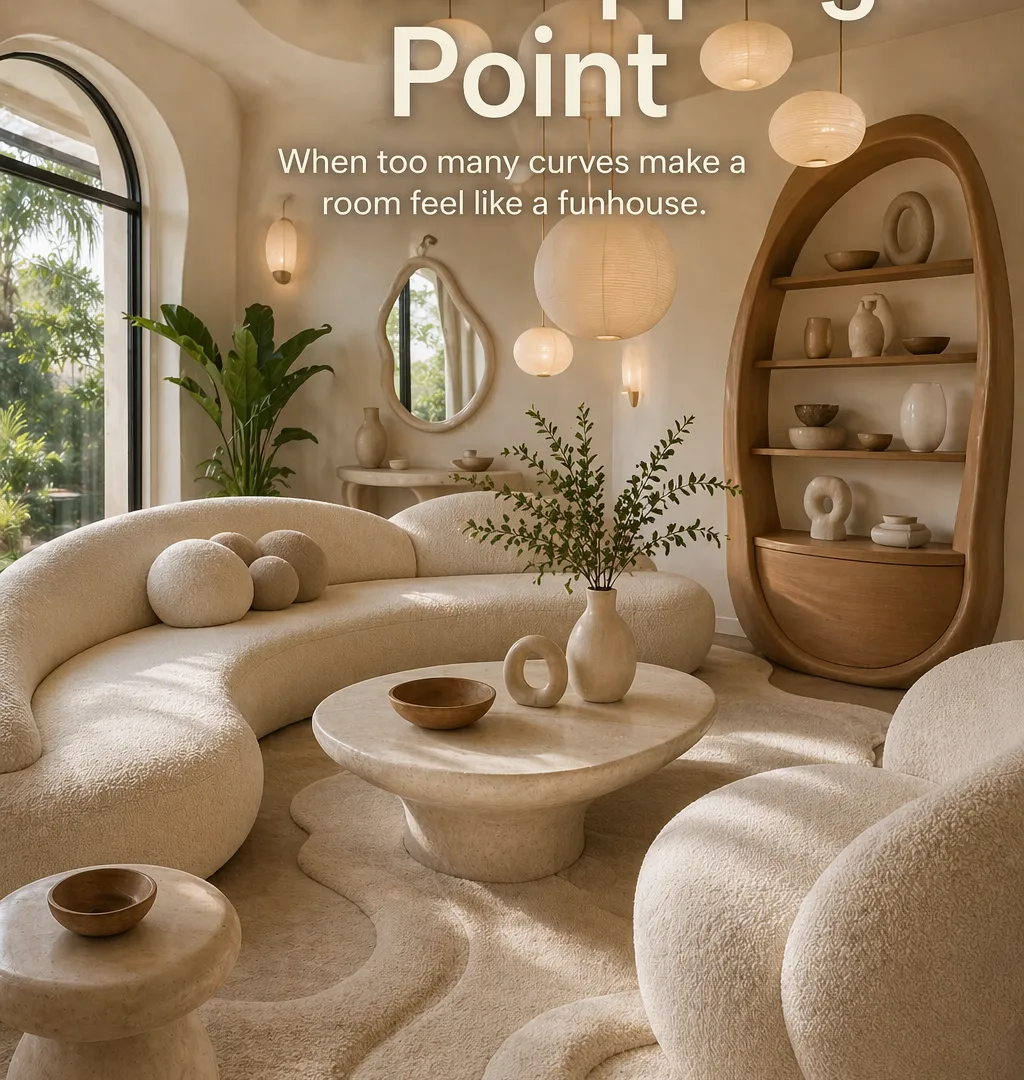
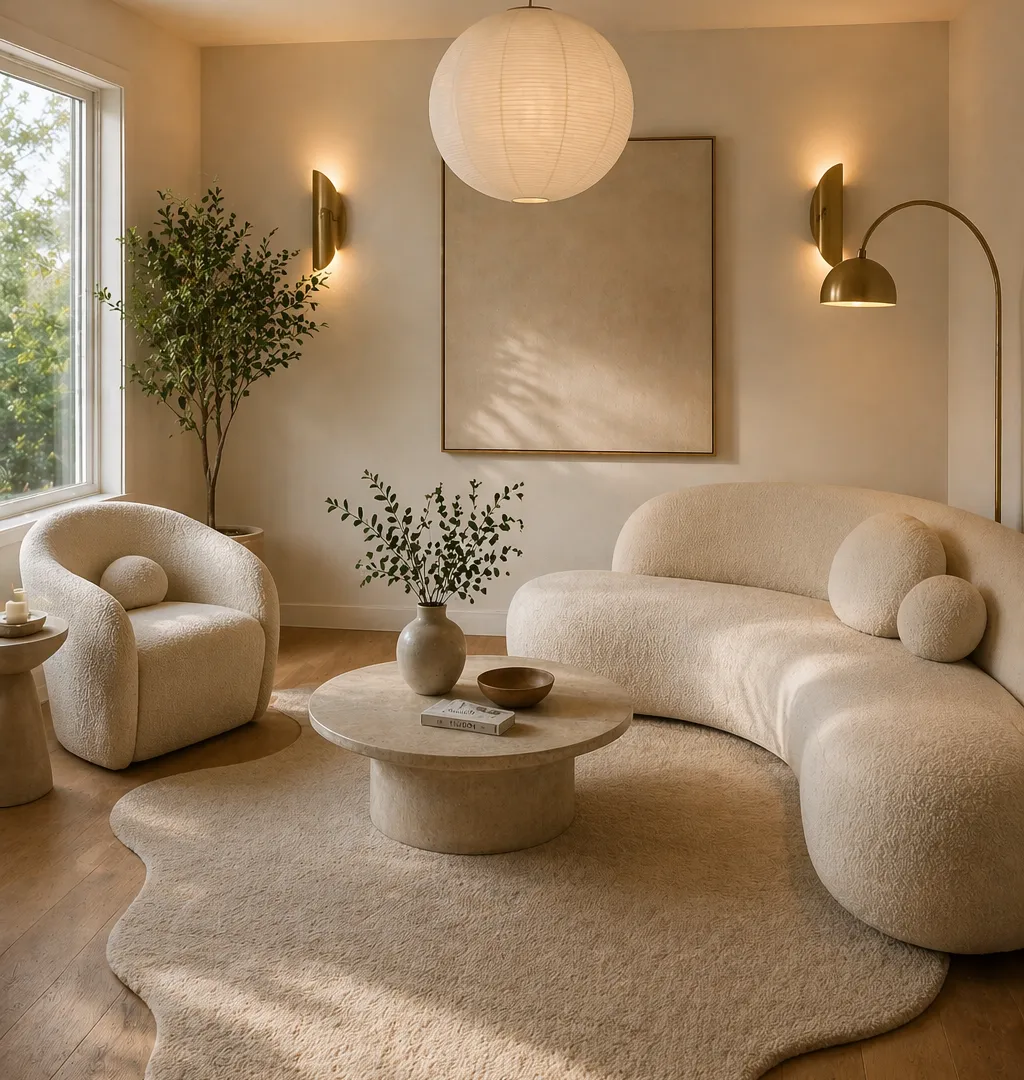
There is a tipping point where a room stops feeling organic and starts feeling like a funhouse. I see this constantly in DIY living room makeovers. Someone buys an arched cabinet, pairs it with a wavy rug, adds a curved bouclé chair, and tops it with a circular pendant light. The eye has nowhere to rest. The design loses all gravity.
Contrast requires an anchor. You need severe, uncompromising lines to make soft edges work.
I said earlier that curves are the antidote to boxy rooms. That is true — except when you eliminate the boxes entirely. If you have a crescent sofa, pair it with a sharp, rectangular travertine coffee table. If you have arched doorways, run wide, straight-plank hardwood floors to ground them. The friction between the two shapes is what makes the room feel expensive.
3. The Curved Sofa Reality Check
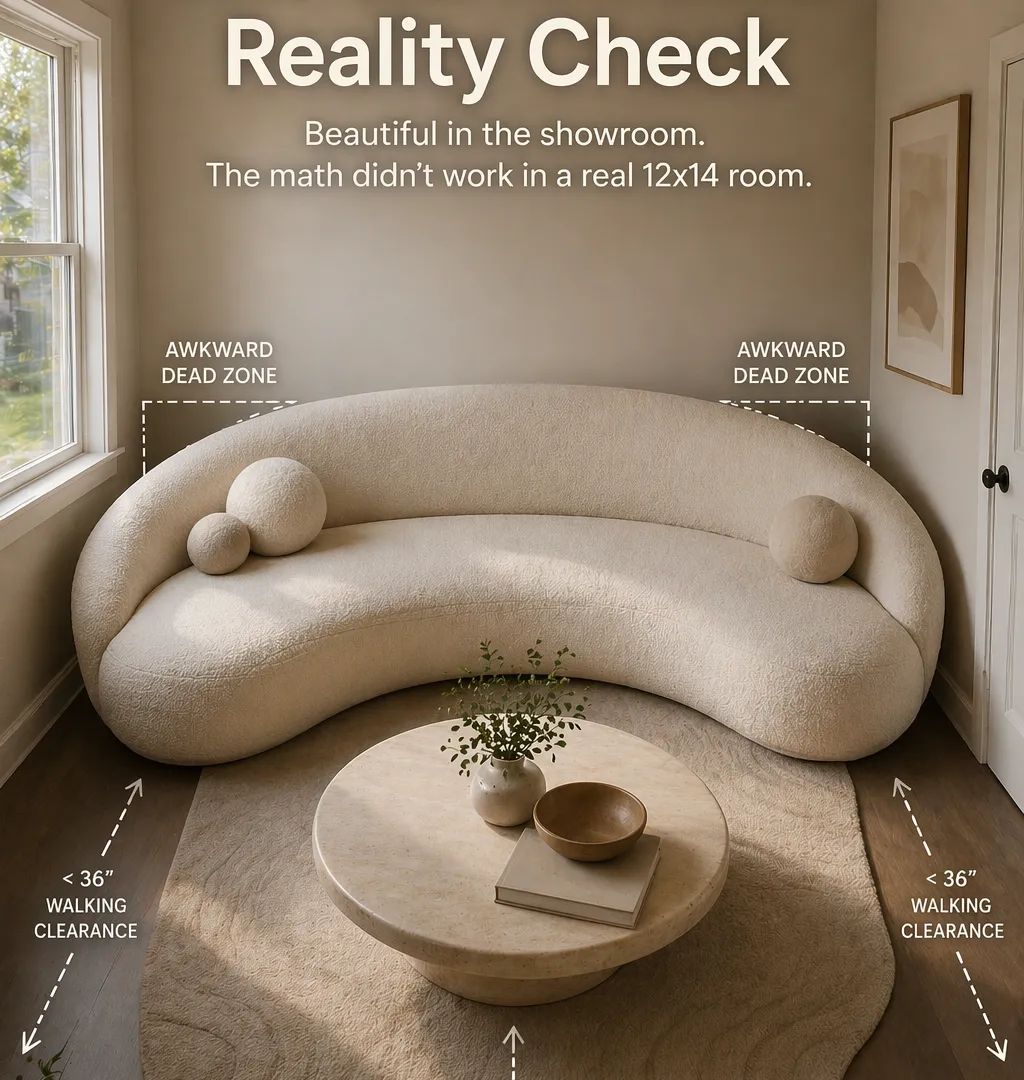
I once specified an oversized crescent sofa for a 12x14 living room in Boston. It was a complete disaster.
The client loved the look of the curved back in showrooms, but showrooms have unlimited square footage. In a real home, a curved sofa cannot sit flush against a wall without creating awkward, unusable dead zones in the corners behind it. It demands to float in the center of the room. To do that correctly, you need a minimum of 36 inches of walking clearance on all sides. We ended up having to return the piece and swap it for a traditional linear sectional. The math simply did not support the shape.
Are curved sofas practical? Only if you have the footprint to let them breathe.
4. Architectural Arches: The Permanent Fix
Yes, ripping open walls is a commitment. But it is the only permanent fix for a house that feels too rigid. Drywall archways change the actual skeleton of the home, doing work that furniture simply cannot replicate. They soften the transition between rooms, guiding you through a house rather than forcing you through a doorway. Plaster or painted finish? Plaster adds heavy texture, while paint keeps it modern; both work flawlessly depending on your light.
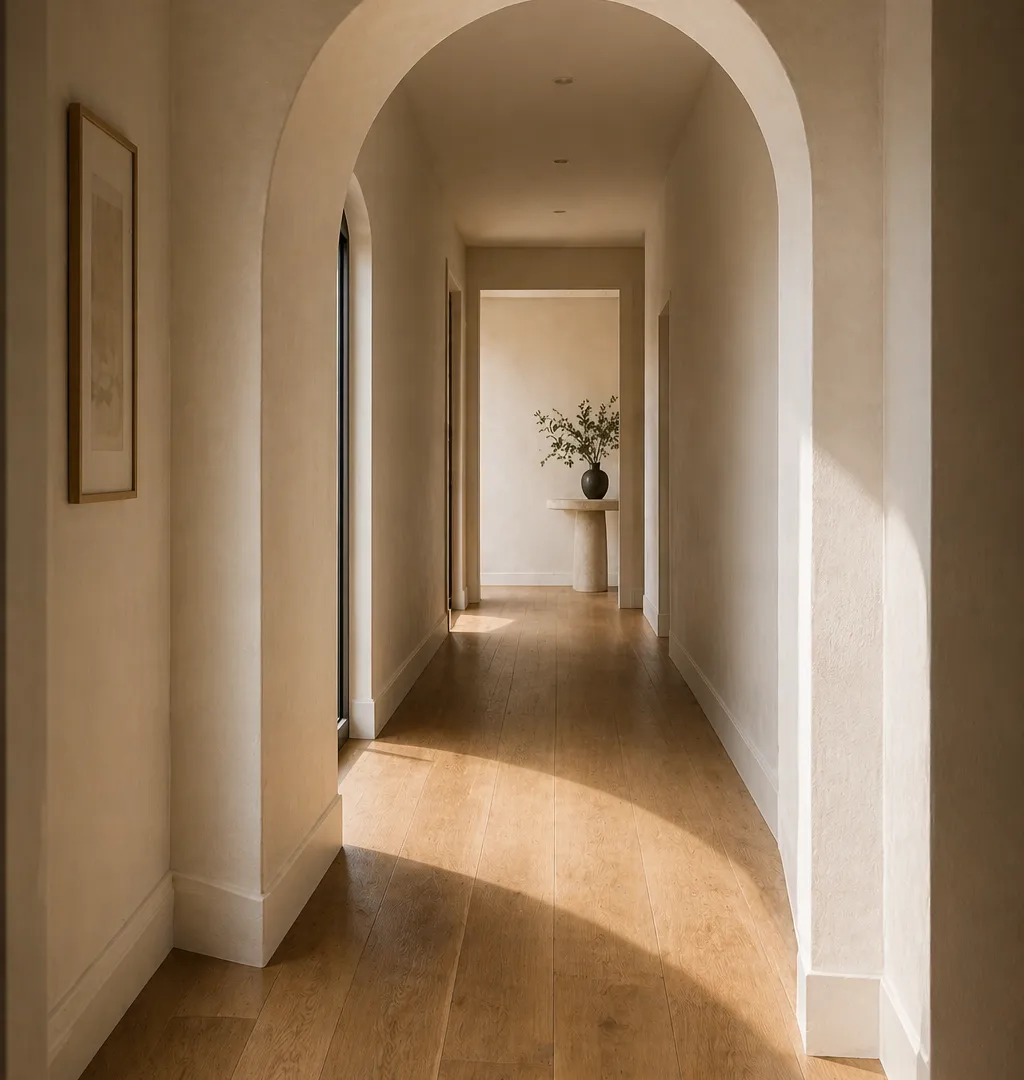
Furniture is a bandage, but architecture is the cure.
The cost is often the deterrent, but it shouldn't be. A custom drywall archway typically costs $800 to $2,000 to frame and finish, depending on local labor rates and whether you are altering load-bearing structures. That is less than the cost of a mid-tier curved sofa from CB2. Why spend thousands on temporary seating when you can fix the room itself? If you have the budget for one major upgrade, skip the trendy furniture. Spend the money on the walls.
5. Softening the Edges Without Remodeling
What happens when you cannot renovate? Renters and budget-conscious homeowners need a different strategy.
The trick is focusing on the perimeter of the room rather than the center. Replace standard rectangular area rugs with large, asymmetrical organic shapes that break up the grid of the floor. Install globe pendants or arched floor lamps to disrupt the hard right angles where the walls meet the ceiling. These elements introduce fluidity without demanding construction. They act as visual speed bumps for the eye.
Focus on lighting hardware, specifically. Unlacquered brass wall sconces with curved backplates pull the eye upward and soften the walls instantly.
6. The Dining Room Flow
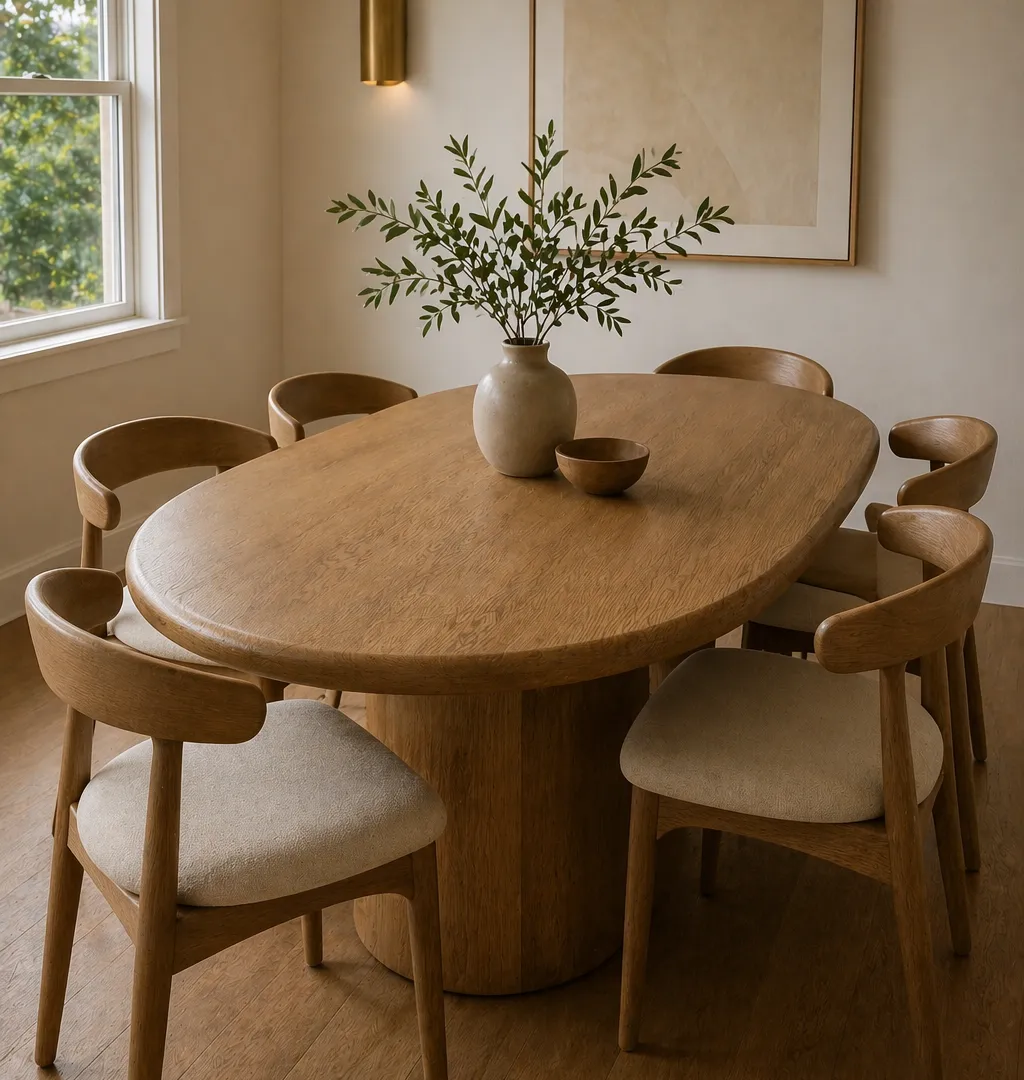
Sharp edges demand walking clearance; rounded edges forgive tight footprints. The dining room is where this spatial reality becomes impossible to ignore. A rectangular table in a small dining area creates pinch points at every corner, forcing people to slide sideways to reach their seats. An oval or round table removes those hostile edges entirely. It is the easiest way to make a cramped room navigate flawlessly.
It is a simple geometric hack.
Beyond functionality, an oval table changes the social dynamics of a meal. Have you ever noticed how rigid a rectangular dinner party feels? There is no defined head of the table. Everyone is angled slightly toward the center, which naturally encourages shared conversation rather than isolated, side-by-side chatting. Whether you choose a solid oak pedestal table or a sleek marble oval, the curve does the social heavy lifting.
7. The Verdict on Wavy Decor
A wavy mirror is not an interior design strategy. It is a reaction to a TikTok trend.
There is a massive difference between structural, organic curves and decorative squiggles. The squiggles will date your home to exactly 2024. True organic design borrows from nature — the sweep of a riverbank, the erosion of a stone, the arch of a cave. Those shapes endure because they are fundamental to human psychology. Decorative waves applied to headboards and picture frames are fast fashion for your walls. They lack the gravitas that a real room requires.
Invest in weight and permanence. Leave the squiggles behind.
About the Author: Elena Vance
Interior design enthusiast and DIY expert. Elena Vance has spent over a decade curating spaces that blend modern aesthetics with everyday functionality. Passionate about helping you create a home that tells your unique story.


