
23 Funky Eclectic Decor Ideas to Steal Right Now

Most eclectic rooms fail the same way. Not because the pieces are wrong — but because there's no color logic underneath them. You can have the coolest vintage lamp, the quirkiest gallery wall, the most character-filled thrifted chair, and still end up with a room that looks like a storage unit.
Color is what holds the chaos together. So before we get into ideas, let's talk palettes.
The Color Palettes Behind Funky Eclectic Decor
Eclectic spaces don't follow a single palette — they follow a system. Pick 3–4 colors, repeat them in unequal amounts across the room, and the mix suddenly reads as intentional.
Here are the four palettes that show up most consistently in eclectic rooms that actually work.
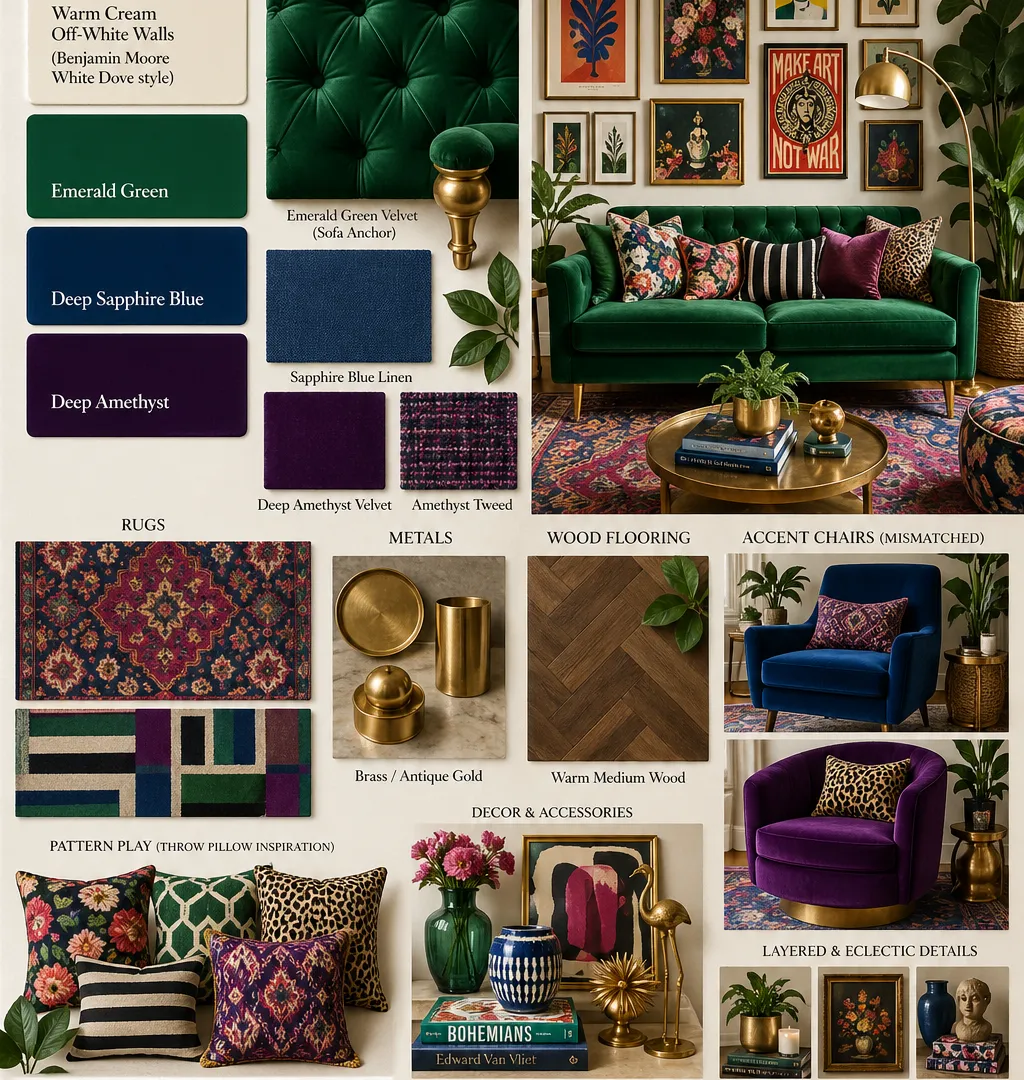
Palette 1: Jewel Tones on a Warm Neutral Base
The colors: Emerald green + sapphire blue + deep amethyst, sitting on warm cream or off-white walls.
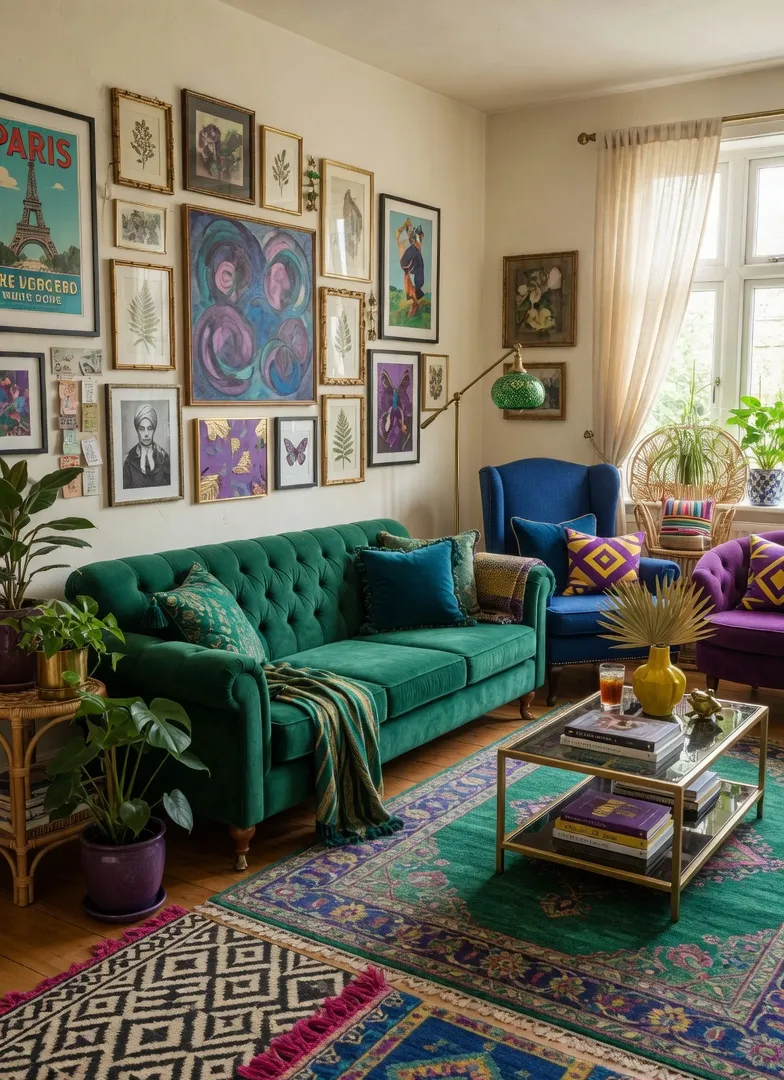
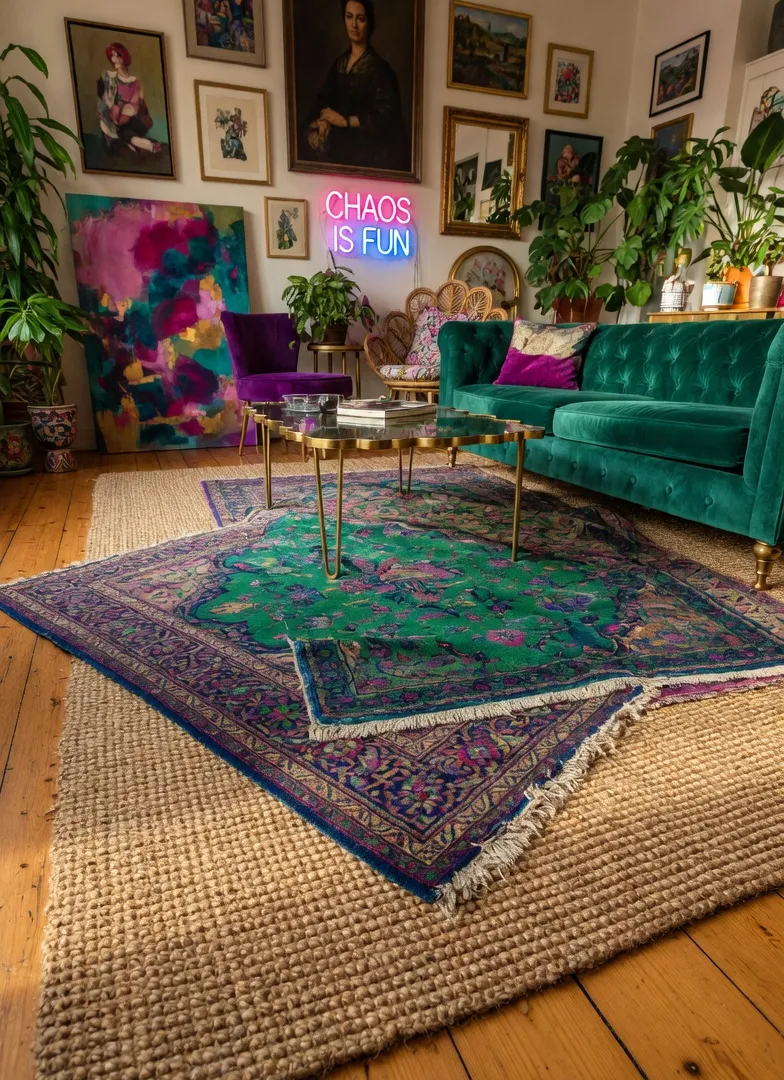
This is the most classic eclectic palette — and the one with the highest ceiling. Jewel tones are saturated enough to hold their own against pattern and texture, which is why they dominate eclectic spaces. An emerald velvet sofa with a Persian rug and a brass floor lamp is a combination that's been working for decades and will keep working.
The key is the base. Warm cream walls (think Benjamin Moore's White Dove, LRV 85.9) give jewel tones room to pop without making the room feel like a jewelry box. Cool white walls push jewel tones into garish territory. Warm is always the call here.
Mix two or three jewel tones freely — emerald with sapphire, or amethyst with deep teal — but repeat each one in at least two places in the room or it'll look like you just threw a dart at a color chart.
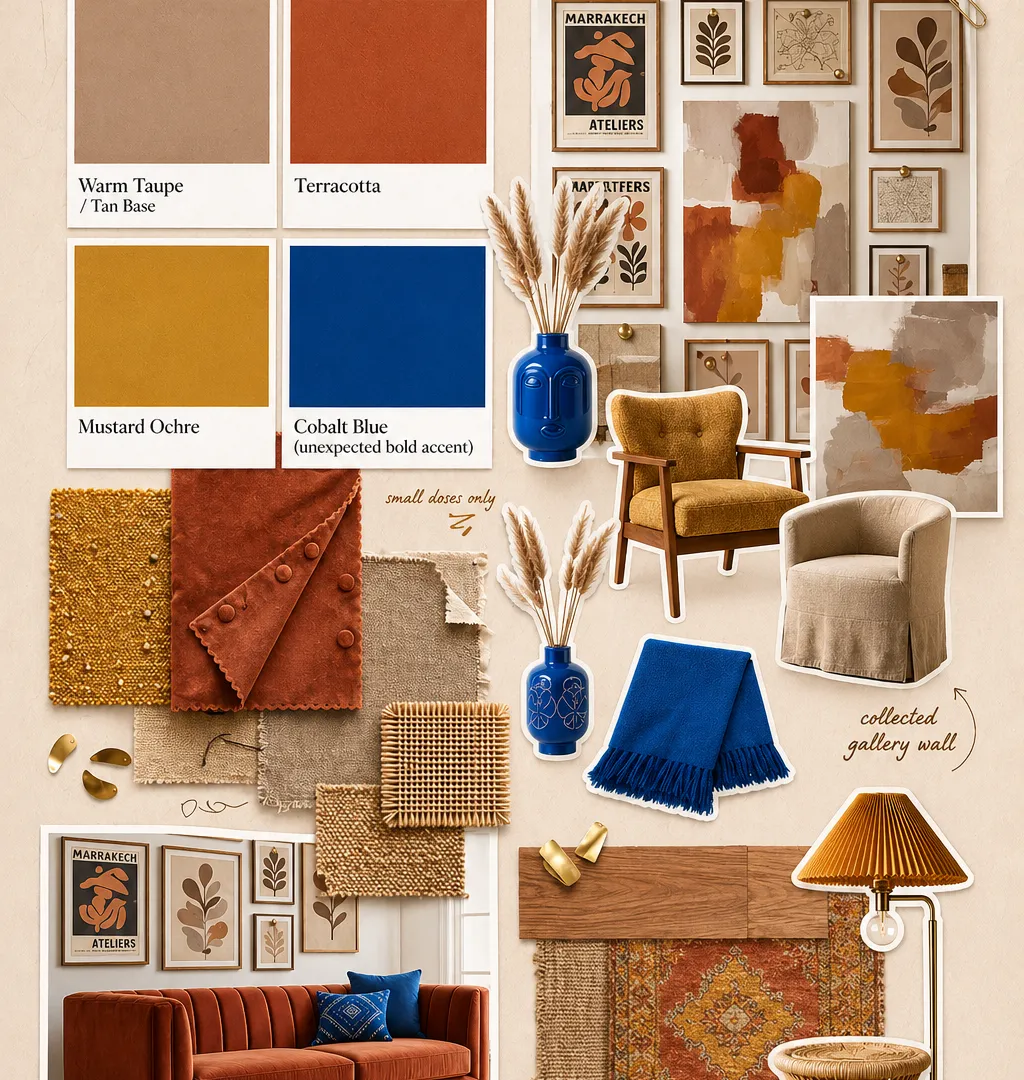
Palette 2: Warm Earthtones with One Bold Accent
The colors: Terracotta + mustard + warm taupe/tan, with one unexpected accent (cobalt, rust, or deep plum).
This is the more relaxed, less-committal eclectic palette. Where jewel tones are dramatic, earth tones are grounded. The room feels warm and collected rather than electric — like a well-traveled apartment rather than a jewel box.
Terracotta, clay, ochre, and burnt sienna all belong in this family. They pair naturally with raw wood, rattan, and woven textures. The bold accent is what keeps the palette from going full bohemian: a cobalt blue ceramic vase on a warm wooden shelf, a deep plum throw against terracotta cushions. One contrast color, used in two or three small doses.
If you're nervous about eclectic style, start here. It's forgiving, it layers well, and it photographs beautifully.
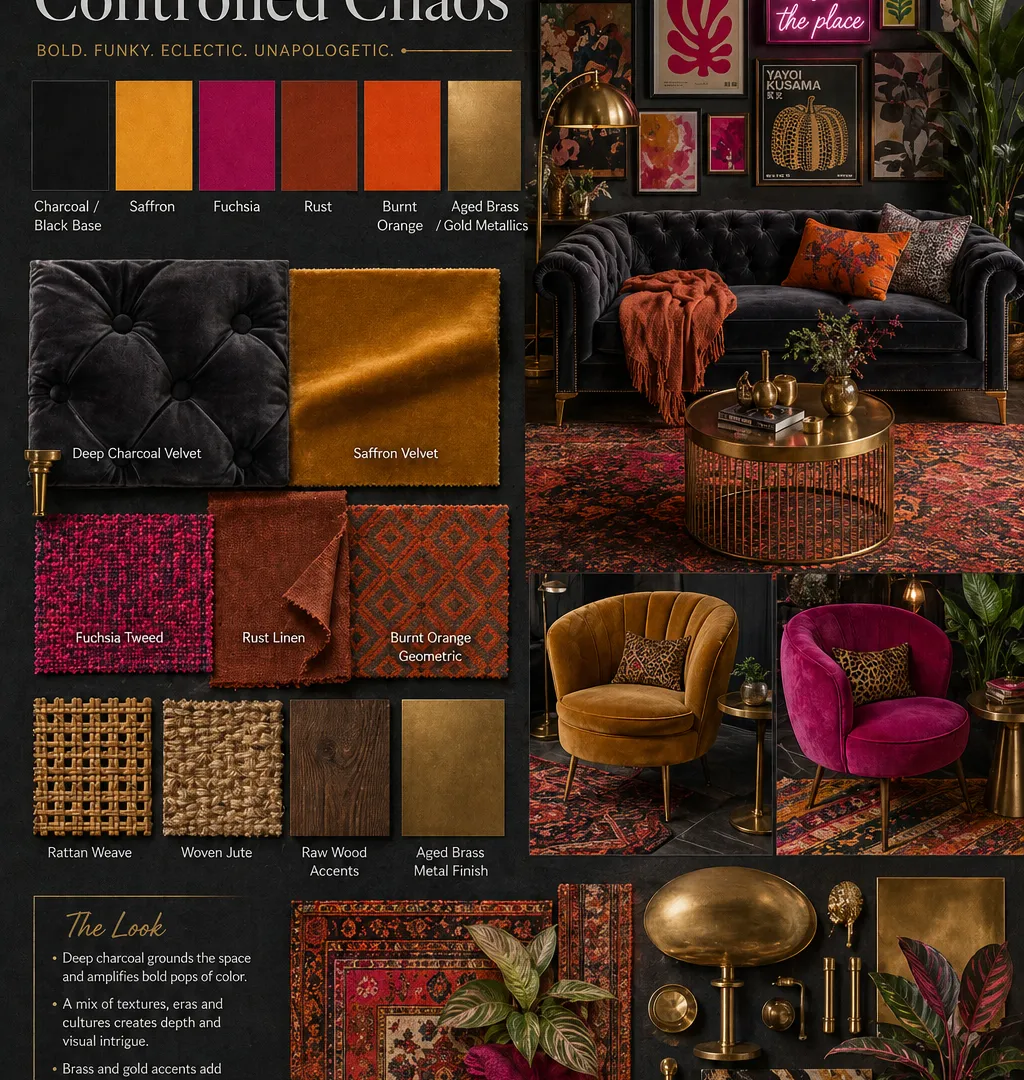
Palette 3: High Contrast with Controlled Chaos
The colors: Black or charcoal base + bold warm colors (saffron, fuchsia, rust, burnt orange) + brass or gold metallics.
This is the most adventurous of the three and also the one most likely to go wrong. The logic: dark walls or dark furniture absorb visual noise, which means you can push the accent colors harder without the room feeling out of control. Deep plum walls let you hang neon artwork. Black cabinetry makes a saffron backsplash look intentional rather than accidental.
Brass and gold hardware is essential here — it bridges dark surfaces and warm accent colors without looking disconnected. Matte black hardware competes with everything. Aged brass ties everything together.
This palette is best for rooms you spend less time in: a dining room, a bathroom, a moody reading nook. Living with high contrast all day in a main living area can be exhausting in a way that's hard to predict until you're already committed.
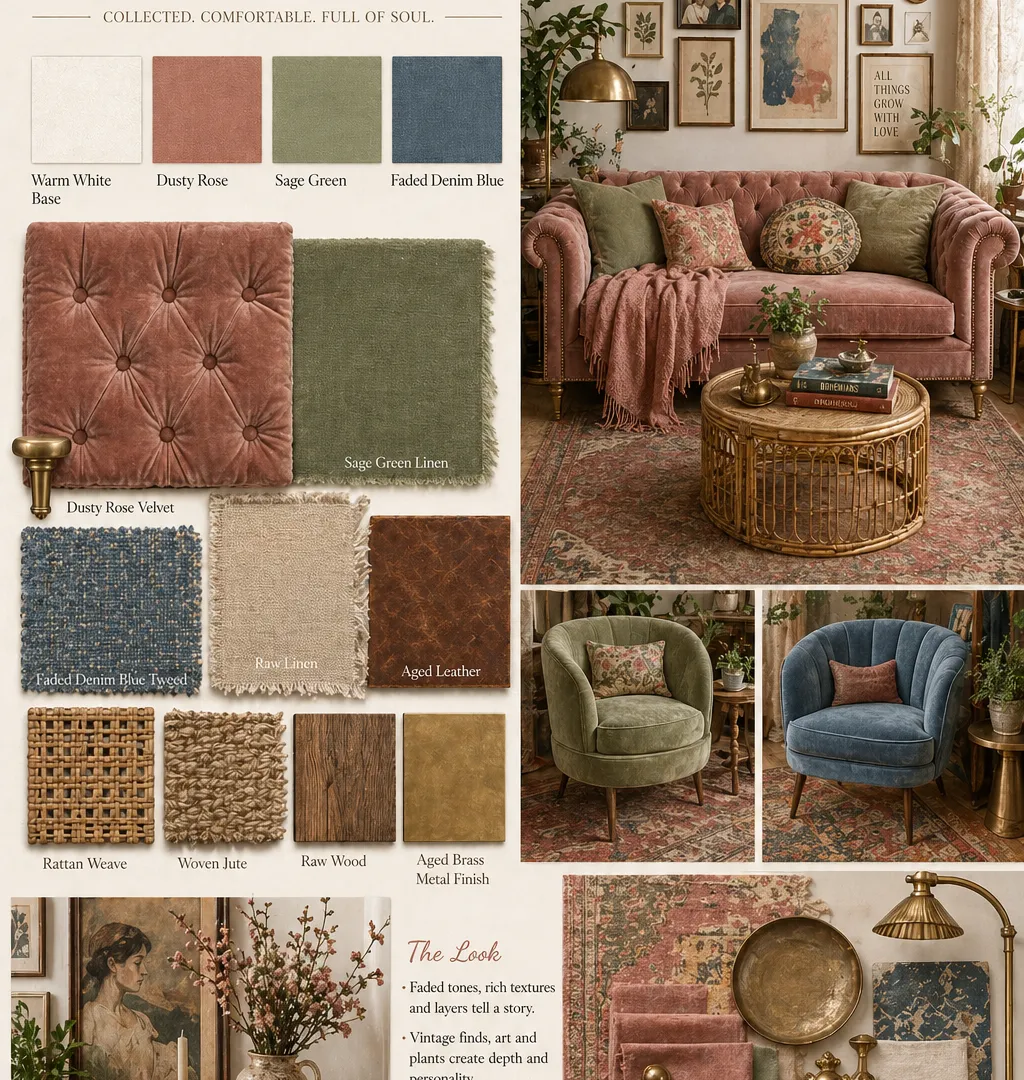
Palette 4: Faded and Layered (The Vintage Eclectic Approach)
The colors: Dusty rose + sage green + faded denim blue + warm white, with aged brass and raw linen.
Not all funky eclectic decor is loud. This palette plays with patina — things that look worn, faded, found. The colors are muted versions of bold hues: dusty rather than hot pink, sage rather than forest green, denim rather than cobalt. The result feels like a room that's been slowly collected over twenty years.
Works exceptionally well in older apartments with architectural details, in cottages, or in any room with natural light and visible wood floors. The muted palette actually requires more texture variety to stay interesting — velvet, linen, rattan, aged leather — because without saturation, texture does the heavy lifting.
23 Funky Eclectic Decor Ideas
Now that you have the color logic, here's how to put it to work. These ideas aren't a checklist — pick the ones that feel like you, not the ones that look most impressive on a list.
1. A bold sofa as your anchor. Don't let the sofa be beige. An emerald velvet sofa, a deep sapphire linen loveseat, a mustard tweed sectional — the sofa is the largest surface in most living rooms and the single highest-impact color decision you'll make. Once you commit to it, every other choice gets easier because you have a reference point. Emerald green with brass legs is an unbeatable starting point for Palette 1.
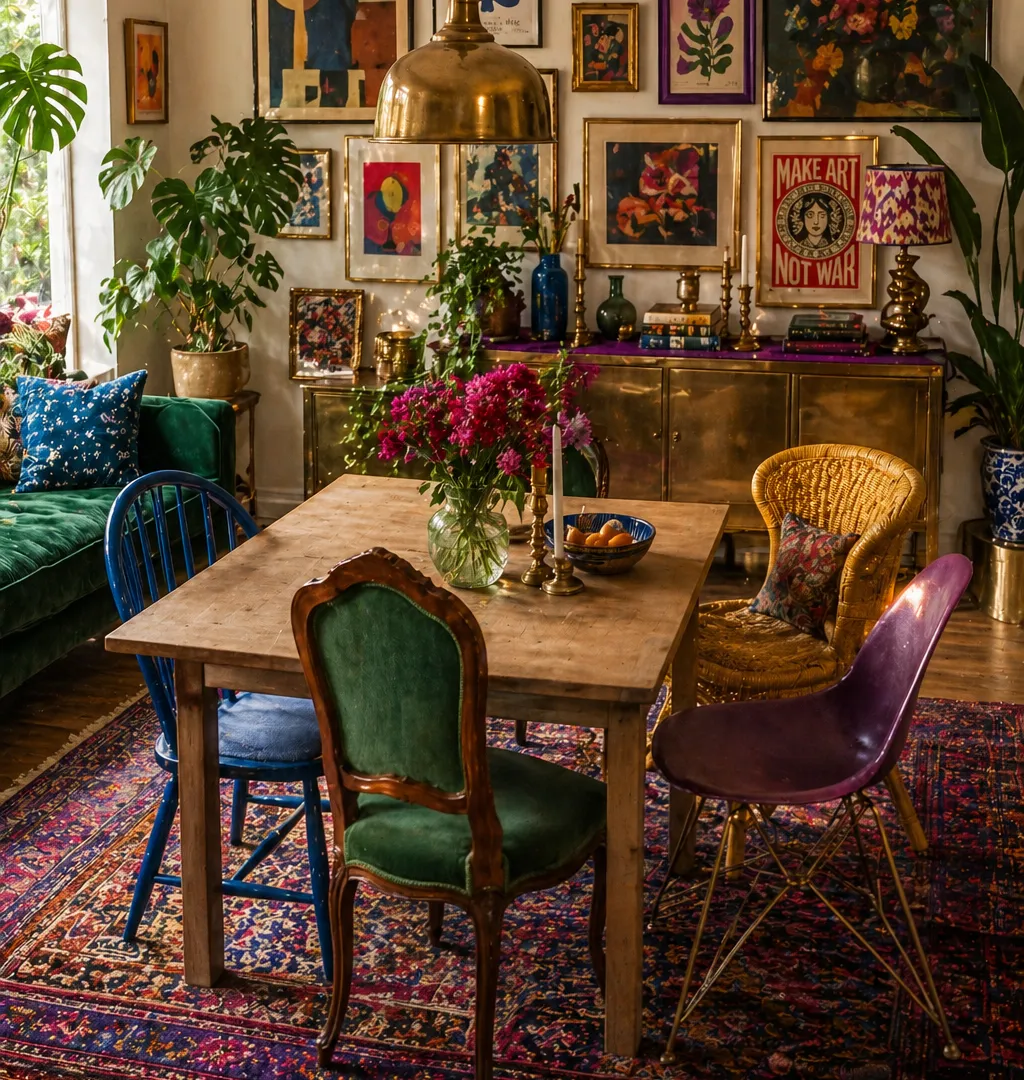
2. Mismatched dining chairs around one simple table. Skip the matching dining set and head to local thrift stores or estate sales instead. Look for chairs with interesting shapes: a spindle-back Windsor, a velvet-seated Victorian piece, a 1960s molded plastic chair. Keep the table itself simple — a natural wood or plain painted surface — so the chairs can be the stars without competing with each other. The one rule: at least one color from each chair should appear somewhere else in the room.
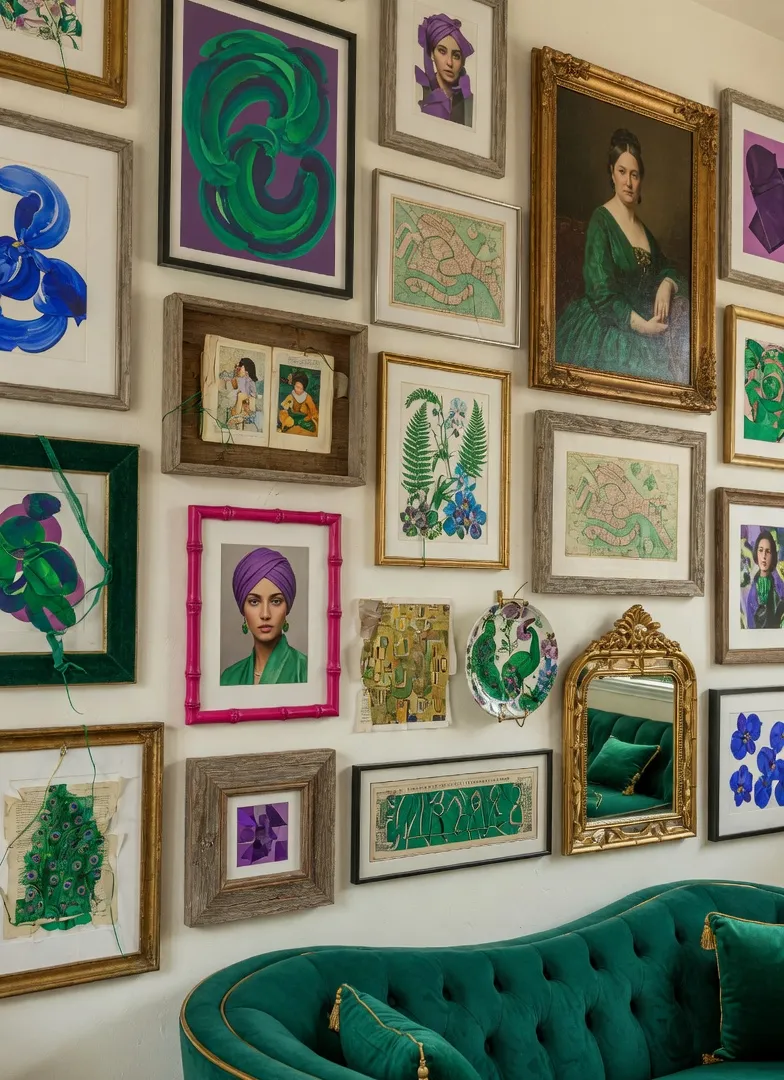
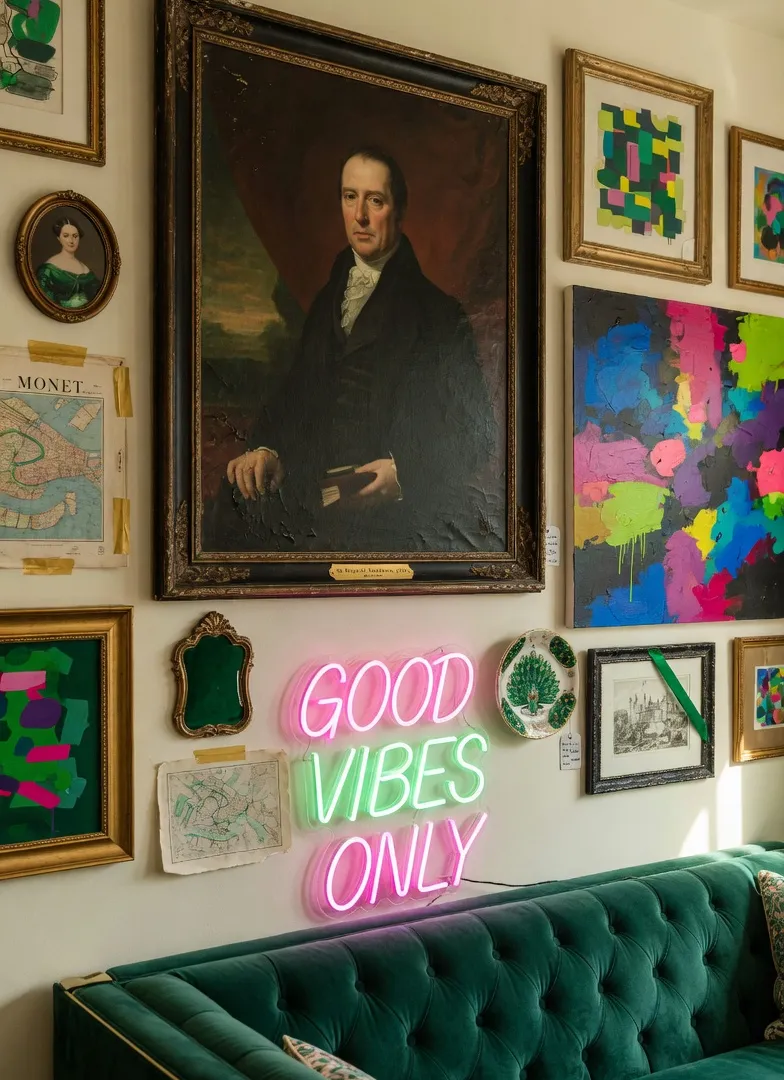
3. Gallery wall with zero rules about frames. Portraits, abstract prints, maps, pages torn from art books, a small mirror, a ceramic plate — all fair game. Different frames, different sizes, different orientations. The only thing worth coordinating: the spacing between pieces (keep it consistent at 2–3 inches) and one color that runs through at least a third of the pieces. Everything else, let it run wild.
4. An old portrait with a modern twist. Find a large, moody oil portrait at an estate sale or antique shop. Hang it prominently. Lean a neon sign against the wall below it, or prop a piece of modern abstract art beside it. The deliberate clash between serious and playful is exactly what makes a room feel eclectic rather than just old. This single move reads immediately as intentional.
5. Layer two rugs instead of one. A flat-woven kilim layered under a shaggy Moroccan-style rug, or a large jute rug as the base with a smaller vintage Persian on top. Layering adds texture, depth, and the visual impression of a room that's been lived in for a long time. It also solves the problem of no single rug being quite the right size — two smaller rugs often cover the area more effectively anyway.
6. A wavy or sculptural mirror. Flat rectangular mirrors are invisible. A sunburst mirror in aged brass, an irregular wavy mirror in olive green frame, a giant porthole-style mirror — these become actual decor, not just a reflective surface. Place it somewhere it'll catch light: opposite a window, above a sideboard, leaning against a wall in a corner.
7. Bold cabinetry color in the kitchen. Teal, deep forest green, mustard yellow, or navy — pick one and paint your lower cabinets. Leave uppers white or off-white if you're nervous. This one move changes the entire character of a kitchen without a renovation. Pair with unlacquered brass hardware (it develops its own patina over time, which only makes it look better in an eclectic kitchen).
8. Mismatched nightstands. A vintage trunk on one side, a modern floating shelf on the other. A stacked pile of books versus a small ceramic stool. In a bedroom with character, symmetry is the boring choice. The only thing to coordinate: keep both sides roughly the same height so the visual balance holds even if the actual pieces don't match.
9. Floral wallpaper on one wall, geometric rug on the floor. Large-scale florals and hard-edged geometrics shouldn't work together. Somehow they do — because the contrast between organic shapes and structured lines creates tension that keeps the eye moving. Stick to one shared color between the two patterns and the combination holds.
10. A statement lamp that makes no apologies. A papier-mâché parrot perched beside a simple drum shade. A lamp built from stacked vintage books. A hand-thrown ceramic base in a color that has no right to be in the room. Funky eclectic decor often lives or dies by the lighting — it's the one category where going completely off-script is always the right call.
11. Open shelves as a living mood board. Books spine-out by color, then by cover. A ceramic vase tucked between them. A small sculpture. A trailing pothos. A framed photo propped (not hung) against the back wall. Open shelving in eclectic rooms looks intentional when it's edited down to things you actually love — and chaotic when it becomes the place you put everything that doesn't have a home.
12. Dried botanicals from the ceiling. Bundles of dried lavender, eucalyptus, or pampas grass hung from exposed beams or a ceiling hook with simple twine. It's a low-cost, high-character move that works in almost any eclectic space. The subtle scent is a bonus. The zero-maintenance is the real selling point.
13. A checkerboard floor (or floor cloth). Black and white checkerboard is one of those patterns that somehow manages to be both retro and contemporary simultaneously. In a bathroom, entryway, or kitchen, it anchors the space and lets everything above it be as wild as it wants. If you're renting, a painted canvas floor cloth achieves the same effect without the commitment.
14. Velvet anything in a jewel tone. Velvet reads expensive at every price point. A forest-green velvet armchair found at a thrift store, a pair of amethyst velvet cushions from a discount home store — the material itself does most of the work. In Palette 1 particularly, velvet jewel tones against warm neutral walls is one of the fastest ways to make a room look like you spent significantly more than you did.
15. Mix your metallics deliberately. Brass table lamp. Chrome picture frame. Copper pendant. All in the same room, none of it matching. Mixed metallics used to be considered a mistake — now it's a marker of an eclectic room that knows what it's doing. The one caveat: don't mix more than three different metals, and repeat each one at least twice so nothing looks accidental.
16. A bold accent wall in the bathroom. Small bathrooms are where you should take the biggest risks. Jewel-tone paint, a maximalist botanical wallpaper, two different patterns on two different walls — all of these work in a bathroom because the small footprint turns what would be overwhelming into something that feels like a jewel box. You spend less time there, so the intensity is tolerable. And guests always comment on it.
17. Repurposed vintage storage. A painted mid-century sideboard as a TV console. A set of vintage suitcases stacked vertically as sculpture and storage. An old apothecary chest for bathroom organization. The shape of well-made vintage storage is almost always better than what you can buy new at the same price point — and the history it carries is the whole point.
18. Curtains hung from near the ceiling, pooling on the floor. Not because curtains need to be long. Because long curtains make ceilings look taller, windows look grander, and rooms look more considered. In an eclectic space, choose fabric with some personality — a printed linen, a velvet in a shade that echoes something already in the room, a sheer that filters afternoon light into something golden.
19. An egg chair or a piece of furniture with an unusual shape. The Arne Jacobsen Egg Chair (or any of its many affordable lookalikes) is a cliché for good reason: an enclosed, curved silhouette in a room full of straight lines creates instant visual interest. Any furniture with an unexpected shape — curved sectional, asymmetric bookshelf, a chair that looks like it was designed by someone who doesn't take furniture too seriously — serves the same function.
20. A plant you can't ignore. A full monstera that's been growing for three years. A fiddle-leaf fig that's taller than most of your furniture. A trailing pothos that's overtaken an entire shelf. Eclectic rooms benefit from plants that feel slightly out of control — not small, well-groomed specimens lined up on a windowsill. The messiness is the point.
21. Personal collections on display, not hidden. Vintage cameras. Ceramic animals collected from travels. A shelf of paperbacks organized by the color of their spines. Whatever you actually collect — that's the decor. An eclectic room with a visible collection reads as personal and intentional in a way that no amount of carefully chosen store-bought accessories can replicate. The collection is what makes the difference between a room with character and a room that's performing character.
22. DIY something unexpected. Repaint a secondhand ottoman in a color it never came in. Reupholster a chair in a fabric that makes no sense contextually. Make a lampshade out of a material you'd normally put on the floor. Funky eclectic decor is at its best when at least one piece in the room was obviously made or modified by a person, not bought as-is from a store. It's immediately visible, and it's impossible to fake.
23. Get something weird. Actually weird. A door handle shaped like a hand. A ceramic lamp in the shape of a fist. A print that's funny in a way that makes guests stop and look twice. A velvet sofa in a color that has no business being inside a home. Eclectic design has permission to go somewhere that no other style does: genuinely strange. Use it.
The best eclectic rooms don't look like they were decorated — they look like they happened over time, through good taste, bad decisions that turned out well, and a willingness to live with things that don't match.
Pick a palette. Pick two ideas from this list. See what happens from there.
Frequently Asked Questions
About the Author: Elena Vance
Interior design enthusiast and DIY expert. Elena Vance has spent over a decade curating spaces that blend modern aesthetics with everyday functionality. Passionate about helping you create a home that tells your unique story.


