
Intentional Clutter 2026: Collected, Not Chaotic


Marie Kondo admitted in 2023 that she's given up on tidying since having her third child. Which is funny, not because of the irony, but because most people who heard that story felt a private, specific relief — like they'd been holding their breath for years and finally someone gave them permission to exhale.
The backlash against extreme minimalism has been building for a while. People want their homes to feel like somewhere, not like a showroom for a company that sells white paint. And the trend that's emerged in response — intentional clutter, thoughtful maximalism, call it what you want — is real and worth taking seriously.
What it is not: permission to stop editing. The rooms that pull this off aren't the ones where someone kept everything. They're the ones where someone kept the right things and knew exactly how to show them.
What "intentional clutter" actually means (and what it isn't)
The phrase is slightly misleading, which is part of why it gets misapplied. "Intentional clutter" doesn't mean a cluttered room that someone intended. It means a room that looks full because it contains objects worth looking at — not because editing was abandoned.
The practical definition: every object in the room could be explained out loud. Not justified in a defensive way, but pointed to with a reason. That's the rug from the market in Tbilisi. That's the lamp I inherited from my grandmother. That's the ceramic I bought at a craft fair because I've thought about it at least once a week since.
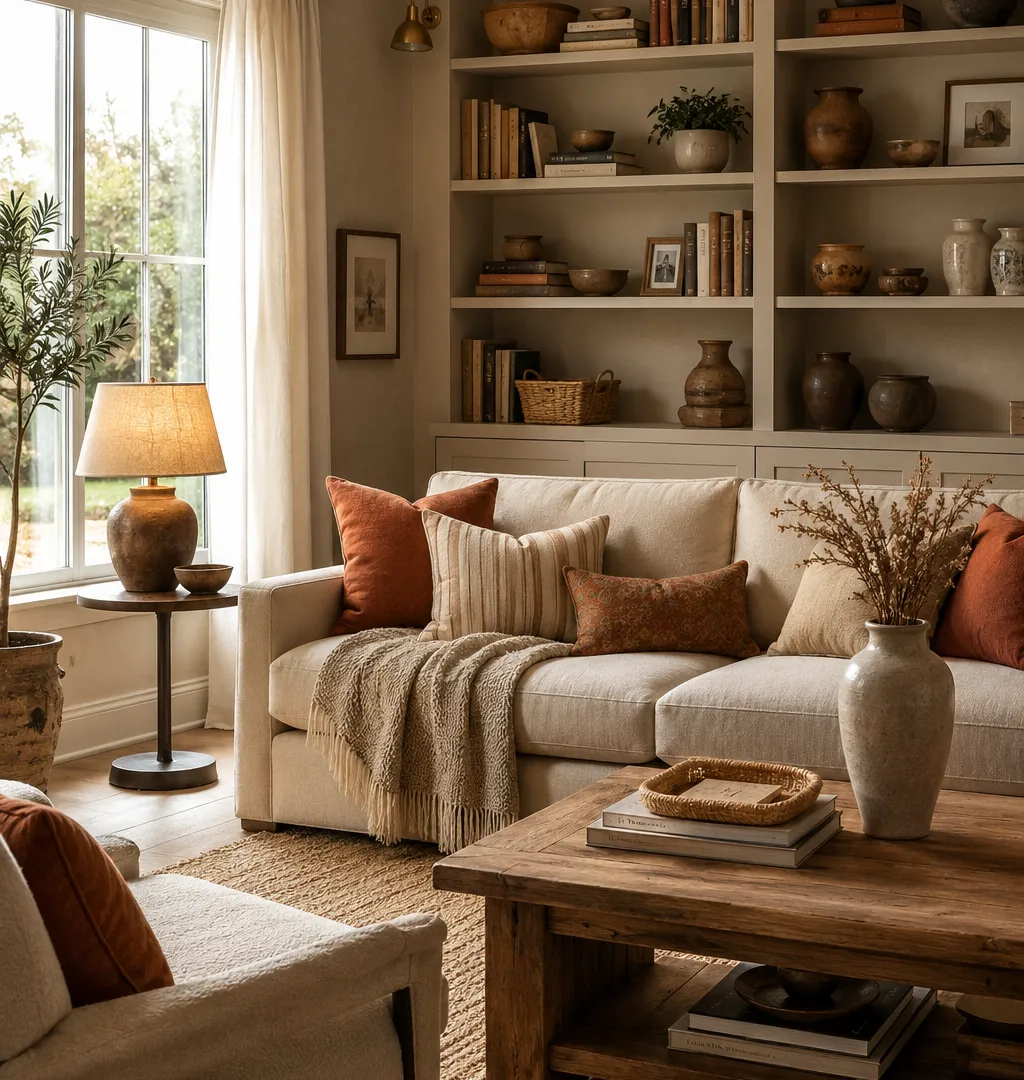
A room where most objects have that quality reads as collected. A room where most objects don't reads as cluttered, no matter how many of them were purchased with good intentions.
The word "curated" gets overused in decor writing, so I'll avoid it here. But the concept underneath it is real: you're making active choices about what stays and what goes, and the room is legible because of those choices.
The one test that separates collected from chaotic
Before adding anything to a shelf, a coffee table, or a wall, ask one question: does this object look better in this room than it did wherever it was before?
Not "do I like it?" You might like it. Not "does it fit the style?" Style can be stretched. The question is whether the object and the room are doing something for each other — whether putting them together makes both better.
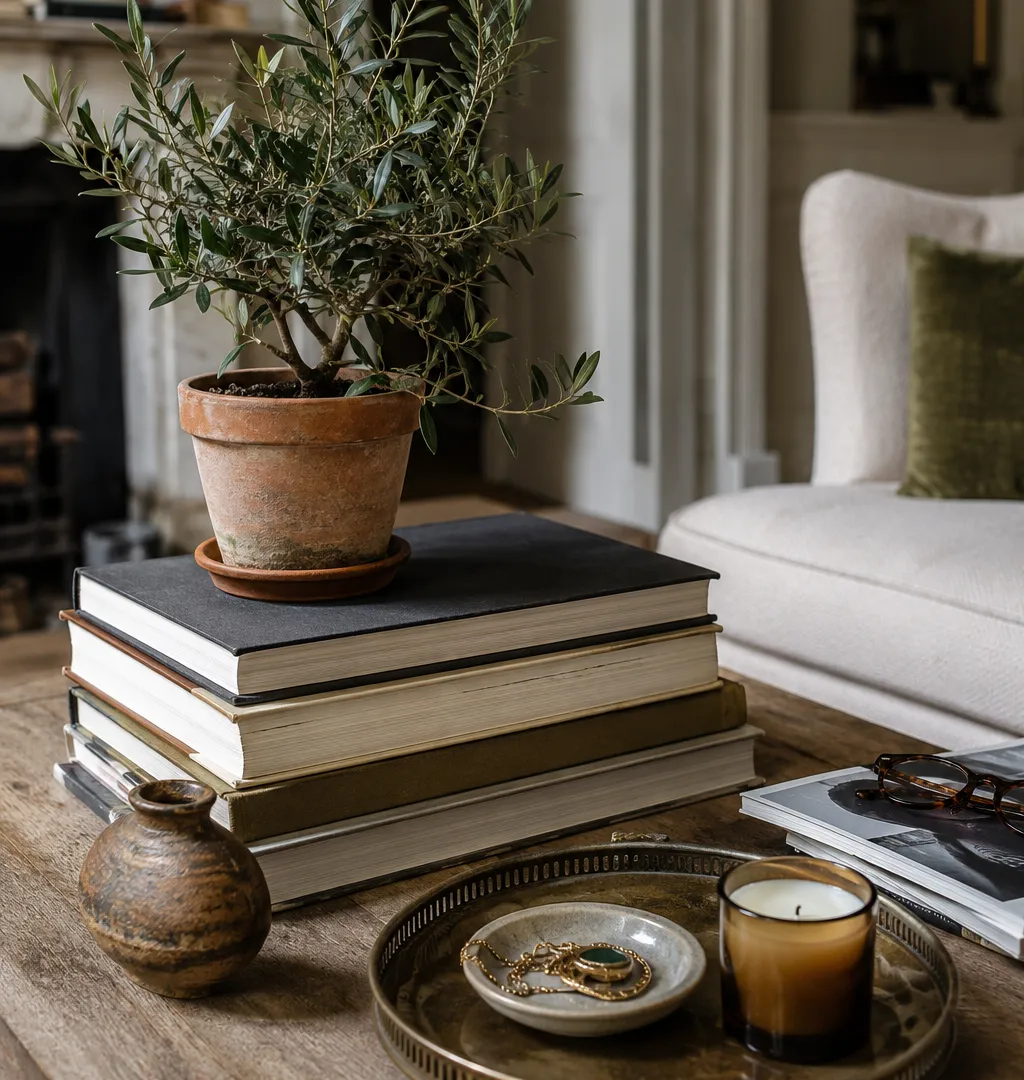
A travel souvenir that sits in a box adds nothing to a room. The same object on a shelf, lit by a lamp, next to two other things it has visual conversation with, becomes something worth noticing. The room gains a layer. The object gets seen.
This test also works in reverse. If an object has been in a room for a year and you don't notice it anymore — not occasionally, but ever — it's doing negative work. It's adding visual noise without adding meaning. It should either move to a better position or leave entirely.
Why the background has to be boring
This is the step most people skip, and it's the one that determines whether everything else works. Intentional clutter needs a neutral ground to read correctly. Without it, the objects compete with the surfaces, and the room reads as chaotic even if every individual thing is worth keeping.
In practice, this means:
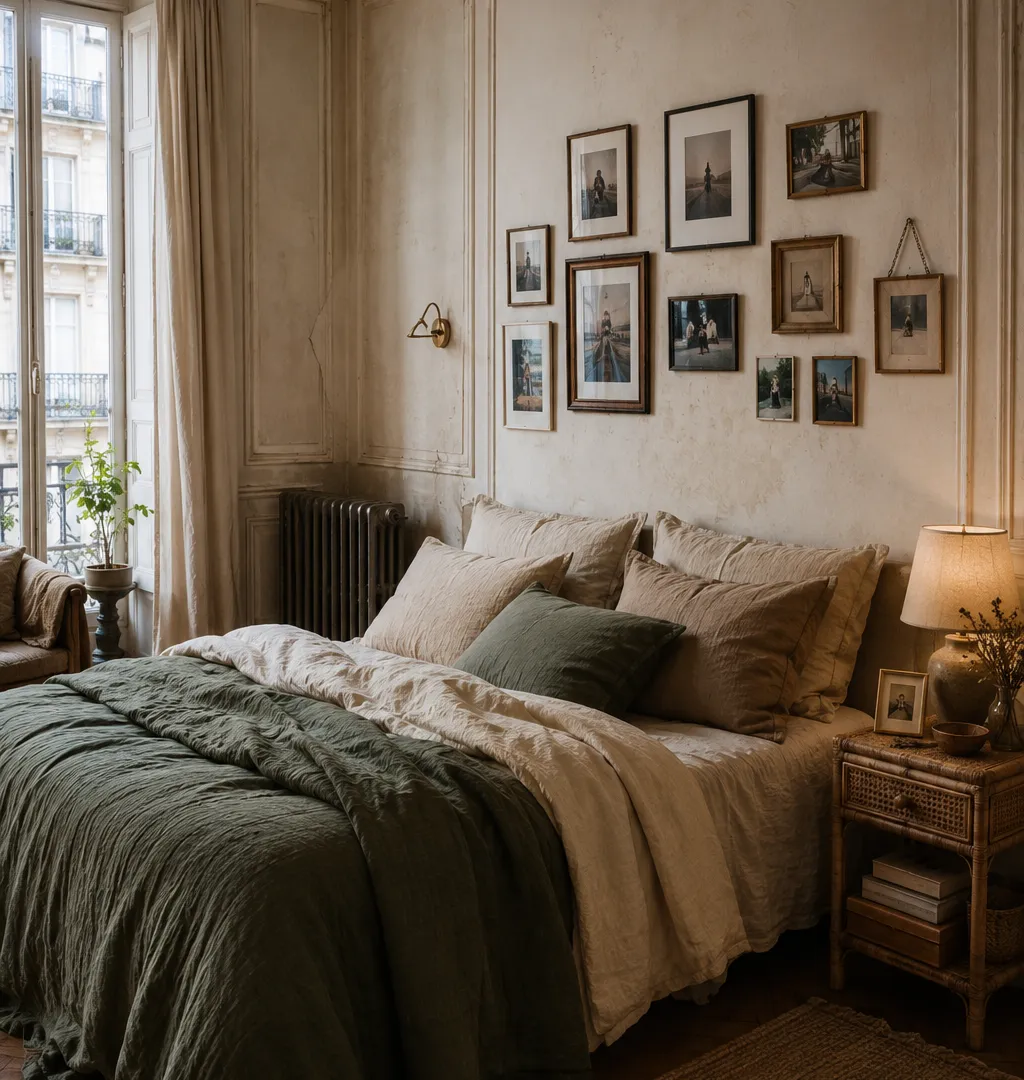
- Walls in a single muted tone — warm white, creamy off-white, or a very quiet greige. No pattern, no wallpaper on the main walls.
- Sofas and major upholstered pieces in a solid neutral — linen, canvas, wool. Not patterned.
- Flooring that doesn't compete — natural wood, stone, or a rug in a single quiet color.
- Window treatments that don't draw the eye upward — simple linen panels, no bold prints.
The objects provide the color, the pattern, the story. The background makes space for them to do that. If the background is already busy, there's nowhere for the eye to rest, and the room feels overwhelming regardless of how thoughtfully the objects were chosen.
This is the reason why the same collection of ceramics looks composed on a white shelf and chaotic on a shelf painted in a bold color. The ceramics didn't change. The background did.
Room by room: where this approach works and where it fights you
Living rooms are the obvious home for intentional clutter, and they earn it. The surfaces are varied — sofas, coffee tables, open shelving, walls — and the room is used in ways that justify layering. A coffee table styled with stacked art books, a small ceramic, a tray for the remote controls, and a single candle is a room that someone lives in. The same table with nothing on it is a room waiting for guests.
Bedrooms are trickier. The logic of intentional clutter says display what you love, but the purpose of a bedroom is rest, and visual complexity works against that. The version of this that works in a bedroom is quieter — a small gallery wall of personal photographs above the bed, a nightstand with a lamp you like and the book you're actually reading, a throw that has a color you chose on purpose. Not every surface covered. Not a shelf of every meaningful object you own.
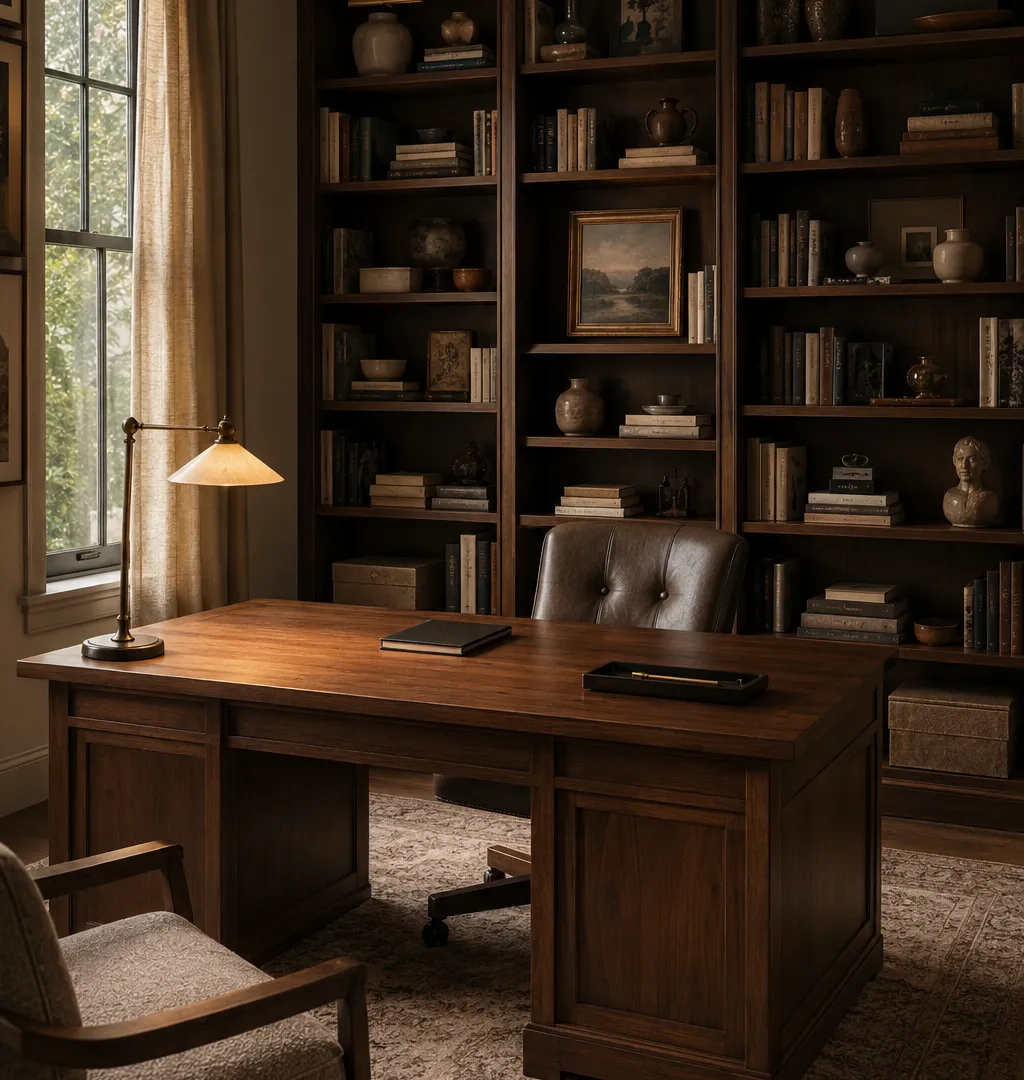
Home offices are where intentional clutter thrives, sometimes too much. A room full of books and objects and layered textiles can feel rich and personal or can make it genuinely hard to concentrate. The limit here is the desk surface itself — if the desk is covered, the room fails its primary function. Keep the desk clear. Let the shelves be full.
Kitchens are the hardest. The combination of functional objects (appliances, utensils, dry goods) and decorative ones (ceramics, plants, art) is difficult to balance because one category keeps expanding based on what you cook, not what you want the room to look like. My working rule: if it's used at least once a week, it can live on the counter. If it isn't, it goes into a cupboard, regardless of how much I like it.
The shelf problem (and how people get it wrong)
Open shelving is where intentional clutter either lands or collapses, and the mistakes are consistent enough to be worth naming specifically.
The first mistake: filling every inch. Shelves need negative space — not the calculated, symmetrical kind from a design catalogue, but actual gaps where the eye can rest between clusters of objects. A shelf that's completely packed from edge to edge reads as storage, not display.
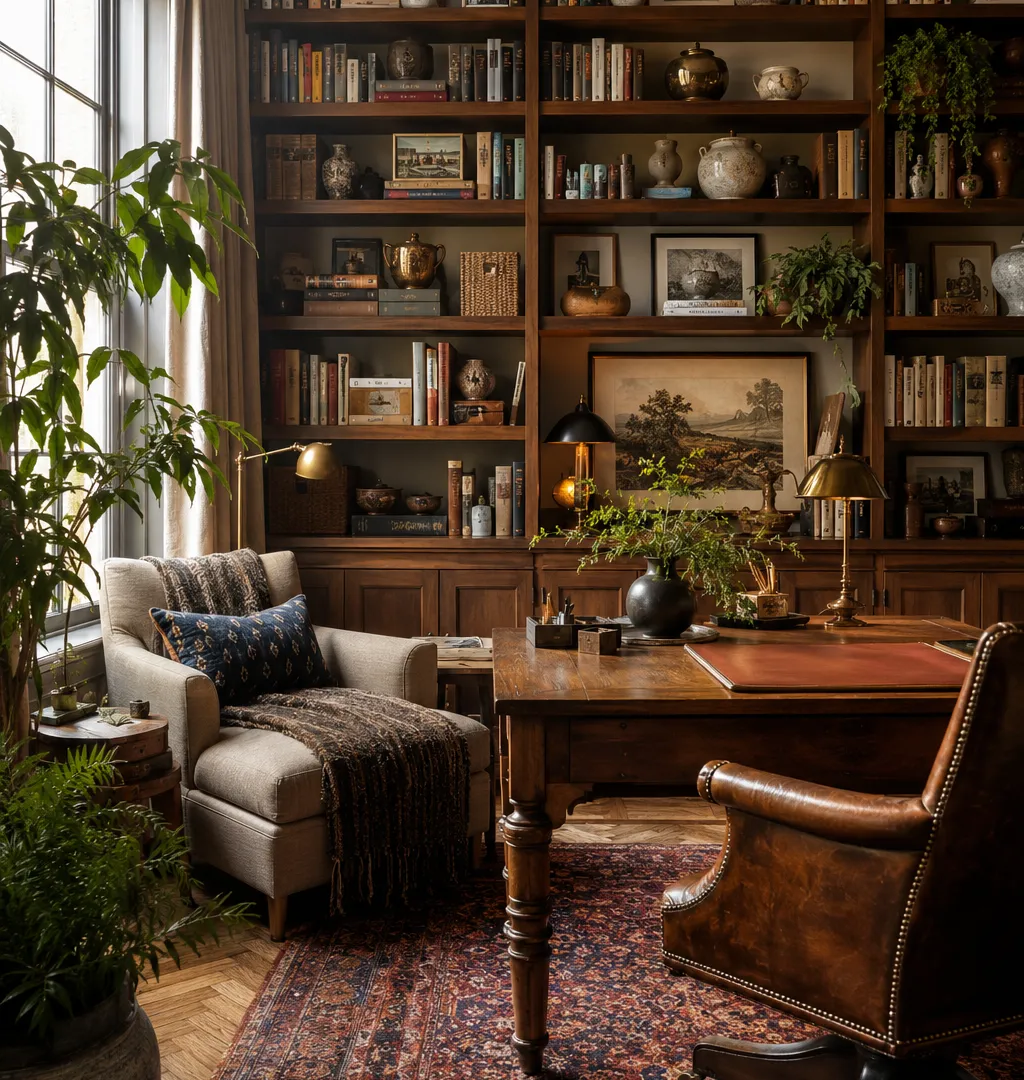
The second mistake: objects at the same height. A row of same-sized ceramics, a line of identically-spaced books — the eye processes it as repetition and moves on. Varying height within a shelf (one tall object, one medium, one small, some books horizontal as a platform for something else) creates the kind of visual movement that makes you want to look longer.
The third mistake: matching collections. A shelf of objects that all coordinate — same color family, same material, same era — reads as a set purchase from a home goods store, not a collection built over time. The thing that gives a shelf genuine character is the object that doesn't quite belong but has earned its place: the weird ceramic your sister made in a pottery class, the brass object you bought because you couldn't stop thinking about it, the thing you can't explain but won't get rid of.
When to stop adding things
The moment a room starts feeling like it needs to be explained, it's over-full.
A room done well with intentional clutter doesn't require a tour. You walk in and feel the accumulation of decisions — the warmth of it, the specificity — without needing to know the story behind every object. The story is available if you ask. It's not required to make the room work.
When you start feeling like you need to tell visitors what things mean before they can appreciate the room, something has tipped. Remove 20% of objects, wait two weeks, and see if you miss any of them. The ones you don't miss weren't earning their place.
The test isn't "do I love it?" You probably love everything in the room, or you wouldn't have kept it. The test is whether the room is better with it than without it. Those are different questions.
Starting from minimal: how to build a collected room slowly
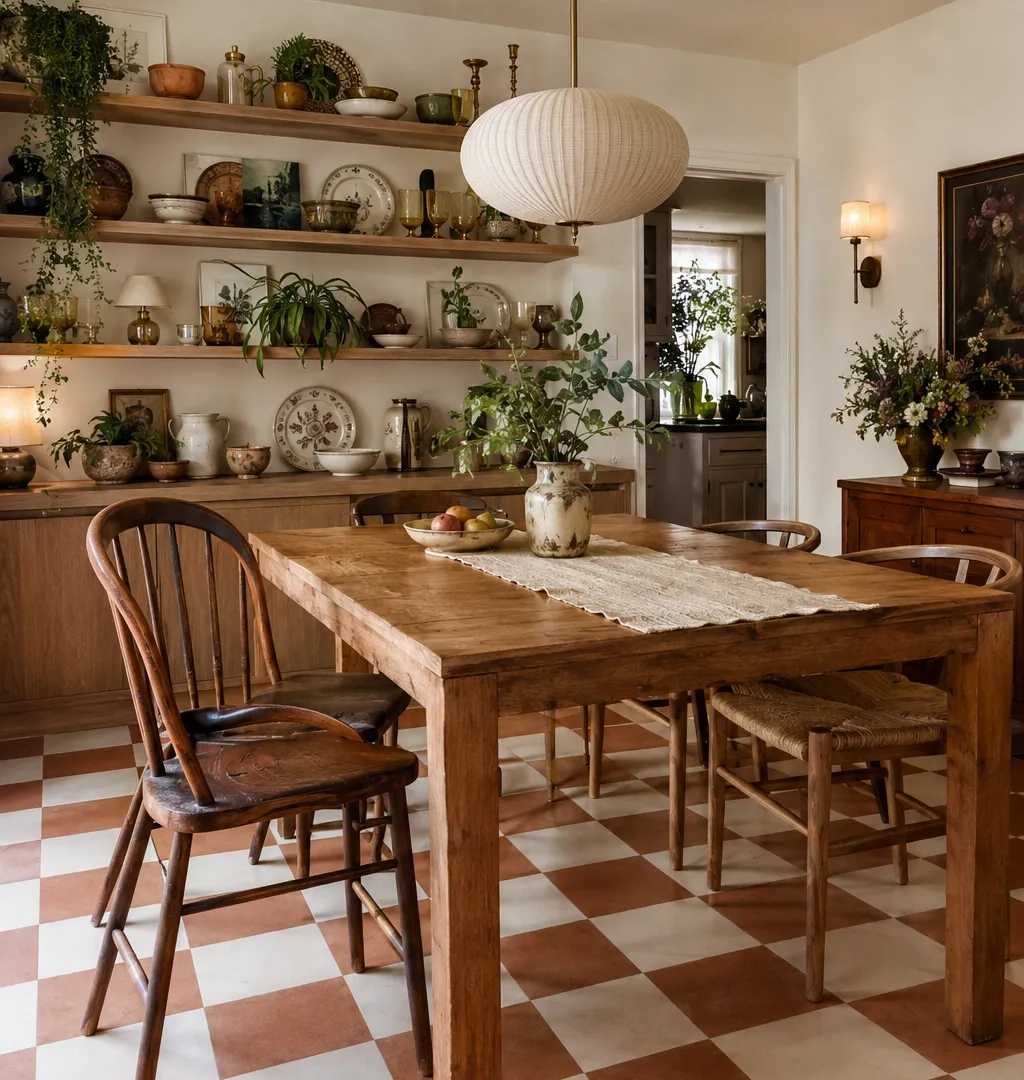
If your home is currently very spare — white walls, clear surfaces, minimal objects — the worst thing you can do is go buy a lot of things at once. Rooms that look collected over time are collected over time. They can't be compressed into a weekend.
The practical version of starting: pick one surface and commit to it. A single shelf, a single coffee table, a single wall. Bring out the things you already own that have meaning — the inherited object, the travel find, the book you've read twice. See if they make sense together. Adjust. Wait.
The objects you need to buy will become obvious as the room develops. You'll notice a gap in height, or a gap in warmth, or a surface that needs something with texture. Buy specifically for that gap. Don't buy in advance of knowing what you need.
Most collected rooms that work took three to five years to look the way they do. That's not a problem. It's the mechanism. The room looks like it took that long because it did — and that's exactly why it doesn't look like something assembled in a Saturday afternoon.
About the Author: Elena Vance
Interior design enthusiast and DIY expert. Elena Vance has spent over a decade curating spaces that blend modern aesthetics with everyday functionality. Passionate about helping you create a home that tells your unique story.


