
Dream Apartment Decor: 6 Inspiring Ideas to Turn Your Rental Into a Personal Sanctuary


Can you actually make a standard-issue apartment feel like a bespoke home when you aren't allowed to paint the walls or drill a single hole?
The internet will tell you the answer is a gallery wall hung with 40 adhesive strips. I disagree. I've lived in five different apartments over the last decade, and I can tell you that plastering the walls with lightweight frames usually just highlights how temporary the setup is.
If you want your rental to feel permanent, you have to stop buying "temporary" solutions. You need to focus on pieces that carry visual weight. You need to manipulate the light, cover the standard-issue finishes, and introduce furniture that does the architectural heavy lifting.
Here are the six decisions that actually make a difference between a place you are crashing in and a place you own (conceptually, at least).
The 6 Upgrades That Actually Matter
If you have a strict lease, focus your budget on these specific areas:
1. Swap overhead lights for plug-in sconces.
2. Install ceiling-to-floor curtains using tension or casing brackets.
3. Use heavy, sculptural furniture to anchor the room.
4. Cover standard-issue floors with massive wool rugs.
5. Use peel-and-stick wallpaper on cabinets, not just walls.
6. Lean oversized art and mirrors instead of hanging them.
The Lighting Rule: Ignore the Ceiling
Most apartments come with what I call "interrogation lighting"—a single, glaring flush-mount fixture in the center of the ceiling. The quickest way to make a room feel cheap is to turn that light on.
The Plug-In Sconce Solution
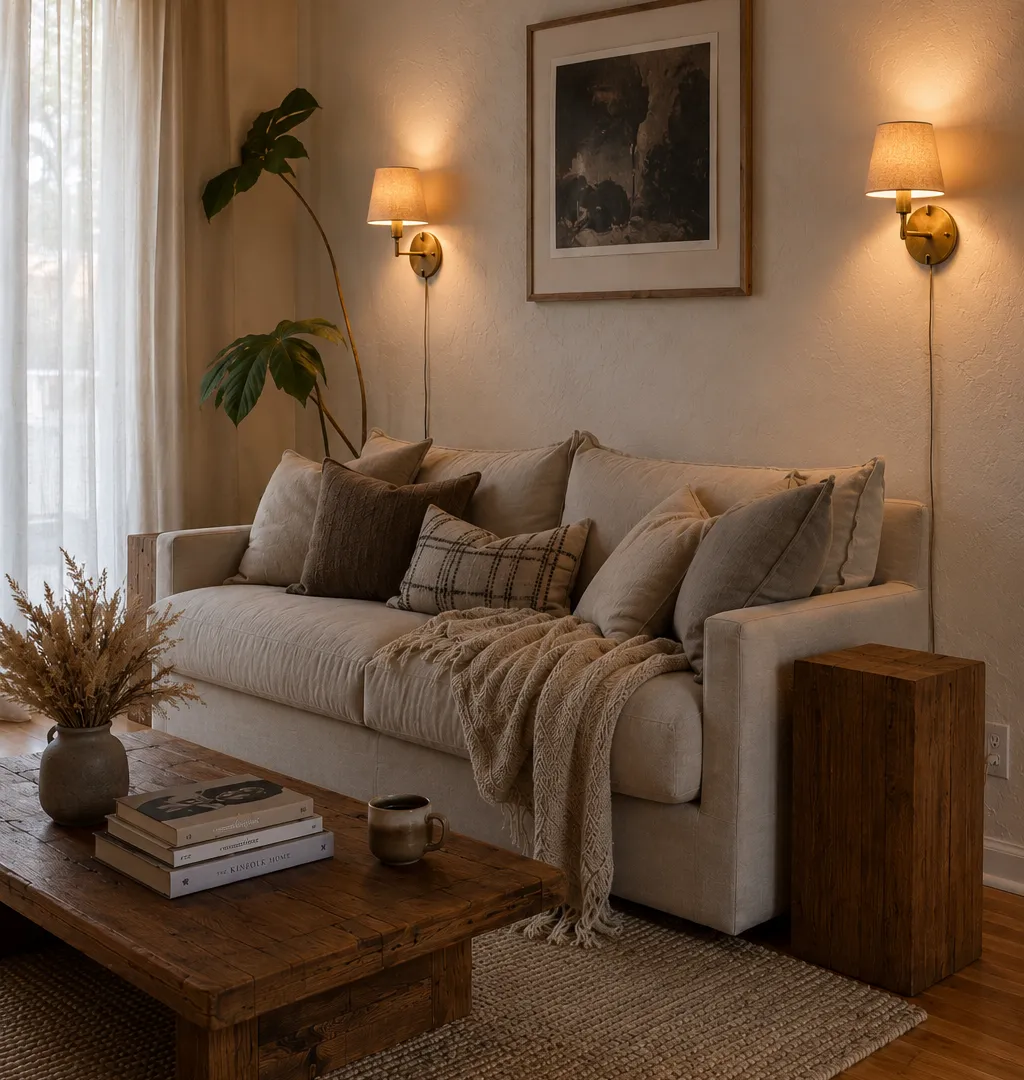
You do not need an electrician to have wall sconces. Plug-in sconces have evolved far beyond the dorm-room aesthetic. Brands like *Schoolhouse* and *Rejuvenation* (expect to pay $150–$300) now offer heavy, brushed brass fixtures with fabric cords that look entirely custom. You mount them using a heavy-duty adhesive hook (the kind rated for 10+ pounds) and run the cord straight down the wall. It creates localized, atmospheric pools of light.
I tried relying solely on table lamps in my second apartment, and it was a mistake. They ate up valuable surface area on my tiny end tables. When I finally swapped them for two plug-in brass sconces flanking my sofa, the living room went from feeling like a cramped dorm to a boutique hotel lounge. Wall sconces free up surface space while drawing the eye upward.
Window Treatments: Skipping the Drill
Nothing screams "rental" louder than vertical plastic blinds. You do not have to live with them, but you also shouldn't drill into the window trim and risk your security deposit.
Casing Brackets
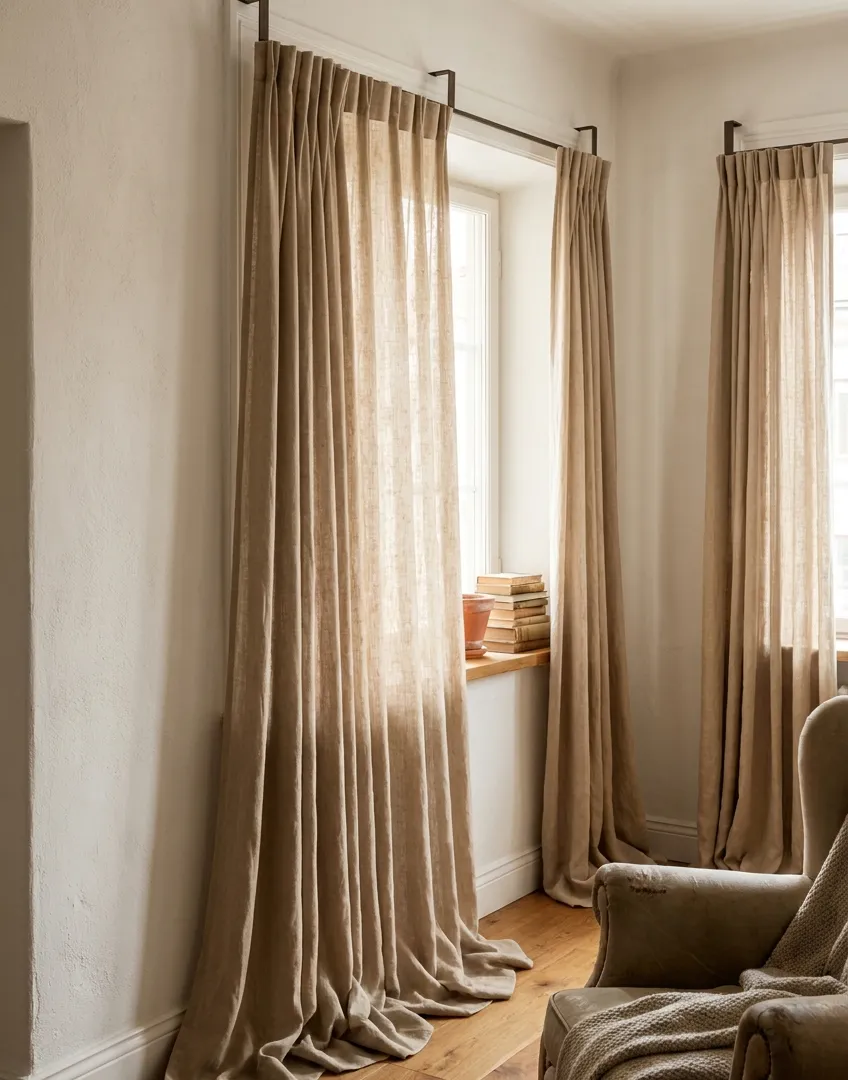
The downside to standard tension rods is that they often fall down if you pull the curtains too hard. If that matters to you, look at no-drill casing brackets. These are L-shaped metal pieces that literally tap into the top of the existing window frame molding with a mallet. No screws required.
Once the brackets are up, hang the heaviest curtains you can afford. I recommend pinch-pleated linen or velvet panels. You want them to start at the very top of the window frame and lightly pool on the floor. This completely hides the ugly plastic blinds behind them and tricks the brain into thinking the windows are much larger than they are.
Furniture as Architecture
When you can't add built-in bookshelves or a fireplace, your furniture has to provide the structural interest. This is exactly why the 2026 "Warm Minimalism" trend—which *Vogue Living* highlighted as the defining shift away from stark white rooms—really shines for renters.
The Power of the Curve
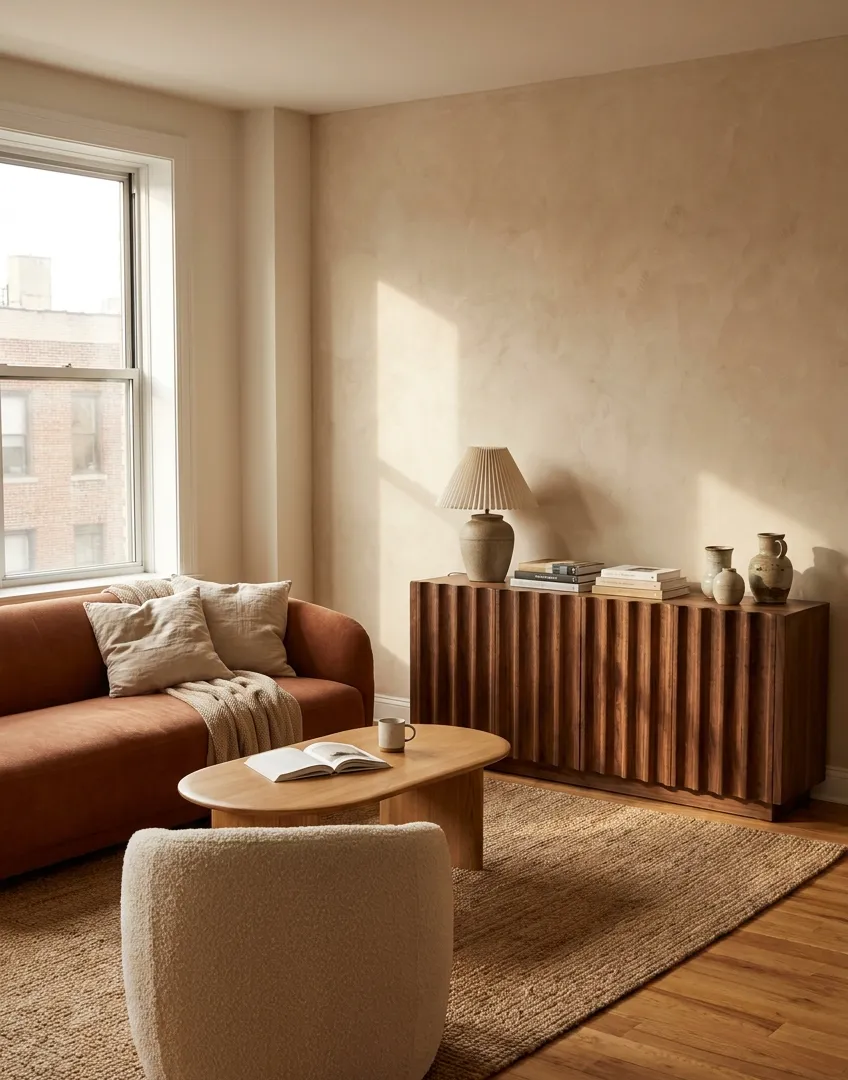
Sharp, boxy furniture pushes against the rigid, boxy walls of a standard apartment. Soften the room by bringing in curves. A rounded accent chair, an oval coffee table, or a sofa with a soft, sloping back breaks up the grid.
Expect to pay $600–$1,200 for a quality solid wood oval dining table. Below that, the veneer edges tend to peel quickly. If I had to pick one sculptural piece to invest in, it's a solid, heavy credenza. I recently worked with a client in a sterile new-build apartment who felt like her living room was floating away; the moment we brought in a 200-pound fluted walnut credenza, the room instantly felt permanent. A heavy piece of furniture anchors the room and gives you a substantial surface to display art and lighting.
The Area Rug Anchor Strategy
Rental carpets are notoriously terrible. Rental vinyl plank flooring isn't much better. Your goal is to cover as much of it as physically possible.
Size Matters More Than Pattern
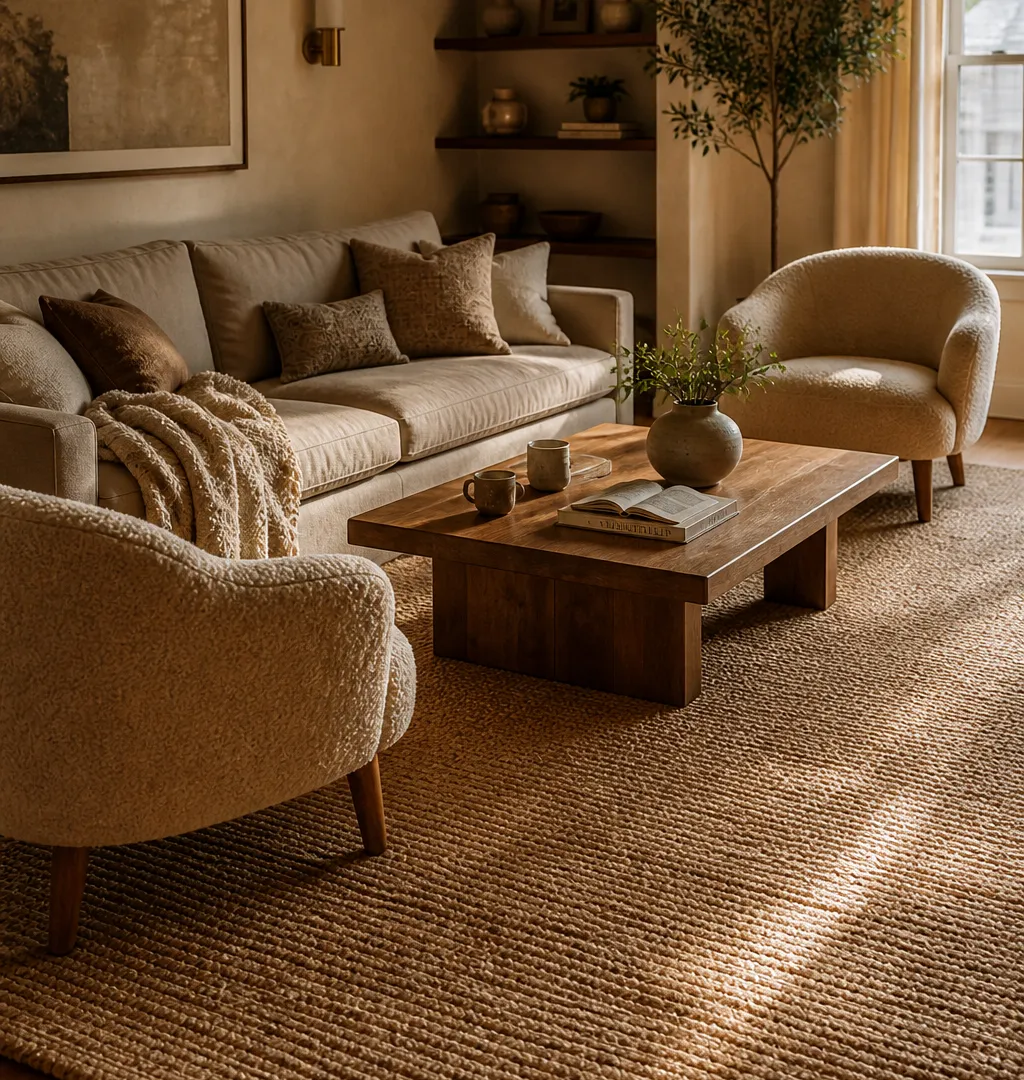
Most people buy a 5x8 rug for their living room because it is cheaper. I made this exact mistake in my first rental to save $200, and the rug ended up floating like a tiny island in the center of the floor, making the room look even smaller. You need an 8x10 or a 9x12. The front legs of every piece of seating furniture should rest on the rug.
A massive, thick wool or jute rug fundamentally changes the acoustics of an apartment (which your downstairs neighbors will appreciate) and physically covers the landlord's flooring choices. If you are on a strict budget, avoid cheap polypropylene; instead, look for oversized flatweave jute rugs at places like *Rugs USA*, which often run under $300 for a 9x12 and provide incredible visual texture.
Peel-and-Stick: Where It Works (And Where It Fails)
Peel-and-stick wallpaper is the renter's holy grail. But there is a right way and a very wrong way to use it.
The Reality Check
In my experience, applying peel-and-stick wallpaper to an entire room is a nightmare. It is expensive, it takes hours to align the seams, and if the rental walls have any texture at all, the paper will bubble and eventually peel off.
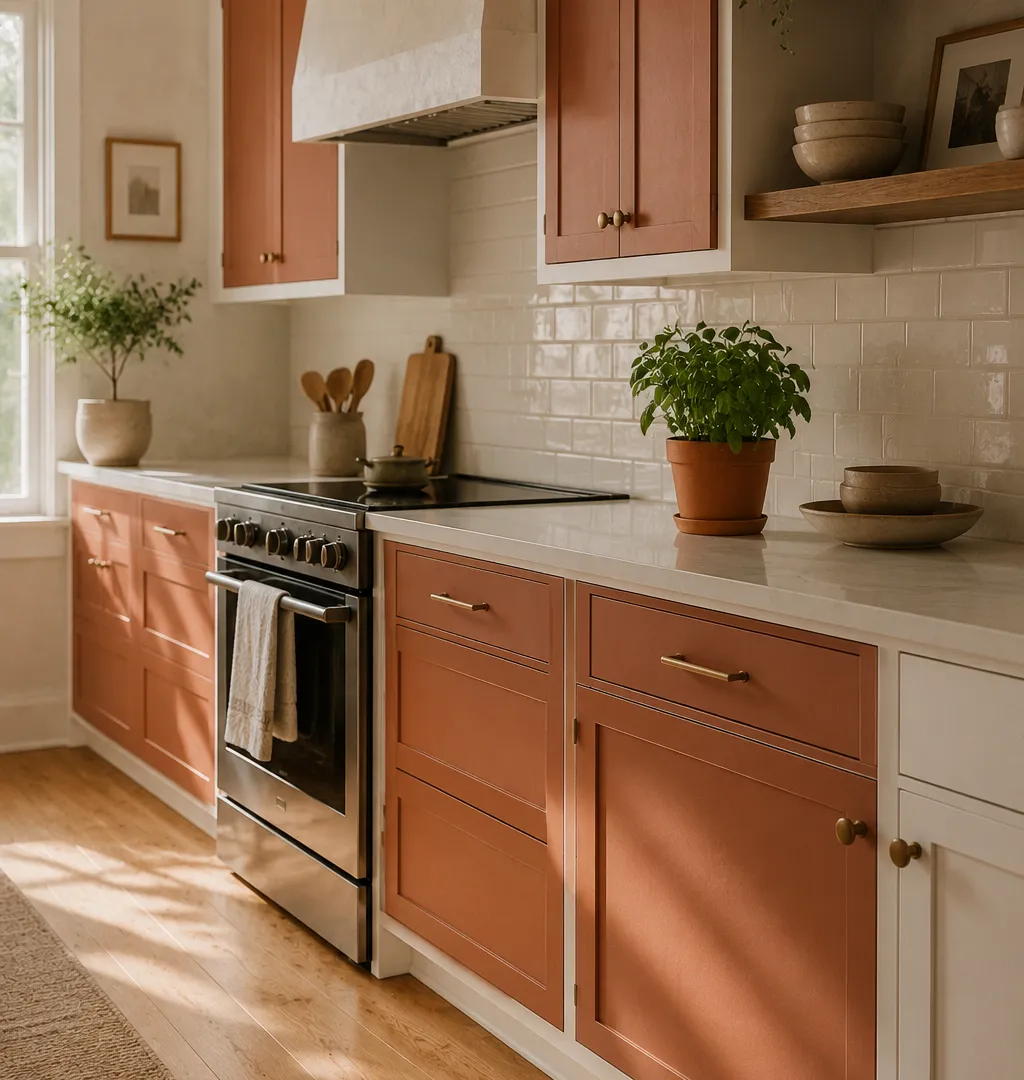
Instead, use it strategically. The best application I've ever seen was a renter who used a matte terracotta peel-and-stick paper to cover just the flat front panels of her generic white kitchen cabinets. It took two hours, required minimal material, and completely transformed the kitchen. When she moved out, a little heat from a hairdryer helped the adhesive release cleanly.
The Art of the Lean
Stop trying to hang heavy things with adhesive strips. It is stressful, and when a 15-pound mirror crashes to the floor at 2 AM—which happened to my first client in 2018—it is terrifying.
The Floor Mirror
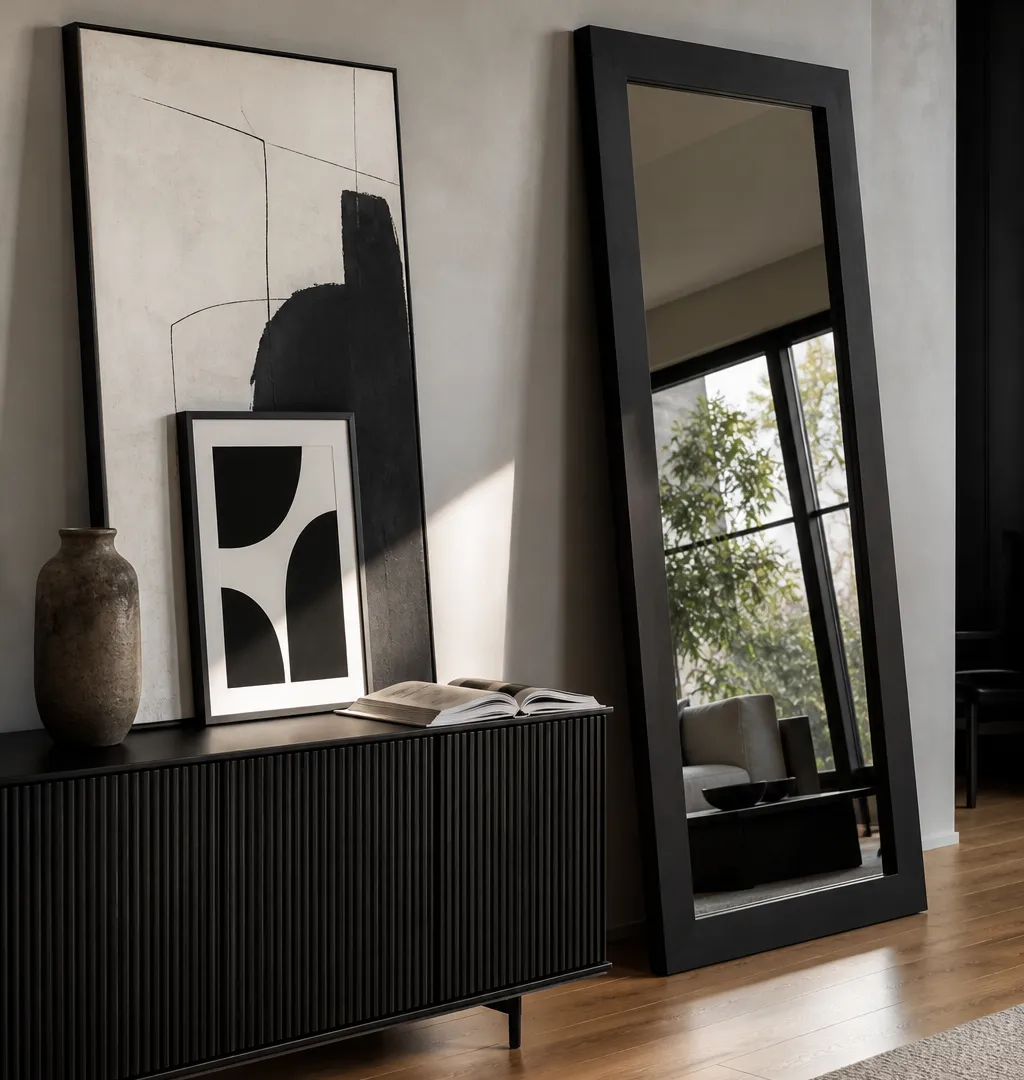
A massive, 6-foot-tall mirror with a thick frame leaning against the wall is infinitely chicer than a small mirror hung perfectly level. It looks intentional, slightly relaxed, and completely damage-free.
The same applies to art. A large canvas leaning against the wall on top of a credenza, layered with a smaller framed print in front of it, feels like an artist's studio. It allows you to rotate your collection without patching holes, and it requires exactly zero tools to execute.
You don't need to redo everything. You don't need to spend thousands fighting the apartment. Work with the restrictions, focus on the objects you can actually pack up and take with you, and your rental will stop feeling like a waiting room.
---
About the Author: Elena Vance
Interior design enthusiast and DIY expert. Elena Vance has spent over a decade curating spaces that blend modern aesthetics with everyday functionality. Passionate about helping you create a home that tells your unique story.


