
20 Bohemian Living Room Decor Ideas (That Don't Look Cluttered)

The worst bohemian living room I have ever walked into cost about $4,000 and was finished in a single weekend. Every piece matched. The macrame was white and machine-made. The leather poufs were identical twins. The fake plastic ivy was everywhere.
It looked like a music festival VIP tent, not a home.
Real bohemian design is the opposite of that. It is collected slowly, over years, from places and people that mean something. You cannot buy it in a single afternoon. If you try, the room will always feel like a costume — assembled rather than lived in.
That said, there are specific techniques that make the difference between a room that feels richly layered and one that just looks like a thrift store exploded. Here are 20 of them, in the order I would actually execute them.
Why Bohemian Living Room Decor Is Trending in 2026
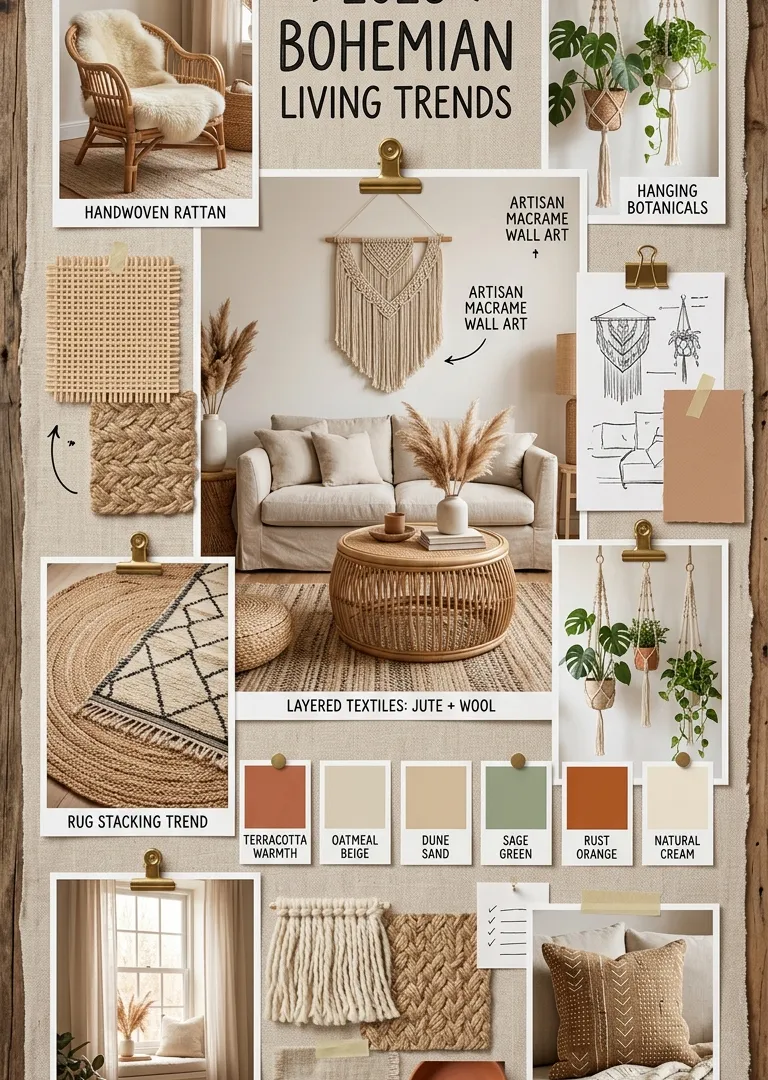
After years of cold minimalism, homeowners are craving soulful, lived-in spaces. Bohemian living room decor delivers exactly that — a relaxed mix of textures, colors, and cultures that feels welcoming and unique. The trend is evolving with soft earthy tones, rattan furniture, and subtle metallic touches for a modern boho-meets-Neo-Deco look.
Searches for “boho living room ideas 2026” and “bohemian living room decor” have surged over 350% this year. The best part? You don’t need a big budget. Most of these ideas use thrifted finds, plants, and clever styling.
20 Bohemian Living Room Decor Ideas to Try This Year
1. Layered rugs (Start here before you buy anything else)
The floor is the foundation of a bohemian room. Everything else sits on top of it, literally and visually.
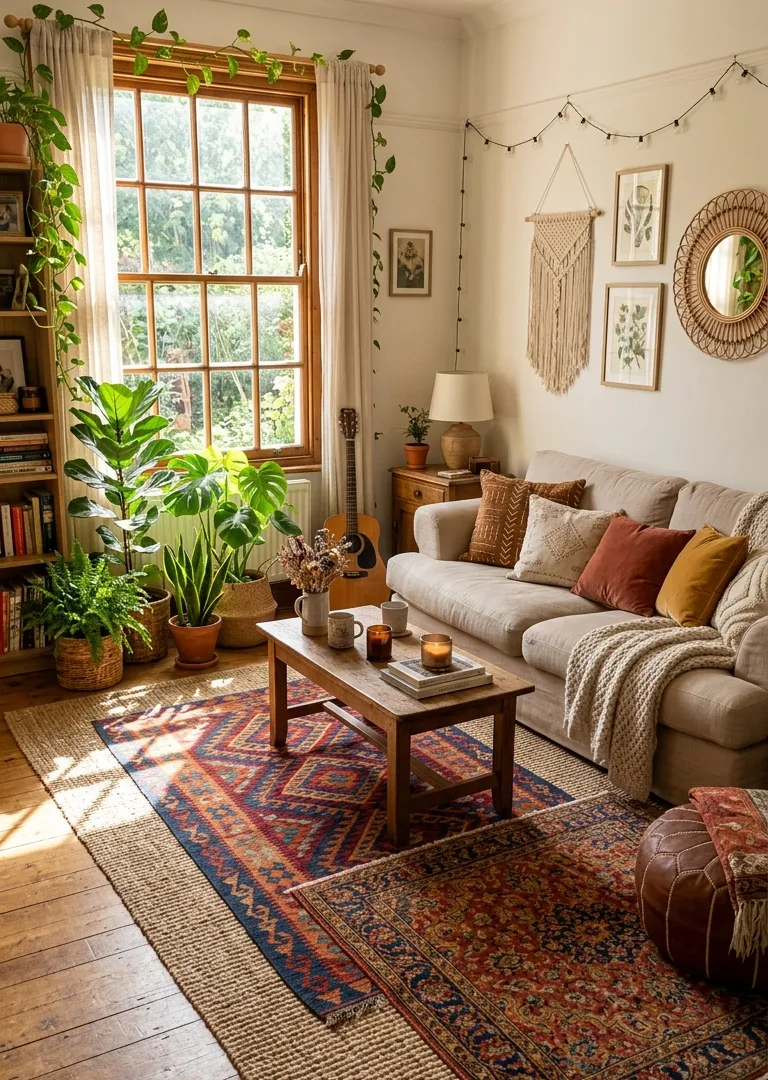
Start with a large neutral jute rug — at least 8×10 feet for a standard living room — to anchor the space. Layer a smaller kilim or Persian-style rug over it at a slight angle. The offset creates depth that a single rug never achieves.
One specific warning: cheap jute sheds aggressively. A $60 jute rug from a big-box store will leave fibers on your sofa, your clothes, and the back of your dog for months. Buy a jute-wool blend instead. It costs about 30–40% more and does not shed.
2. Statement macrame wall hanging (Skip the white ones)
A large macrame piece above the sofa is the most common bohemian move — and the most commonly executed badly.
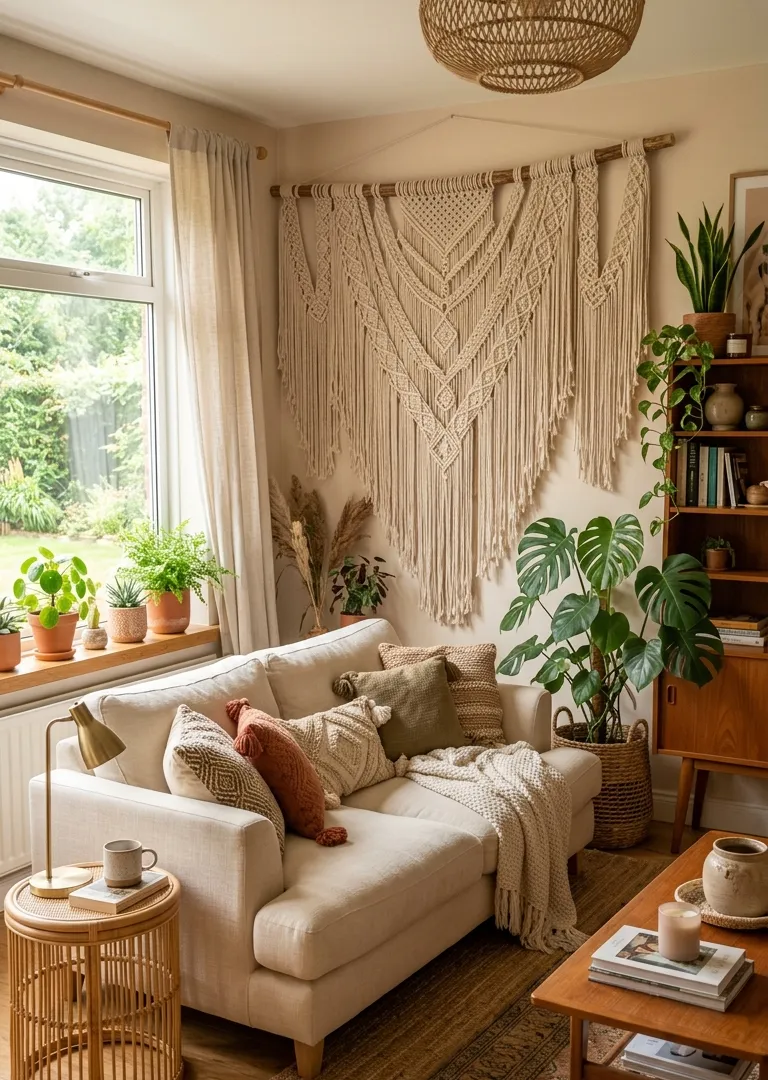
Avoid the stark white, machine-made cotton pieces you see on Amazon. They look flat and cheap in person, even when they photograph well. Look specifically for hand-dyed pieces in mustard, terracotta, or dusty sage, or ones that incorporate raw driftwood instead of a perfect wooden dowel. The imperfection is the point.
Size matters: for a standard sofa wall, you want a piece at least 24 inches wide. Anything smaller disappears.
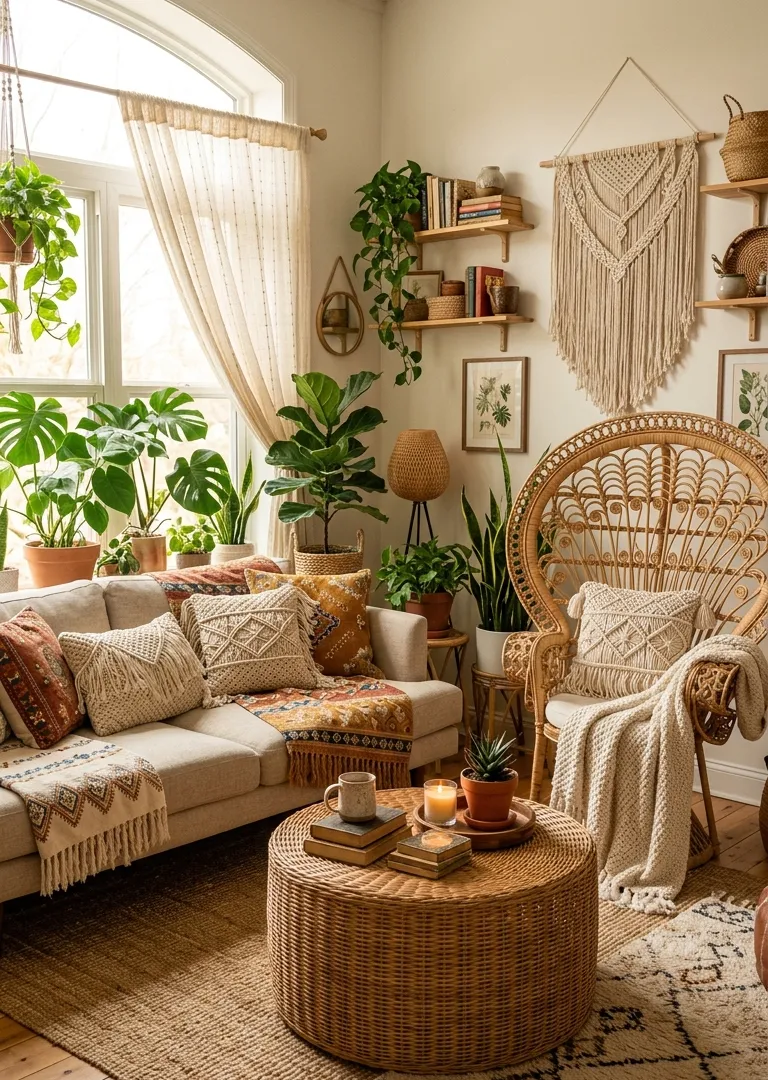
3. One rattan piece (Not a set)
Rattan and wicker belong in a bohemian room. A rattan set does not.
If you buy a rattan sofa, a rattan chair, and a rattan side table, your living room will look like a 1980s Florida patio. Pick one piece — a vintage peacock chair as an armchair alternative, or a single woven ottoman as a coffee table — and let it be the rattan moment in the room. Everything else should be a different material entirely.
4. Plants that actually survive your light conditions
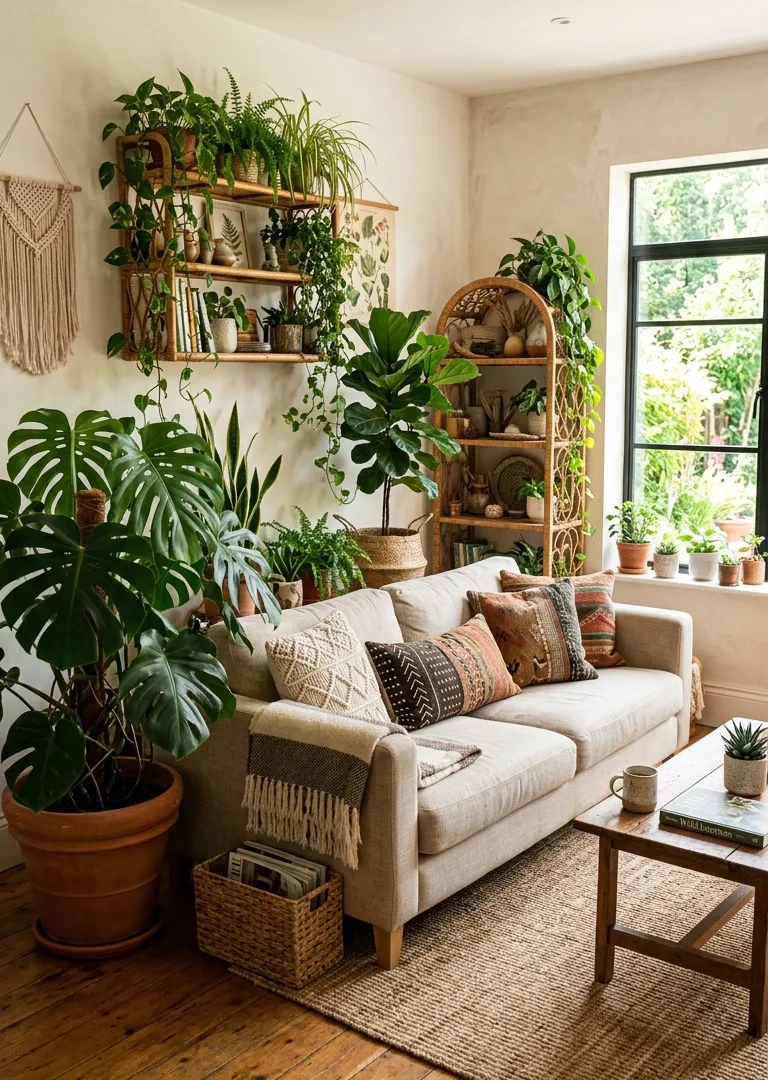
I have killed more indoor plants than I want to count, and almost every time it was because I put a tropical plant in a dark corner because the room "needed a plant there."
A Monstera deliciosa needs at least 3–4 hours of indirect light per day to stay healthy. A Pothos is more forgiving and trails beautifully from high shelves in lower-light conditions. If your living room faces north or gets very little natural light, skip the drama plants entirely. Focus on raw wood textures and woven materials instead — they do more for the bohemian atmosphere than a dying fiddle-leaf fig.
5. Eclectic gallery wall (No pre-made sets)
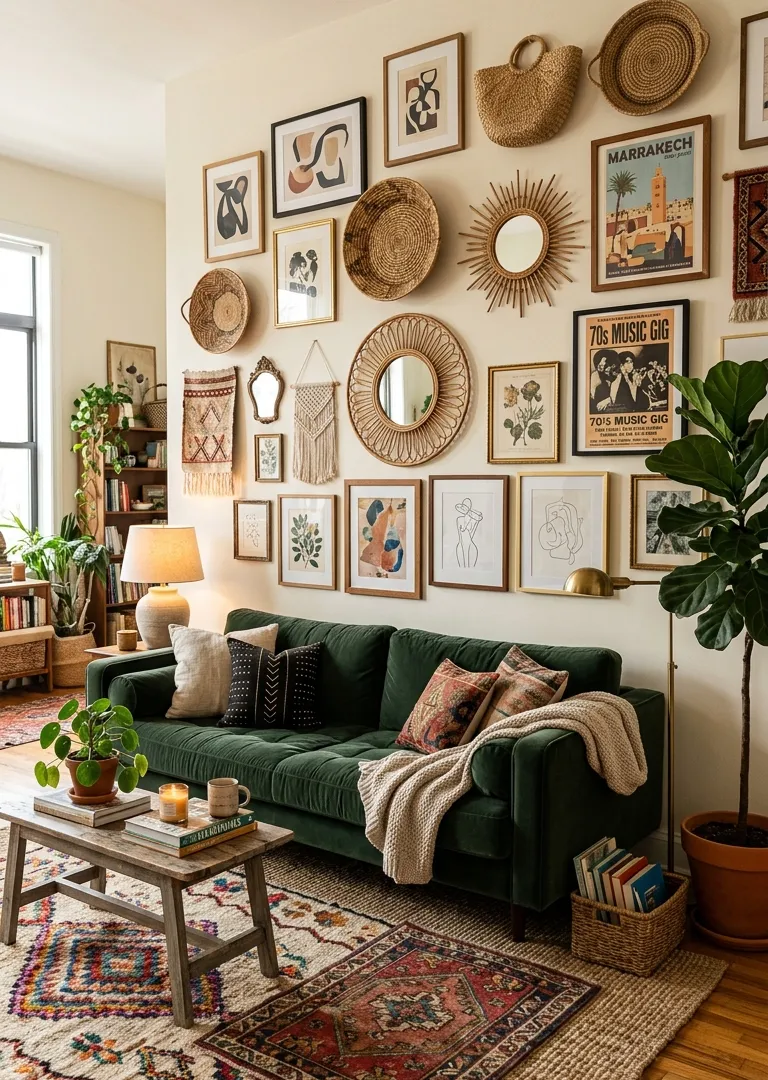
Do not buy a pre-made gallery wall kit. They are designed to match, which is the opposite of what you want.
Mix framed concert posters, vintage travel maps, original art under $100, and flat woven baskets hung directly on the wall. Use frames in mismatched finishes — some raw wood, some matte black, some aged brass — but keep the spacing between them consistent at about 2–3 inches. Consistent spacing is what separates a curated gallery wall from a haphazard one.
6. Layered warm lighting (Remove the overhead light from the equation)
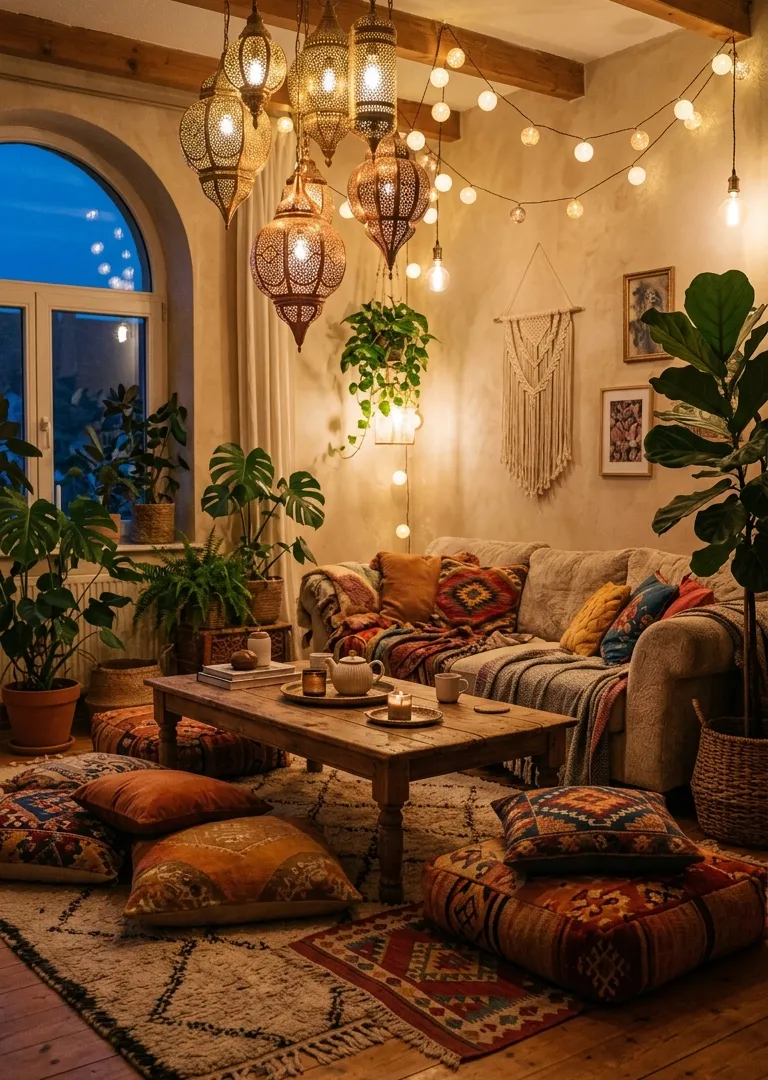
Overhead lighting kills the bohemian atmosphere faster than anything else. A bright, flat LED panel turns a warm, layered room into a convenience store.
Replace overhead lighting with multiple low sources: punched Moroccan lanterns hung at different heights, string lights along a ceiling beam, and at least one tall brass floor lamp. Use warm bulbs throughout — 2700K is the right temperature. Anything cooler reads as clinical. The goal is overlapping pools of warm light, not even illumination.
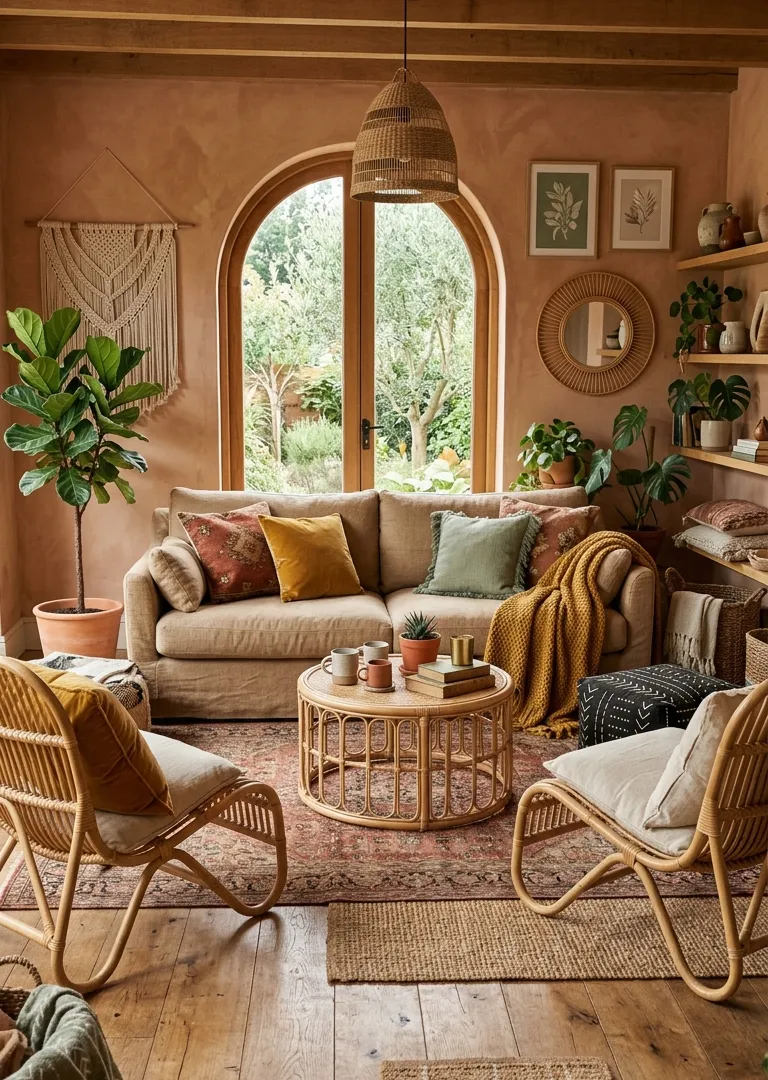
7. Earthy wall color (Dusty, not bright)
Stark white walls fight against the warm, layered aesthetic. They create too much contrast and make the room feel like a catalog shoot instead of a lived-in space.
Paint the walls a dusty beige, warm greige, or muted terracotta. The key word is muted — not the bright terracotta of a Mexican restaurant, but the faded, sun-bleached version. Benjamin Moore's "Pale Oak" or Farrow & Ball's "Dead Salmon" (which photographs warmer than it sounds) are good reference points. The wall color should feel like it has been there for twenty years.
8. Floor cushions and poufs (Buy the dense ones)
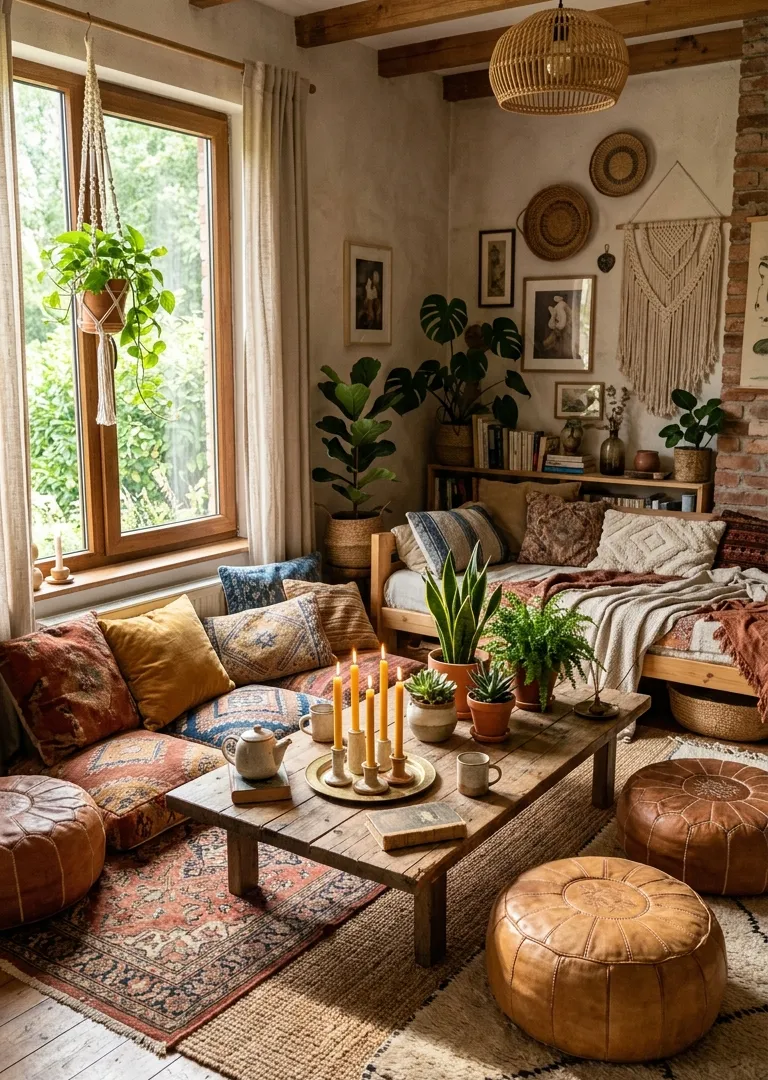
Leather poufs and heavy floor pillows add casual seating that fits the relaxed bohemian energy. They also give guests somewhere to sit during gatherings without pulling in mismatched dining chairs.
The specific thing to check before buying: the fill material. Poufs stuffed with cheap poly-fill will flatten to about two inches within three weeks of regular use. Look for poufs filled with dense foam, shredded leather, or cotton batting. Press down on it in the store — it should resist and spring back.
9. Sofa pillows in mixed patterns and textures
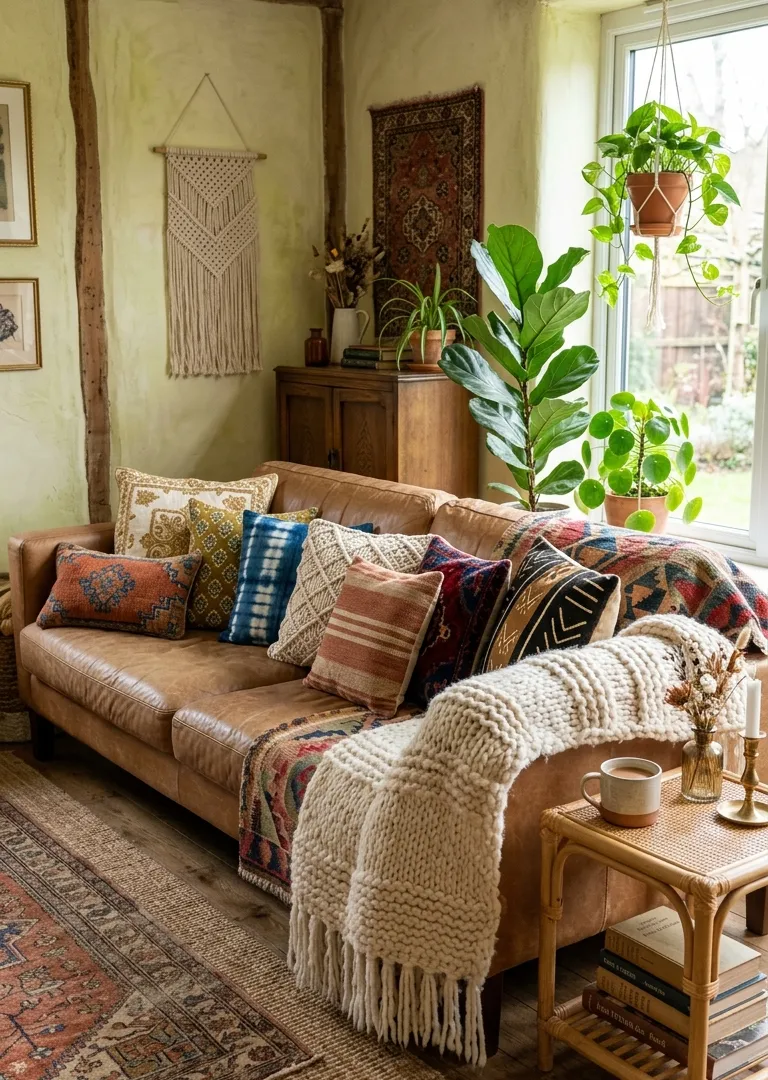
Six pillows minimum on a standard three-seat sofa. All in different patterns. All in different textures.
The trick to making this work without the sofa looking chaotic: keep every pillow within the same color family. You can mix a chunky knit, a flat mud cloth, a woven kilim pattern, and a velvet solid as long as they all share the same terracotta-mustard-sage palette. Pattern variety plus color cohesion is the formula.
10. Heavily styled coffee table (With one organizer)
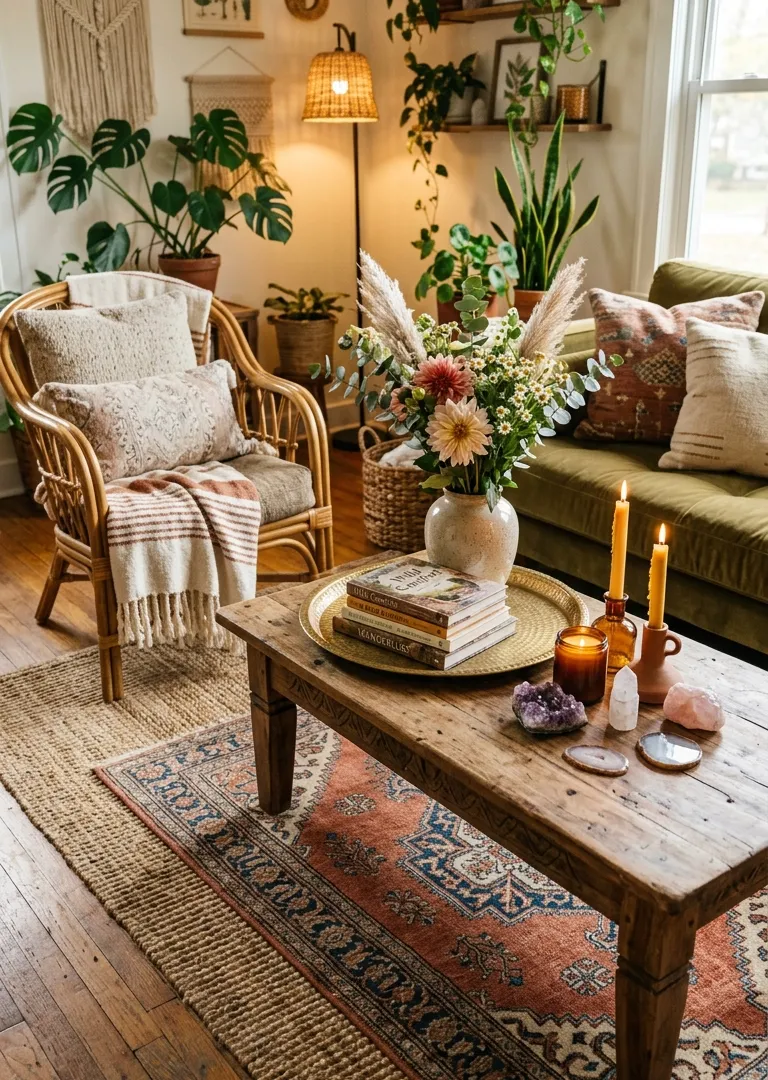
Use a large, low wooden coffee table — ideally one with visible grain and some weathering. Style it with thick pillar candles in varying heights, a stack of two or three oversized art books, and fresh or dried botanicals.
The one thing that keeps it from reading as messy: a brass tray. Corral the remote controls, the lighters, and the coasters inside the tray. Everything inside the tray is contained clutter. Everything outside the tray is intentional styling.
11. Curtains that puddle on the floor
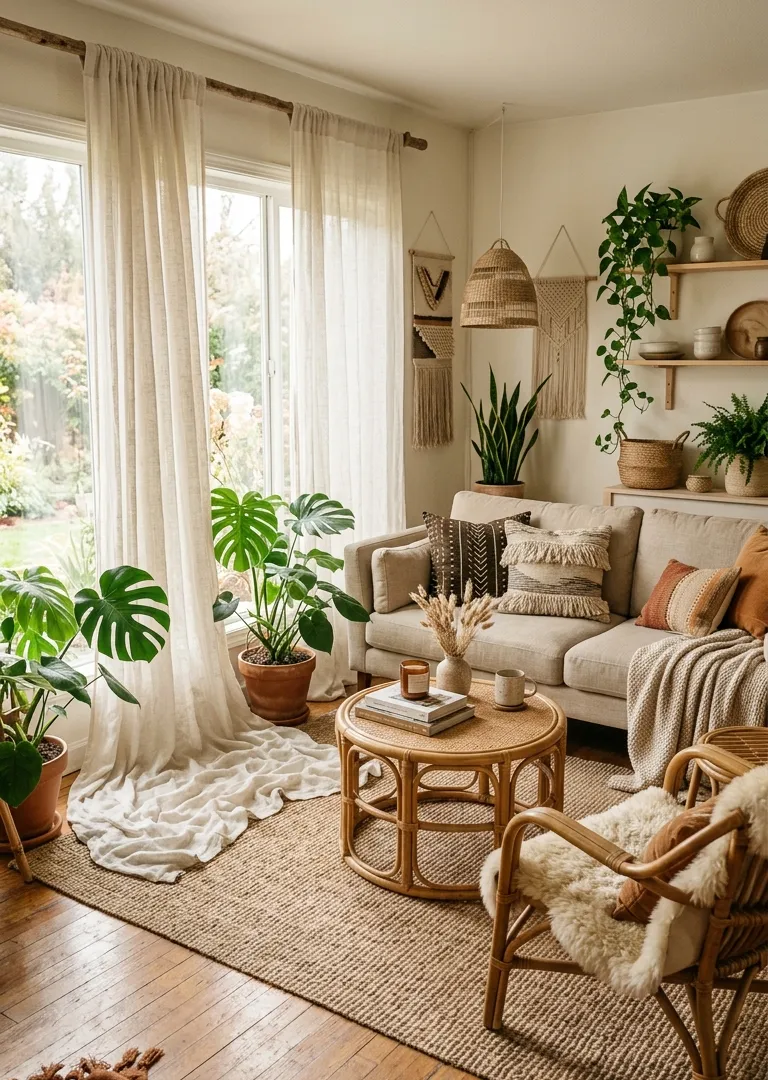
Standard curtains that stop an inch above the floor read as formal and precise — the opposite of what you want. Hang lightweight linen curtains that are long enough to pool slightly on the floor, about 1–2 inches of fabric resting on the ground.
Buy curtains in an unbleached natural linen or a loose cotton weave. The slight wrinkle and drape of these fabrics is part of the look. Do not iron them.
12. Open shelving styled in clusters
Floating shelves with one object per shelf look sparse and corporate. A shelf stuffed with objects looks like a storage unit. The technique that works: cluster three objects together — one tall, one medium, one small — and leave 4–6 inches of negative space between each cluster. The space between is what makes the objects feel intentional rather than dumped.
Ceramics, crystals, small sculptures, and stacked books all work. Avoid plastic anything.

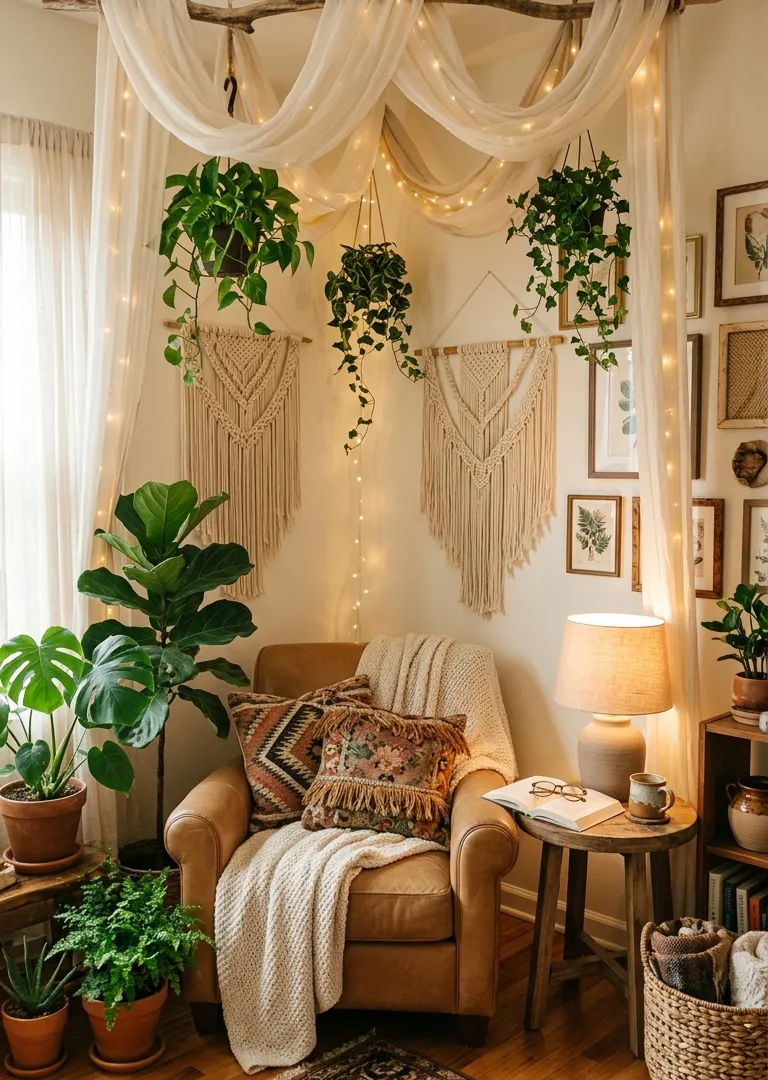
13. Canopy reading corner (Only if your ceiling is 9 feet or higher)
Draping sheer fabric from the ceiling over a corner reading nook creates a sense of enclosure and warmth that is very hard to achieve any other way. In a room with a high ceiling, it looks dreamy. In a room with 8-foot ceilings, it makes the room feel like a tent.
Check your ceiling height before committing. Anything under 9 feet, skip the canopy and use a large floor-standing bamboo screen to create the corner enclosure instead.
14. Afrohemian fusion accents
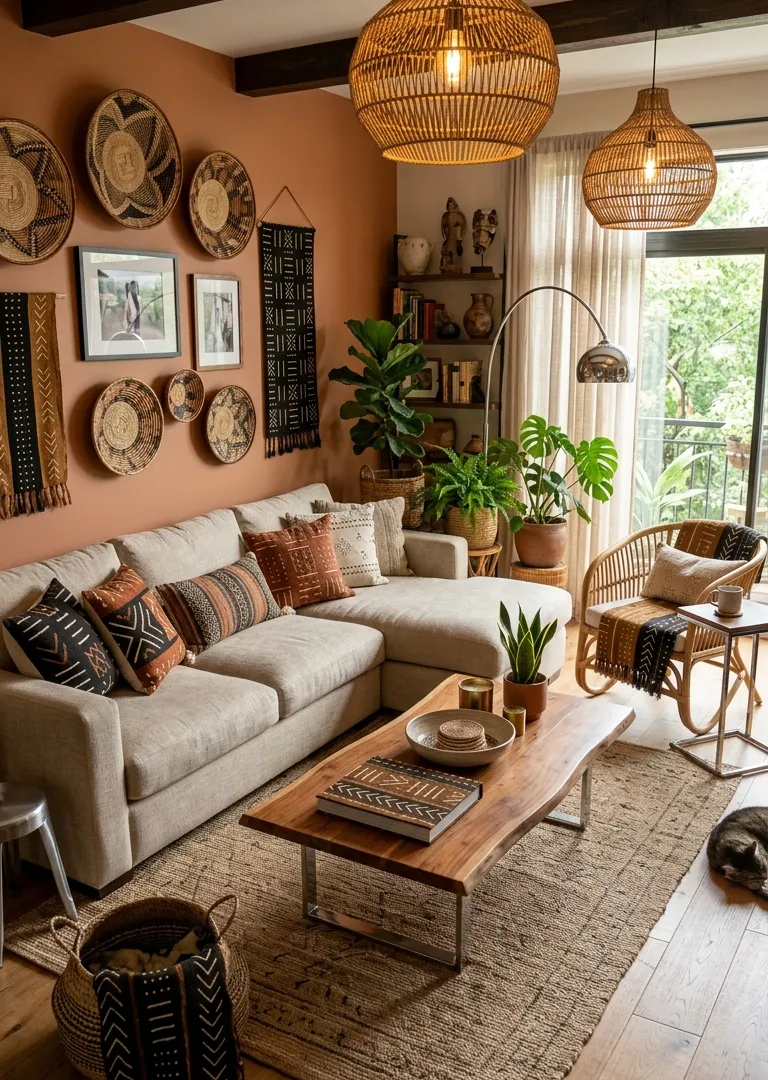
This is the direction the bohemian trend is actually moving in 2026, and it is significantly more interesting than the traditional Moroccan-and-macrame version.
Bring in large Binga baskets from Zimbabwe as floor vessels, heavy carved wooden stools from West Africa as side tables, or bold mud cloth pillows in traditional black-and-white patterns as sofa anchors. These pieces have genuine craft history behind them, which is exactly what gives the style its depth. Source them from African craft importers rather than mass-market versions — the difference in quality is immediately visible.
15. One sharp geometric element (Neo Deco contrast)
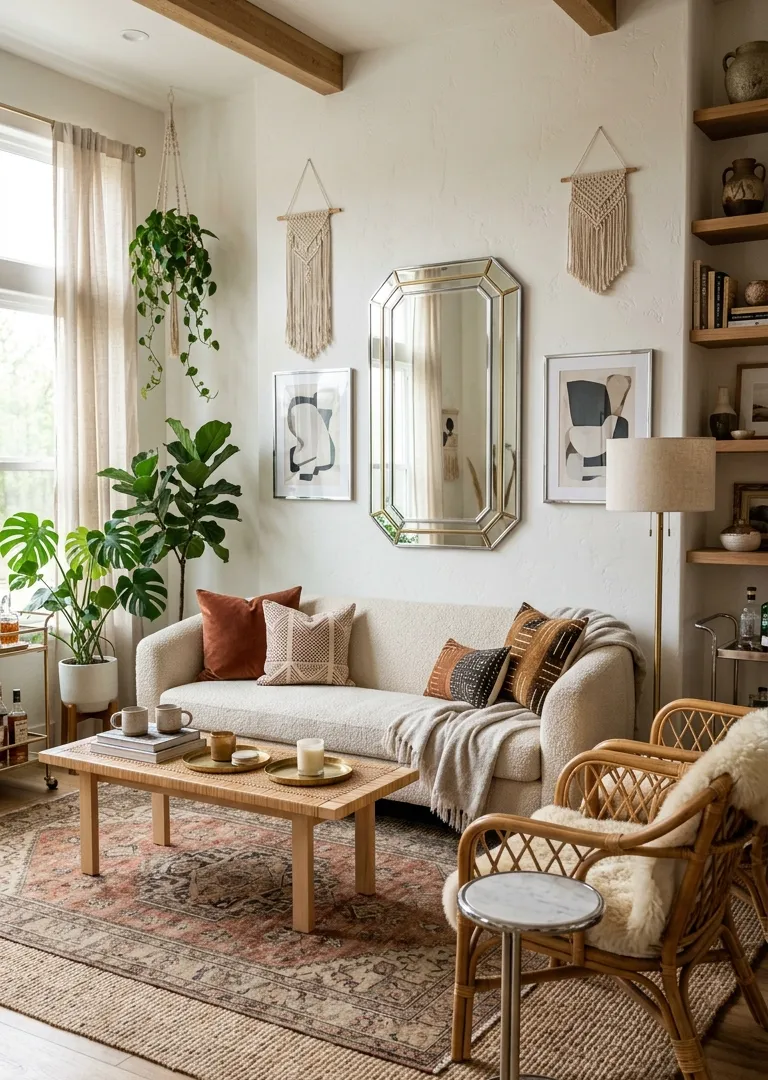
If every object in the room is soft, woven, and worn, the room will eventually read as shapeless. You need at least one element that provides clean geometric contrast.
A thin brass mirror with a angular Neo Deco frame works well. So does a geometric tile pattern on a small side table, or a set of slim brass picture frames on the gallery wall. The sharp line against all the texture is what gives the eye somewhere to rest.
16. Scent as a design layer (Candle and incense corner)
A dedicated scent area on a sideboard — heavy brass candlesticks in two or three heights, a small ceramic incense holder, a matchbox — does something photographs cannot capture: it makes the room smell like a specific place.
Scent is one of the most powerful memory triggers we have, and most interior designers ignore it entirely. If your living room smells like a specific combination of sandalwood and beeswax candle, guests will remember it the way they remember a room in a hotel they loved. Use that.

17. Large woven baskets for storage (The practical necessity)
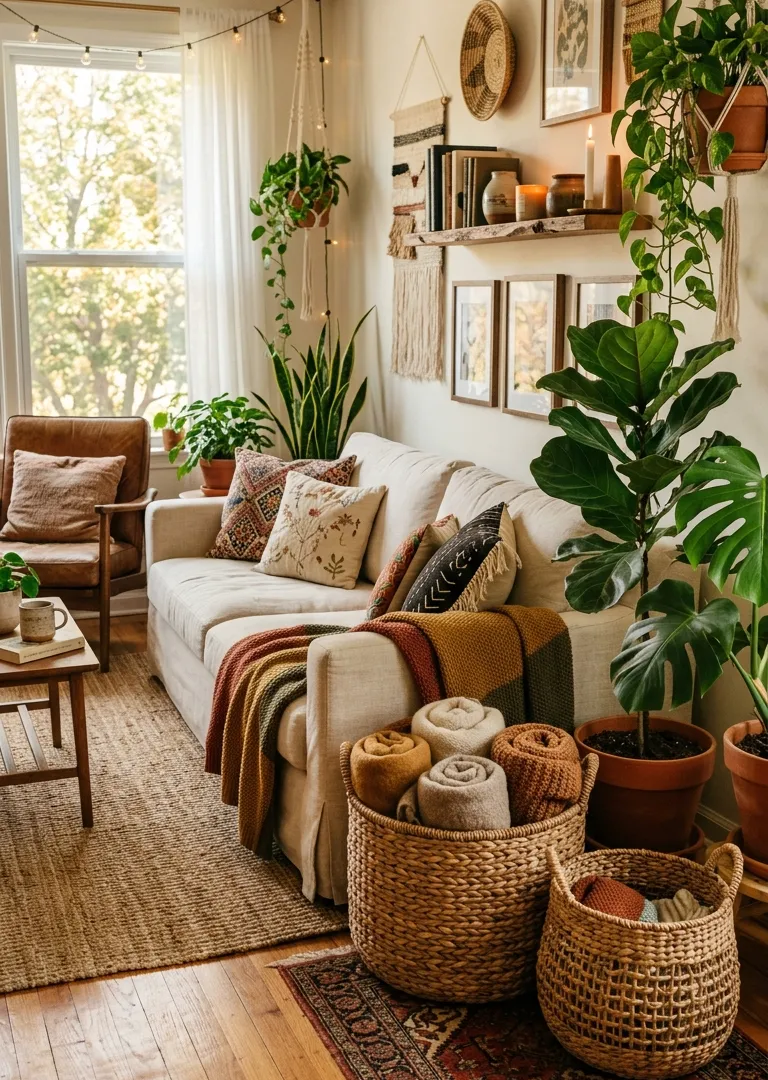
Bohemian design accumulates visual texture — which also means it accumulates real clutter. Dog toys, charging cables, mail, and throw blankets will fight against everything you are trying to create unless you have somewhere to put them quickly.
Two or three large woven floor baskets (at least 18 inches tall) solve this completely. Everything ugly goes into a basket. The baskets themselves are part of the aesthetic. Nobody knows what is inside them.
18. Statement mirror that reflects something worth reflecting
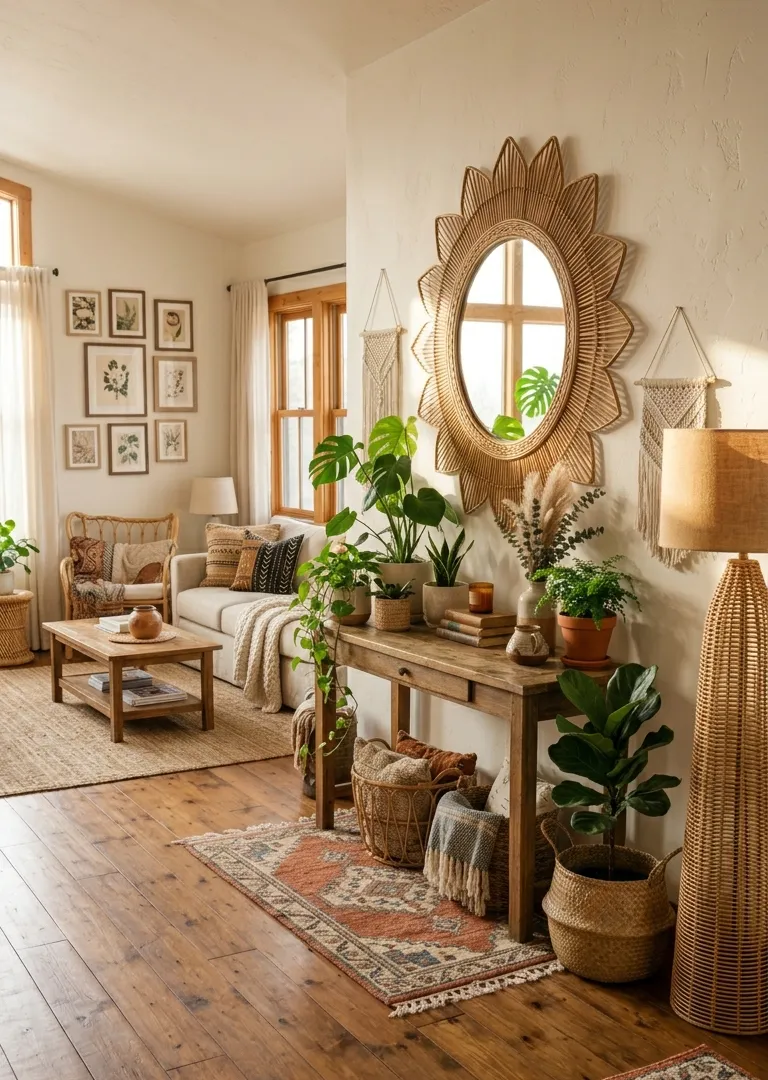
A sunburst mirror or a heavily carved wooden frame mirror anchors a blank wall and bounces light around a room that tends toward dark and layered.
Before you hang it, stand where the mirror will be and look at what it will reflect. If it reflects a beautiful window or a styled bookshelf, hang it. If it reflects the back of your television or a cluttered kitchen island, move it until it reflects something you actually want to see doubled.
19. Secondary seating focal point (Not the television)
Most living rooms have one focal point: the television. A bohemian room works better with two.
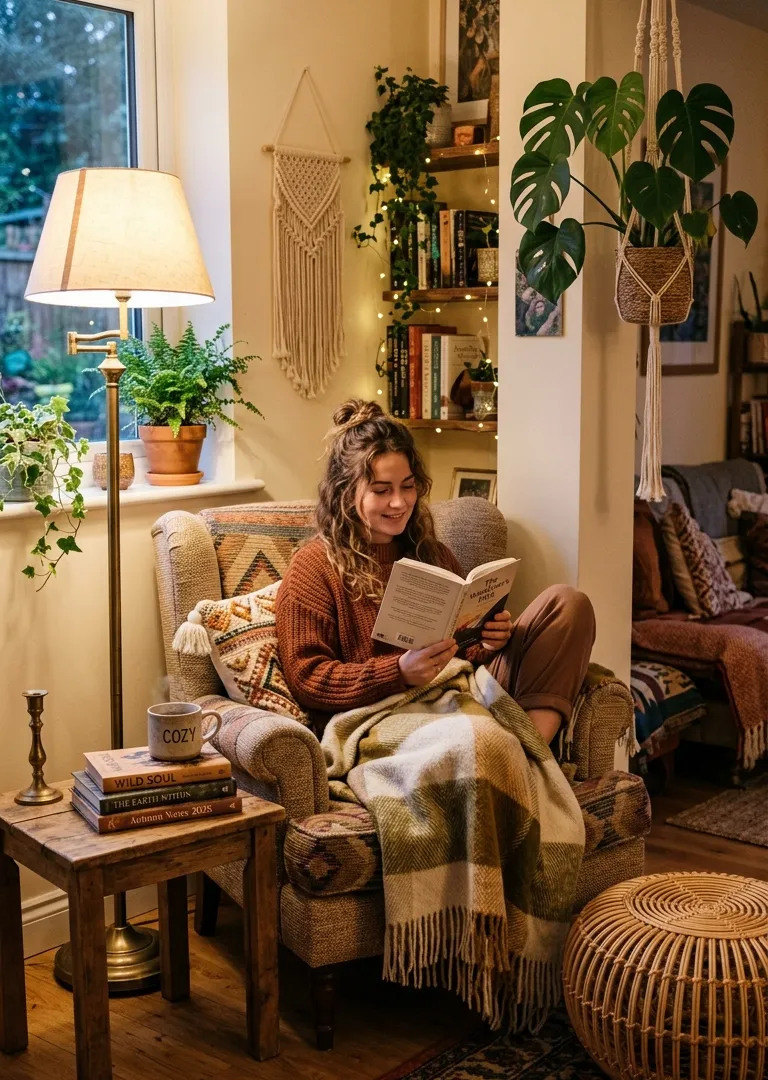
Tuck a worn leather armchair into a corner away from the main sofa arrangement. Add a small side table, a brass floor lamp, and a stack of books. This creates a secondary zone that invites someone to sit apart from the group — and it gives the room a sense of having evolved over time rather than being installed all at once.
20. Start cheap, upgrade slowly
The best bohemian rooms take years. The worst ones were bought in a weekend.
Start with thrifted vintage textiles — they are the hardest element to fake and the easiest to find cheaply. Paint an old wooden sideboard in a muted terracotta tone rather than buying a new one. Make your own macrame plant hanger. Buy one good piece every few months rather than twelve mediocre ones at once.
The rooms that actually pull this aesthetic off are the ones where the owner can point to each object and tell you where it came from. That is not something you can buy. It is something you build.
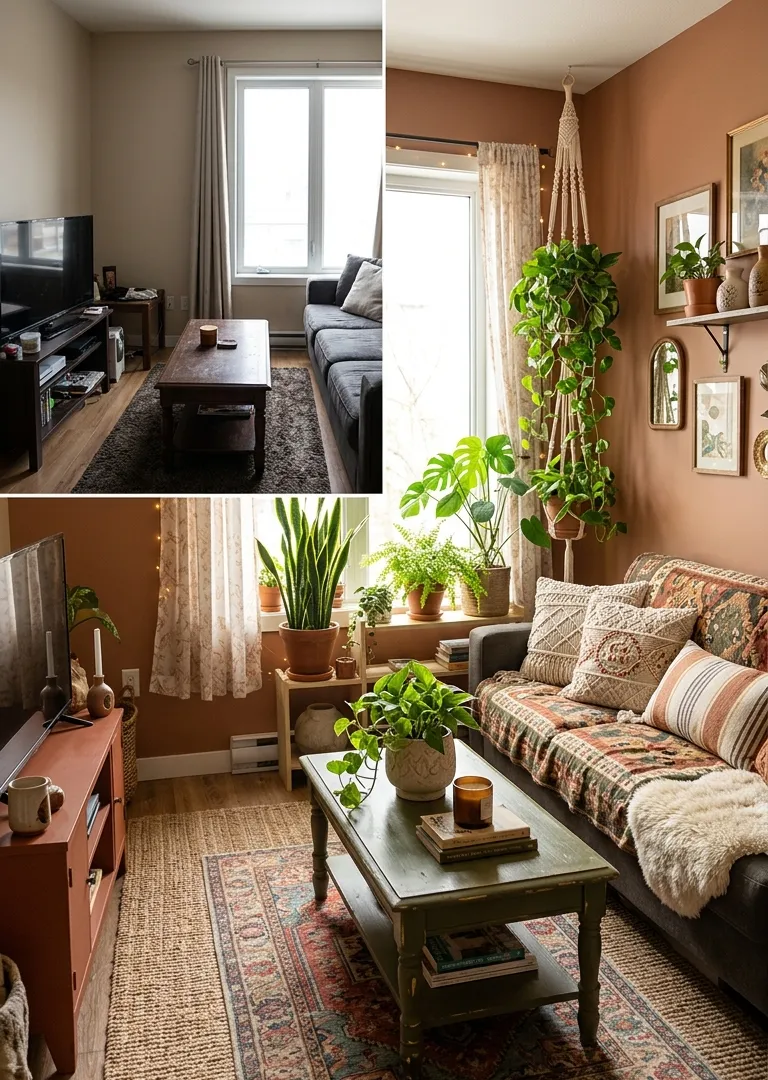
The honest summary: If you are starting from scratch, do the rug layering first, then the lighting, then the wall color. Those three changes will do more than any accessory purchase. Add the objects slowly. The room will tell you what it needs next.
About the Author: Elena Vance
Interior design enthusiast and DIY expert. Elena Vance has spent over a decade curating spaces that blend modern aesthetics with everyday functionality. Passionate about helping you create a home that tells your unique story.


