
Popular Bathroom Design Styles: What Is Replacing White Tile?


Take a look at any recent high-end bathroom renovation. The sharp, clinical white tiles are gone. The cold overhead lighting has been ripped out. Designers are no longer building areas that look like operating rooms. The trend has entirely shifted toward warmth.
Bathrooms are finally being treated as living environments rather than purely functional utility rooms. Designers are prioritizing comfort over clinical efficiency.
I used to believe that a crisp white subway tile was the only way to make a bathroom feel clean. I was completely wrong about that. Staring at sterile white walls first thing in the morning actually creates visual stress. The new dominant styles focus on tactile materials and mood. Modern renovations prioritize human psychology over clinical utility.
1. Organic Minimalism (The New Standard)
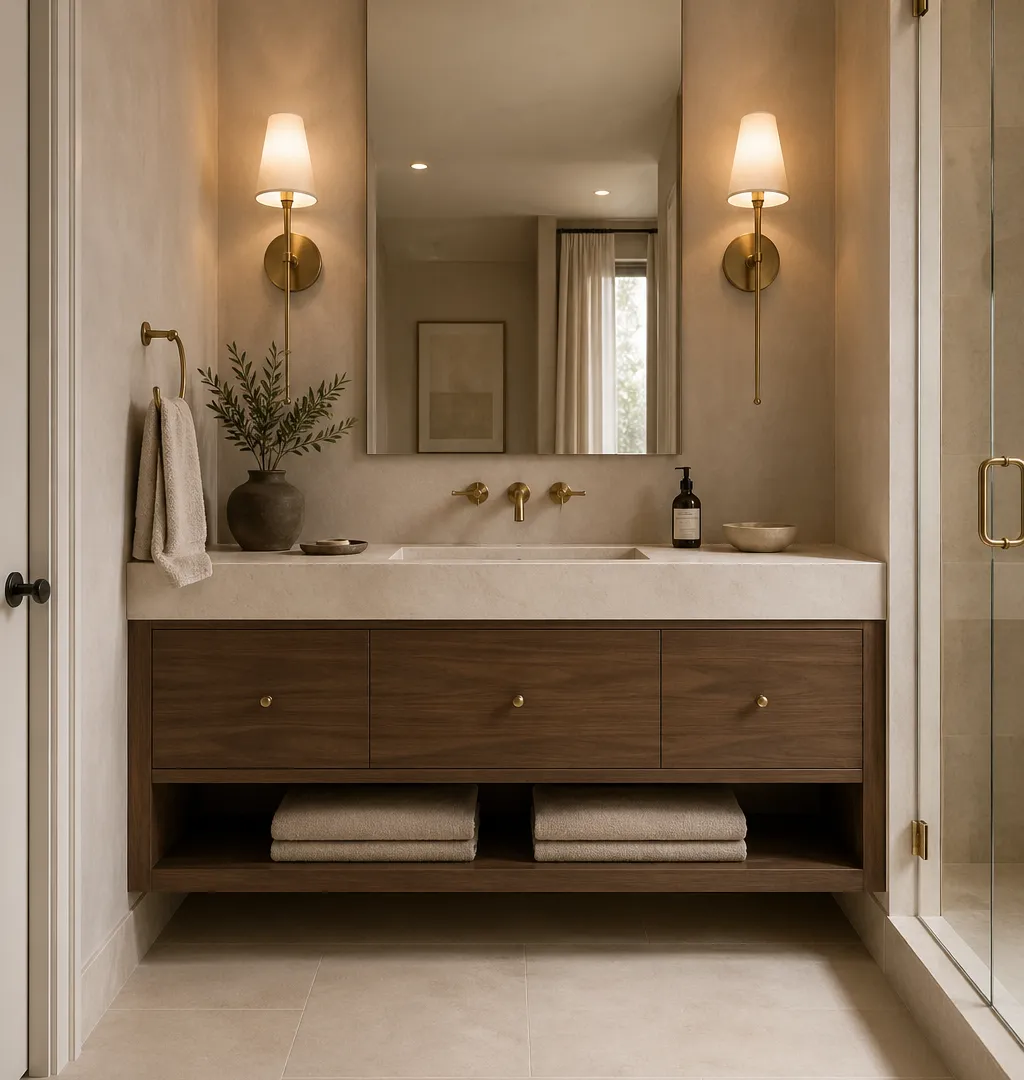
This style currently dominates high-end residential architecture because it balances warmth with incredible restraint. It relies heavily on muted earth tones and rich, tactile materials that demand to be touched.
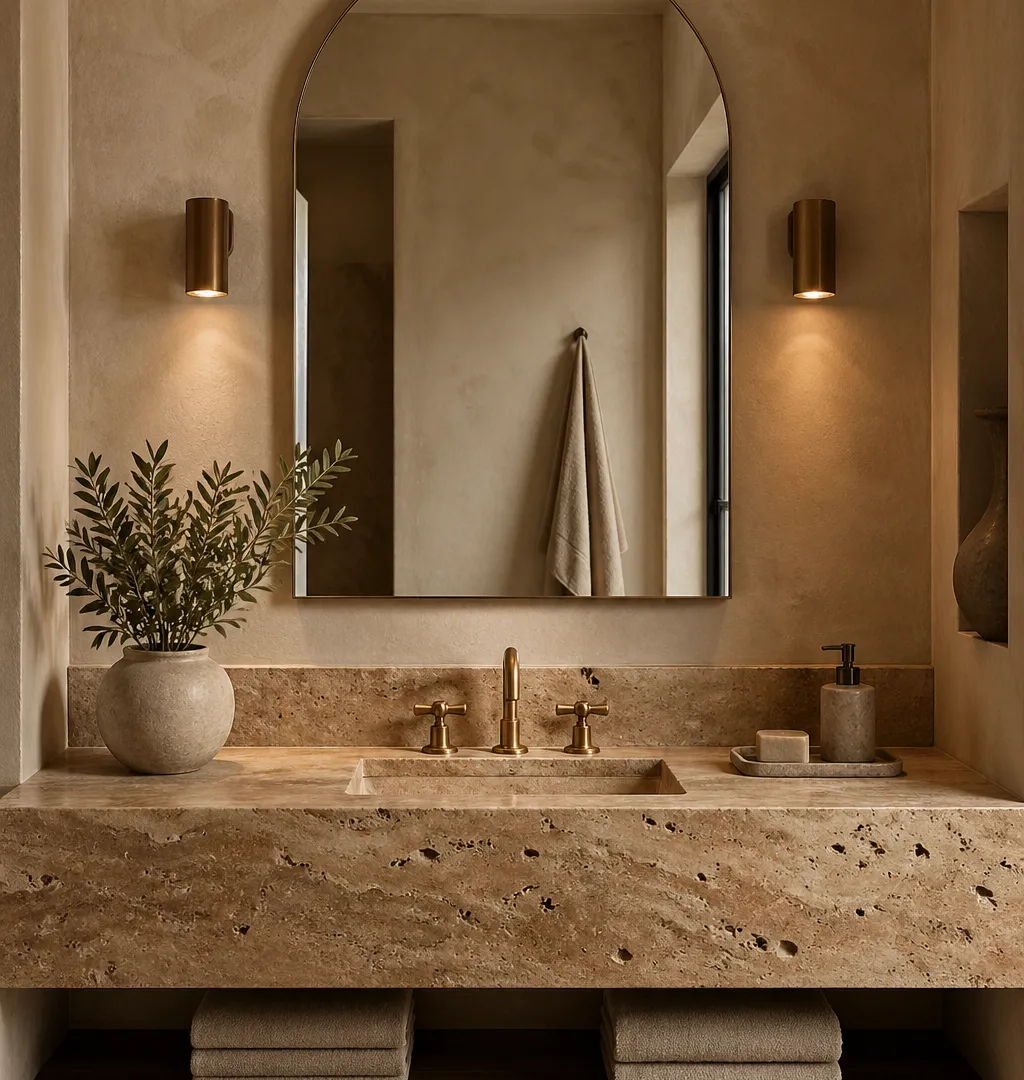
You will see a lot of honed travertine and Roman clay finishes instead of high-gloss porcelain. Why is this happening? The goal is to create an environment that feels carved out of natural rock. These porous materials do require professional sealing to handle the humidity of a shower. But that maintenance trade-off is why the room feels so grounded. A matte plaster wall absorbs morning light rather than glaring it back at you. That subtle diffusion changes how you wake up.
The foundational color palette leans entirely on hues pulled directly from the natural landscape. You will see an abundance of creamy ivory, warm clay, muted sage, and raw umber replacing stark whites.
Lighting plays a massive role here. A standard 4000K daylight bulb will ruin the plaster effect instantly. You need bulbs in the 2700K range to bring out the warmth of the stone. A pair of unlacquered brass sconces from Rejuvenation flanking the mirror provides the necessary layered lighting. Overhead lights alone are a mistake.
You might wonder if this aesthetic will eventually date your home. The reality is that natural stone and organic textures rarely lose their appeal.
2. Japandi
Japandi masterfully blends Japanese architectural principles with Scandinavian design, prioritizing pale oak slat vanities and intentionally uncluttered structural layouts. This specific aesthetic works flawlessly in tight footprints because the overall visual weight remains incredibly minimal. It successfully eliminates the heavy visual clutter that often ruins smaller residential bathrooms. However, you must execute it carefully to avoid creating a sterile environment. The goal is to achieve warmth through intentional minimalism rather than just emptying the room.
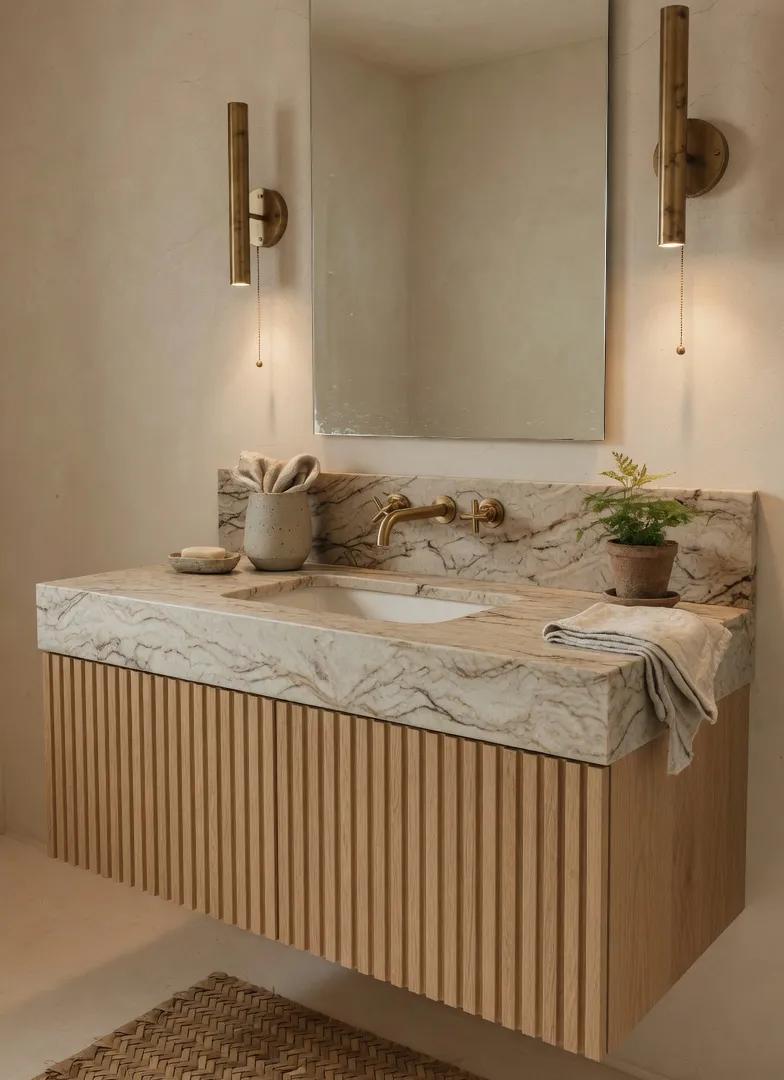
The secret lies entirely in your textural choices. You should incorporate handmade ceramics, woven bamboo bath mats, and heavily veined stone countertops.
These organic elements introduce a necessary human touch. They prevent the bathroom from feeling like an uninviting meditation retreat.
3. Heritage Revived
Sometimes the best way to move forward is to look backward. The heritage revival brings classical elegance into a modern context. You will find heavy shaker-style vanities and vintage-inspired checkerboard floors. It is the exact opposite of the floating vanity trend. The room feels inherited rather than assembled.
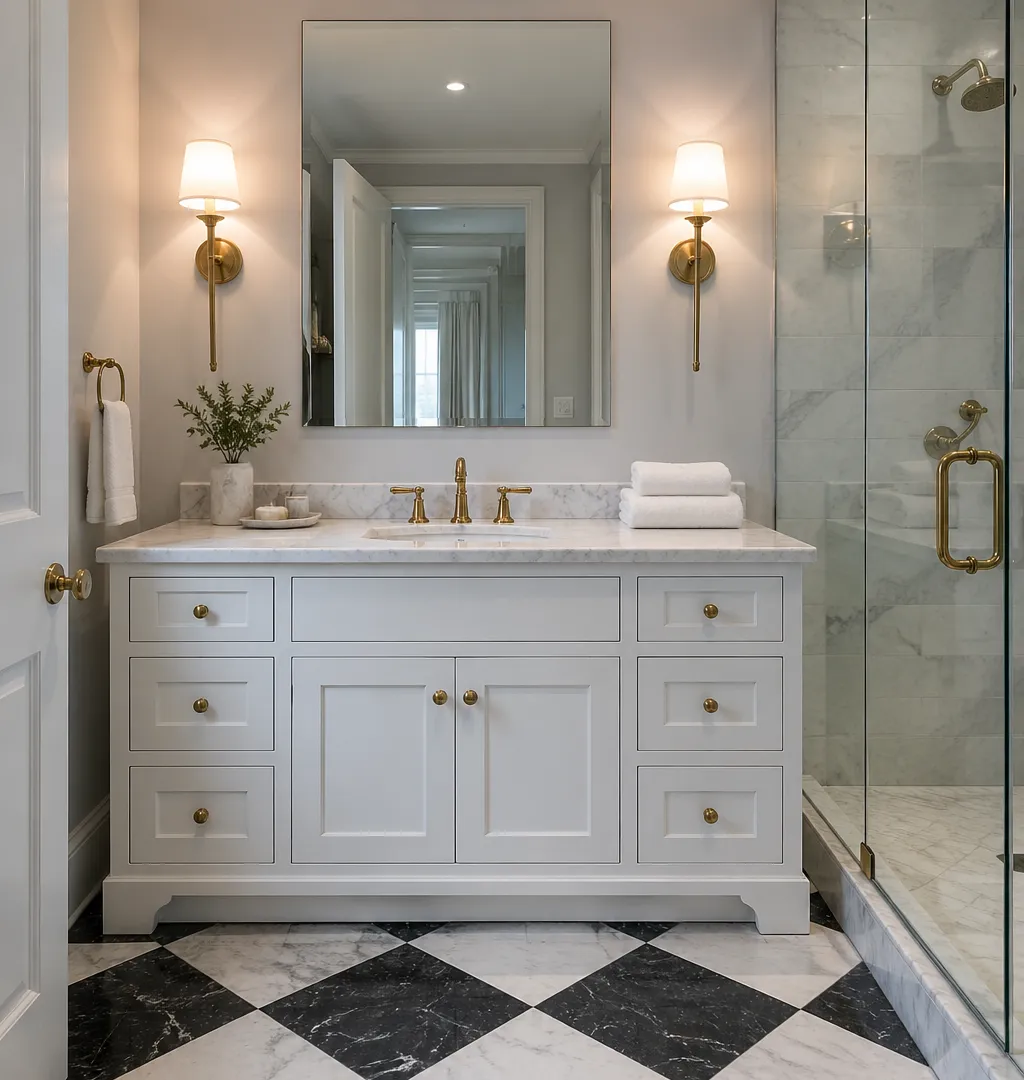
Executing this look requires a delicate balance of materials to avoid looking like a historical museum exhibit. You must introduce modern friction to keep the space feeling current.
The secret is mixing eras intentionally. Pair a classic clawfoot tub with a highly modern frameless glass shower enclosure. Use a traditional marble mosaic on the floor but keep the walls completely bare of molding. This prevents the room from feeling like a rigid time capsule. The friction between old and new is the actual design strategy.
4. Coastal Grandmother
Coastal design has matured dramatically over the past decade. The literal interpretations of anchors, seashells, and navy-striped towels are entirely gone. They have been replaced by a much softer, more sophisticated approach often called Elevated Coastal. This style relies heavily on tongue-and-groove wall paneling, pale blue-gray vanity cabinets, and woven textures like jute rugs. It feels like a high-end beach house rather than a themed rental.
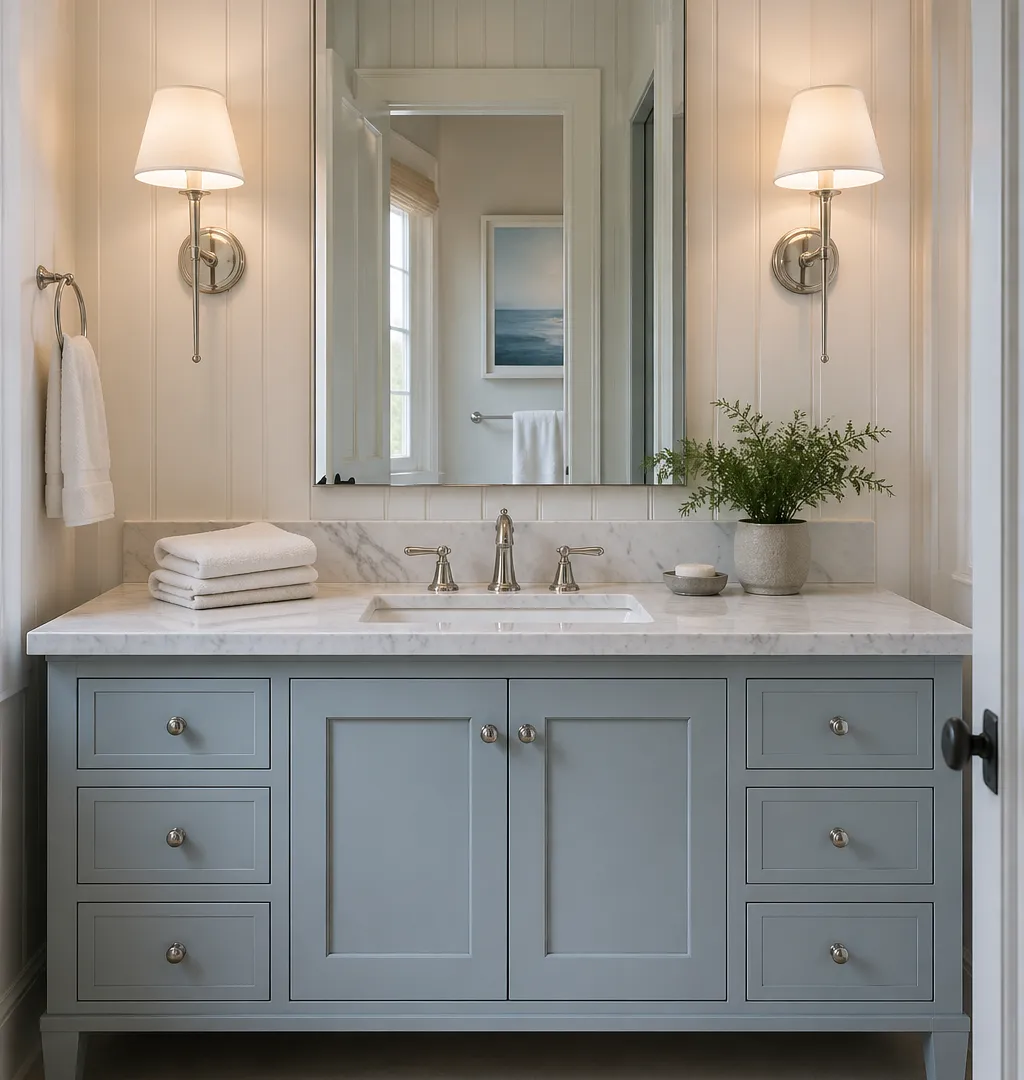
The most critical element in mastering this look is selecting the correct lighting fixtures. You should completely skip the obvious nautical lanterns and instead install polished nickel sconces featuring crisp linen shades.
Nickel provides a cool, silvery tone that pairs perfectly with the cooler color palette of this style. Unlike chrome, which has a blue undertone that feels cold, polished nickel has a warm, yellow undertone that makes the room feel inviting. If you combine it with a honed Carrara marble countertop, you immediately elevate the aesthetic. This pairing prevents the bathroom from feeling generic. It is a timeless combination that ignores fast-fashion trends.
5. Dark Color Drenching
Color drenching involves deliberately painting the walls, the ceiling, and all the baseboard trim in a single saturated shade like charcoal or deep navy. This technique instantly creates a moody, immersive environment that works perfectly for a windowless powder room.
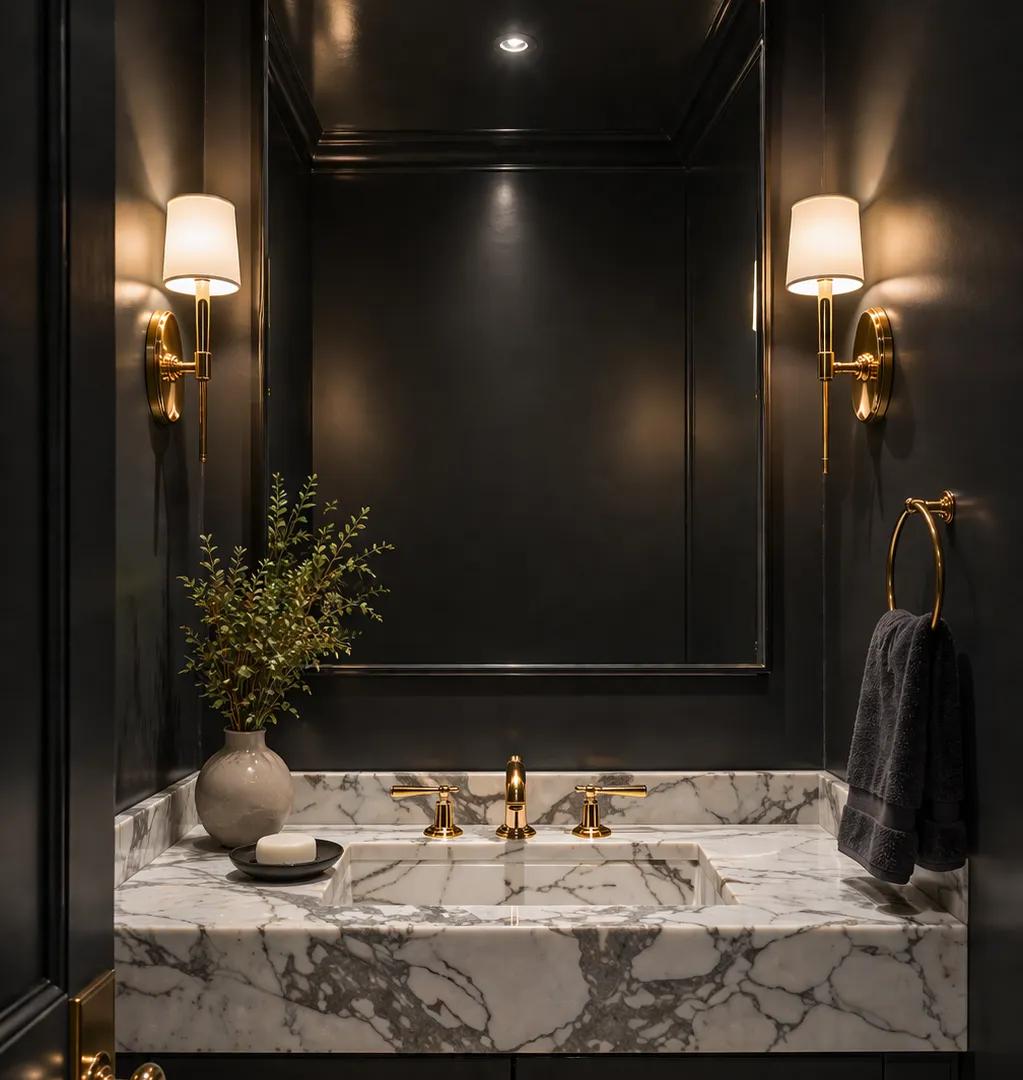
Instead of fighting the lack of natural light with stark white paint, you lean into the darkness to create a jewel-box effect. The trick to executing this without making the room feel like a cave is highly reflective accents. You need elements that will bounce your artificial light around the drenched walls. A polished brass faucet, a dramatically veined marble sink, and an oversized mirror are absolute necessities here. They provide the visual relief that prevents the dark paint from feeling oppressive.
You should also consider using a high-gloss paint finish on the ceiling. That reflective surface mimics the effect of a skylight by catching the glow from your vanity sconces.
6. English Country & Cottagecore
For those who find Organic Minimalism too stark, English Country offers maximum comfort. The secret to this style is avoiding anything that looks built-in or overly customized. Instead of a massive wall-to-wall vanity, you use a repurposed antique dresser converted into a washstand. You hang a vintage oil painting above the toilet rather than generic botanical prints. The bathroom should feel like another furnished room in the house.
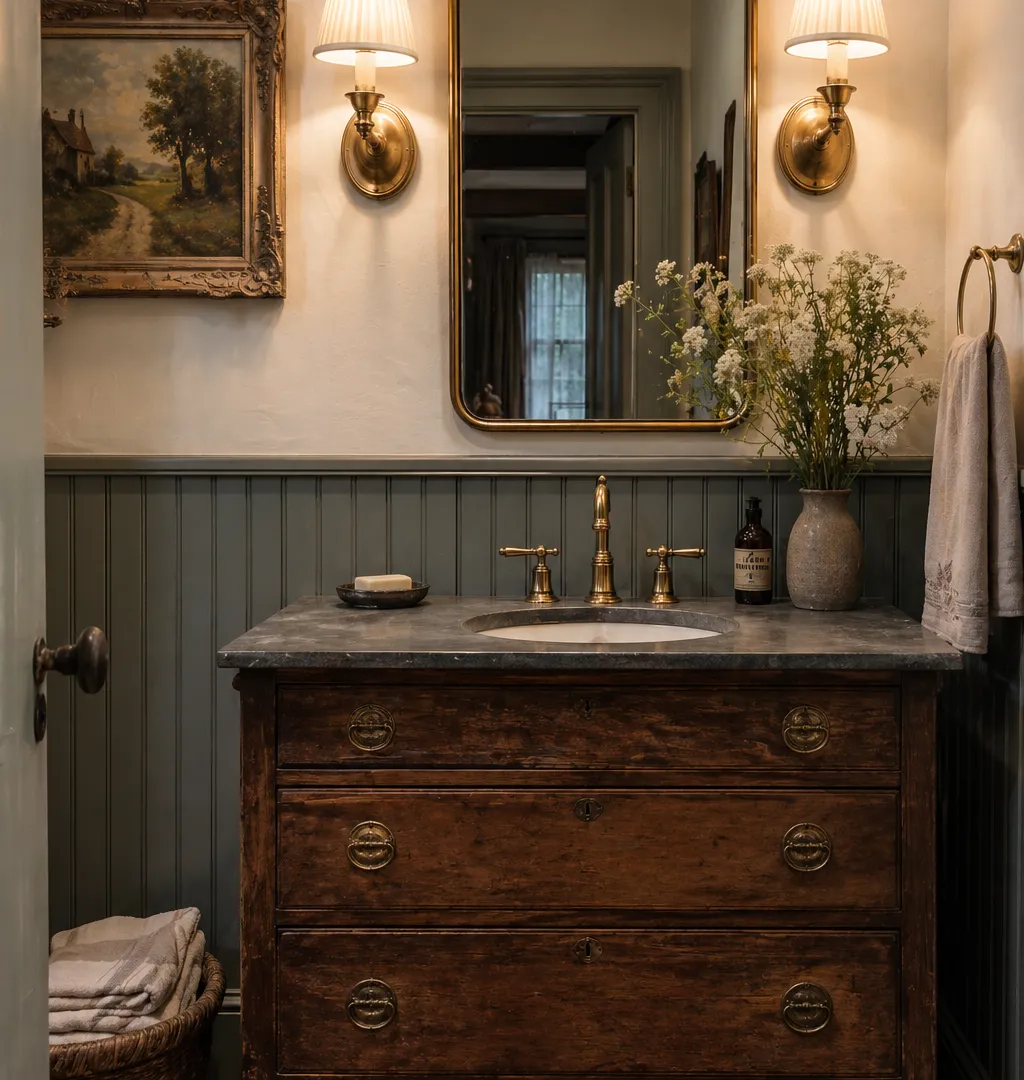
Installing beadboard wainscoting is practically mandatory if you want to ground the room with traditional character. You should paint that woodwork a muddy, muted tone like Farrow & Ball's Pigeon to avoid the starkness of pure white.
I have seen so many people try to execute this look using brand-new, mass-produced farmhouse furniture. It never works because the patina is artificial. You need actual vintage pieces that show real wear and tear. If your vanity has a manufactured distressed finish from a big-box store, the illusion shatters immediately. Hit the flea markets for a solid wood cabinet, then have a fabricator cut a scrap piece of soapstone for the top. That effort is what makes the design authentic.
7. The Wet Room Reality Check
A true wet room completely encloses both the shower footprint and a freestanding tub behind a single, massive wall of glass. This layout looks absolutely incredible in high-end architectural magazines.
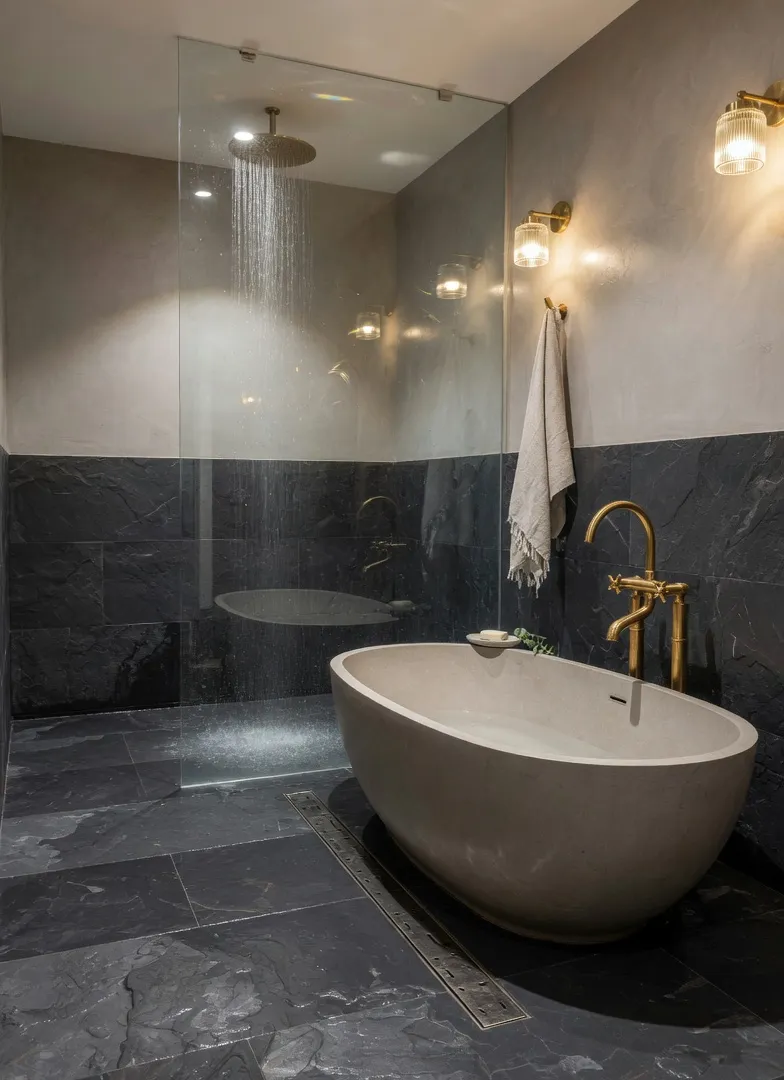
However, it is an absolute nightmare to live with if the contractor gets the floor slope wrong. Water will pool around the base of the tub, creating a constant slip hazard and a breeding ground for mold. I inspected a recent build where the drainage failed completely, ruining the subfloor in six months. I saw this layout everywhere in Scandinavia last winter, where the underfloor heating dries the slate almost instantly, but their homes are built for it. If you want a wet room here, you must hire a waterproofing specialist, not just a standard tile setter. The entire room has to be treated like a swimming pool.
Do you realistically have an extra ten thousand dollars allocated strictly for advanced structural waterproofing? If your budget cannot handle that hidden expense, you should keep the shower and the tub completely separate.
8. The "Spa Sanctuary" Illusion
Everyone wants a wellness sanctuary in their primary bath. I mentioned earlier that aesthetics are dominating current design. That is entirely true, except when it comes to floor plans. Homeowners try to squeeze massive freestanding tubs into standard 5x8 dimensions. The tub ends up jammed against the toilet and the vanity. You cannot clean behind it.
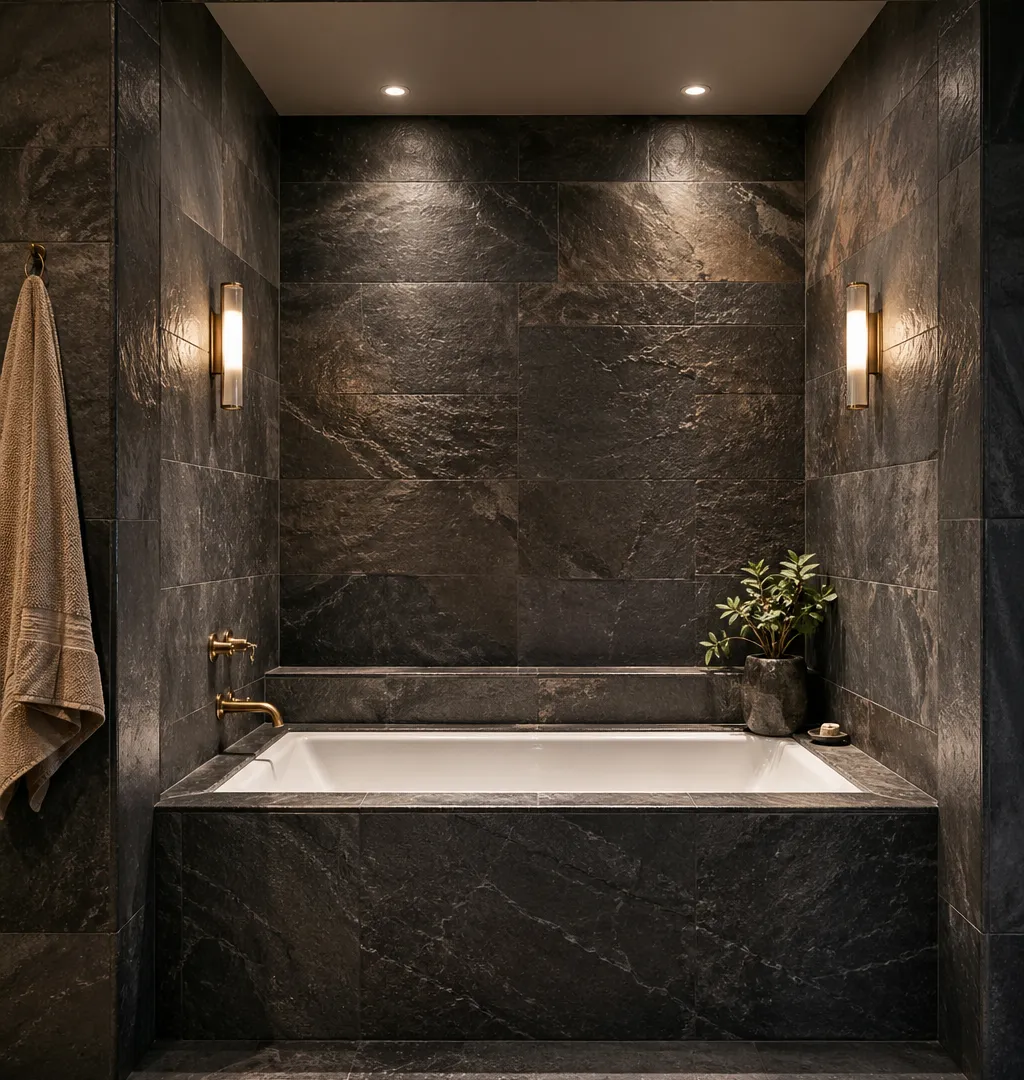
A freestanding tub absolutely requires a minimum of twelve inches of clearance on all sides so that you can actually clean around it. If your floor plan cannot provide that breathing room, a beautifully tiled built-in alcove tub is the correct architectural choice.
I recently stayed in a boutique hotel in Tokyo that completely ignored the freestanding tub trend. They built a deep soaking tub directly into a slate alcove. It felt far more luxurious than a plastic acrylic shell floating awkwardly in a corner. Sometimes the best design is knowing what your square footage can actually handle. Do you actually need a standalone tub?
9. The Hardware Evolution
The days of default polished chrome are fading fast. Unlacquered brass and living finishes are dominating high-end renovations. These metals patina over time, darkening where water hits them and remaining bright where you touch them daily. It is a material that reacts to human behavior. That interaction makes the hardware feel alive.
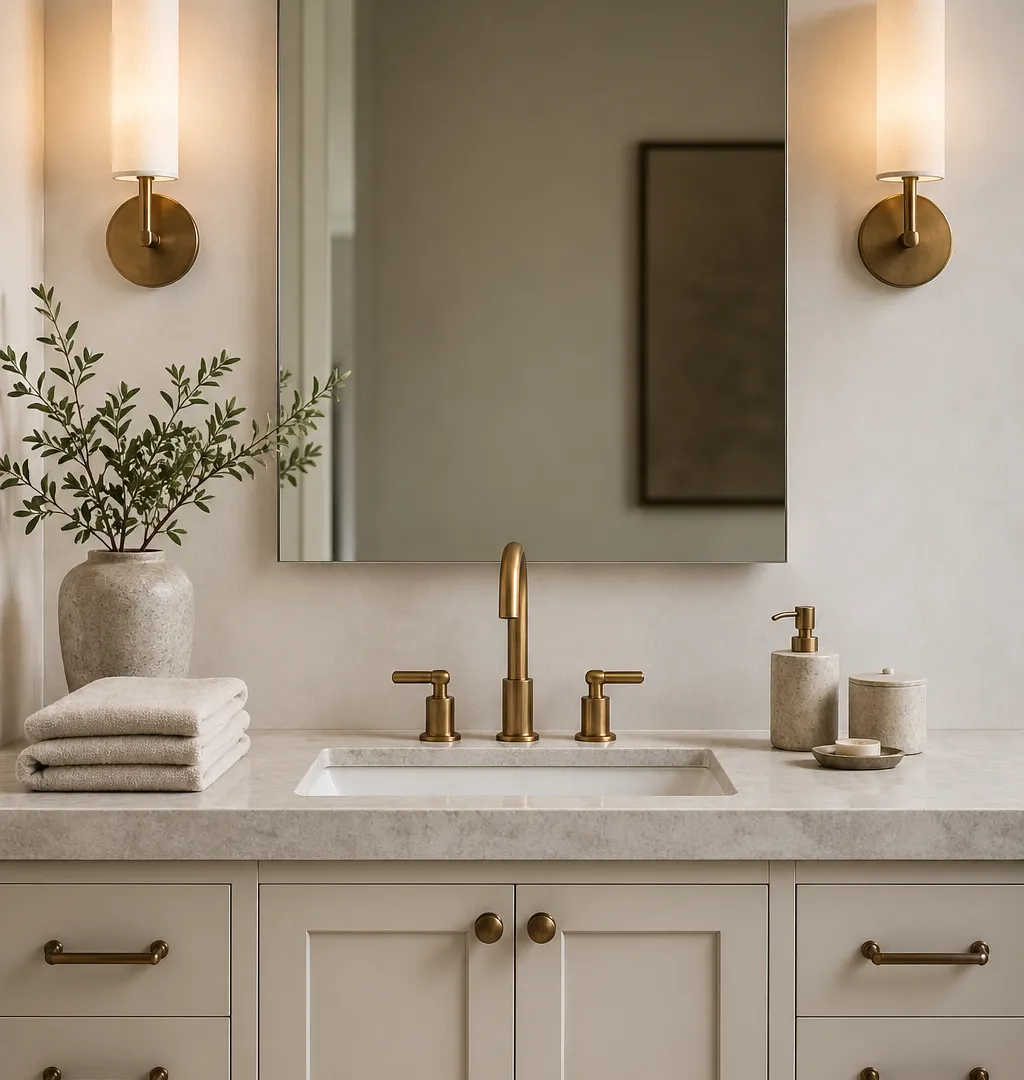
Meanwhile, the matte black fixtures that saturated the market five years ago are rapidly losing ground. Homeowners are actively replacing them with warmer, more forgiving bronze and brass tones.
Mixing metals is no longer a design faux pas; it is a requirement for a layered look. You might choose a brass faucet but pair it with bronze cabinet pulls. Matching every single piece of metal in the room looks like you bought everything from a single catalog page. It lacks imagination. A gathered mix adds depth. Is it terrifying to mix finishes for the first time?
10. The Grout Mistake You Will Regret
You can choose the most expensive handmade Moroccan Zellige tile in the world, and bad grout will ruin it. The most common mistake I see is pairing a beautiful white floor tile with bright white grout. Within three weeks of foot traffic and shower humidity, that pristine white will turn into a patchy, dirty gray. You will spend every weekend scrubbing it with a toothbrush. It is a completely avoidable nightmare.
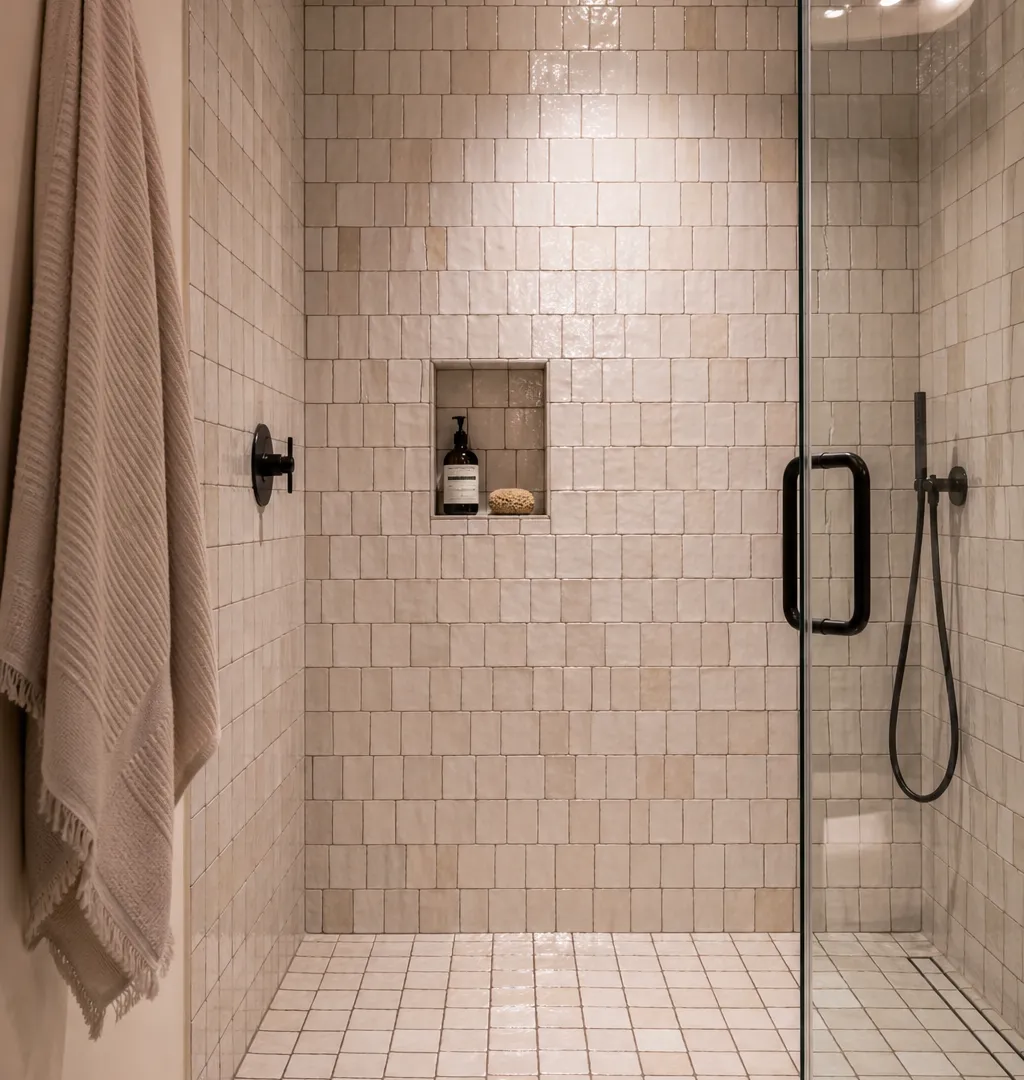
You must always specify an epoxy grout formula when tiling bathroom floors or shower pans. This is not a place where you want to cut costs.
Epoxy is practically bulletproof because it is not porous like traditional cement-based grout. It resists stains, ignores moisture, and never needs to be resealed. Yes, it costs more upfront and requires a skilled installer because it dries rapidly. But that initial investment saves you years of intense maintenance. If your contractor refuses to use epoxy, find a different contractor.
11. The Graphic Tile Trap
You should exercise extreme caution when considering hyper-trendy, heavily patterned floor tiles. A bold geometric tile looks fantastic when scrolling through Instagram today, but it lacks staying power.
It will absolutely date your house by 2028. We saw this happen with the aggressive black-and-white encaustic tiles from five years ago. They dominated Pinterest, and now people are paying contractors thousands of dollars to rip them out. The base layer of your bathroom should be boring. Use neutral stones or solid colors for the floors. You can inject personality through paint and hardware.
Those decorative elements require perhaps twenty minutes and minimal budget to swap out when your tastes change. Ripping up a cemented floor requires two weeks of demolition and thousands of dollars.
About the Author: Elena Vance
Interior design enthusiast and DIY expert. Elena Vance has spent over a decade curating spaces that blend modern aesthetics with everyday functionality. Passionate about helping you create a home that tells your unique story.
