
Earthy Cozy Bedroom Ideas to Turn Your Rental Into a Sanctuary


You unlock the door after a 10-hour day and the bedroom hits wrong. Stark white walls, cold overhead light, generic builder-grade carpet. It's not that the room is ugly. It's that it doesn't know you're home.
That gap — between a space that's livable and one that actually pulls you in — rarely needs a renovation. What it needs is the right sequence. Earthy cozy bedrooms work because they layer warmth in a specific order: light first, then texture, then anchors, then life. Get that order wrong and you end up with a room that's full of nice things but still feels unsettled.
Here's how to build it from the ground up — without losing a cent of your security deposit.
How to Bring Earthy Cozy Bedroom Ideas to Life
Earthy cozy bedroom ideas work by layering natural materials, warm tones, and low ambient lighting in a specific order: start with light sources (2700K bulbs, layered lamps), add natural textiles (washed linen, chunky knit throws in terracotta and olive), anchor the floor with jute layered over a softer rug, and bring in one large architectural plant. Each layer builds on the last.
1. Master Earth Tones Bedroom Decor with "Messy" Linen Layers
Start here. Before the plants, before the rattan, before anything else — the bed is the room.
Most people tighten their bedding like a hotel and wonder why the room feels stiff. The irony is that perfectly made beds are what make earthy bedrooms look staged. The look you're going for — that slow-living, just-rolled-out-of-a-good-morning feeling — requires the opposite.
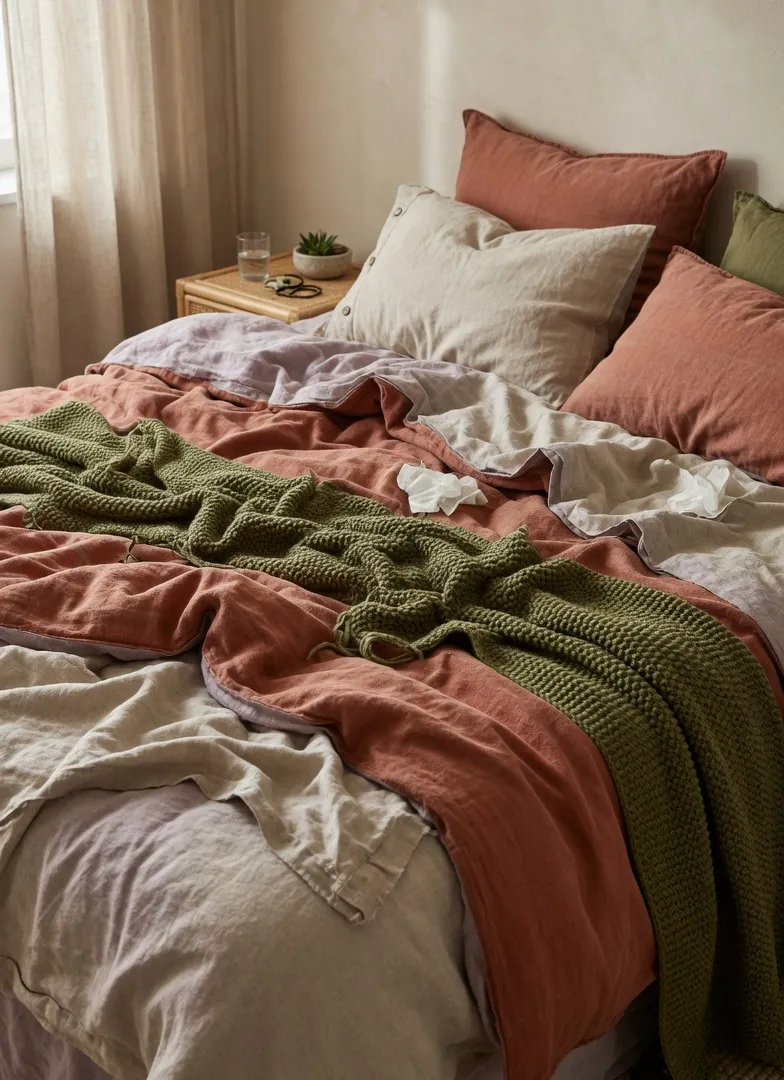
Swap whatever you're sleeping in now for washed linen in a shade that's grounded: oatmeal, warm terracotta, dusty clay, ochre. Not bright, not white. The slight nubby texture of linen catches light differently than cotton does; you get natural shadow and depth across a flat surface without doing anything. There's also a practical reason to make this your first investment: a 2024 systematic review published in the Journal of Sleep Research found that linen bedsheets reduced nighttime awakenings compared to cotton under warm conditions — so the aesthetic case and the functional case happen to align.
The technique: oatmeal fitted sheet as your base, a rust or raw clay duvet cover draped (not tucked), and a chunky knit throw in olive or mustard loosely folded at the foot. Not arranged. Thrown. The difference between "styled" and "lived-in" is exactly that.
One note on budget: quality washed linen costs $80–$150 for a duvet cover, which feels steep until you realize it travels with you to every apartment after this one. It's not rental furniture — it's a portable room reset.
2. Swap the "Big Light" for Warm Minimalist Bedroom Earthy Glows
Here's the thing about overhead lighting: it's not cozy-resistant because it's overhead. It's cozy-resistant because it's usually 4000K daylight white and aimed at everything equally. That flat, shadowless wash is the single fastest way to make a decorated room look undecorated.
Kill it. Or at least, stop defaulting to it after 6 PM.
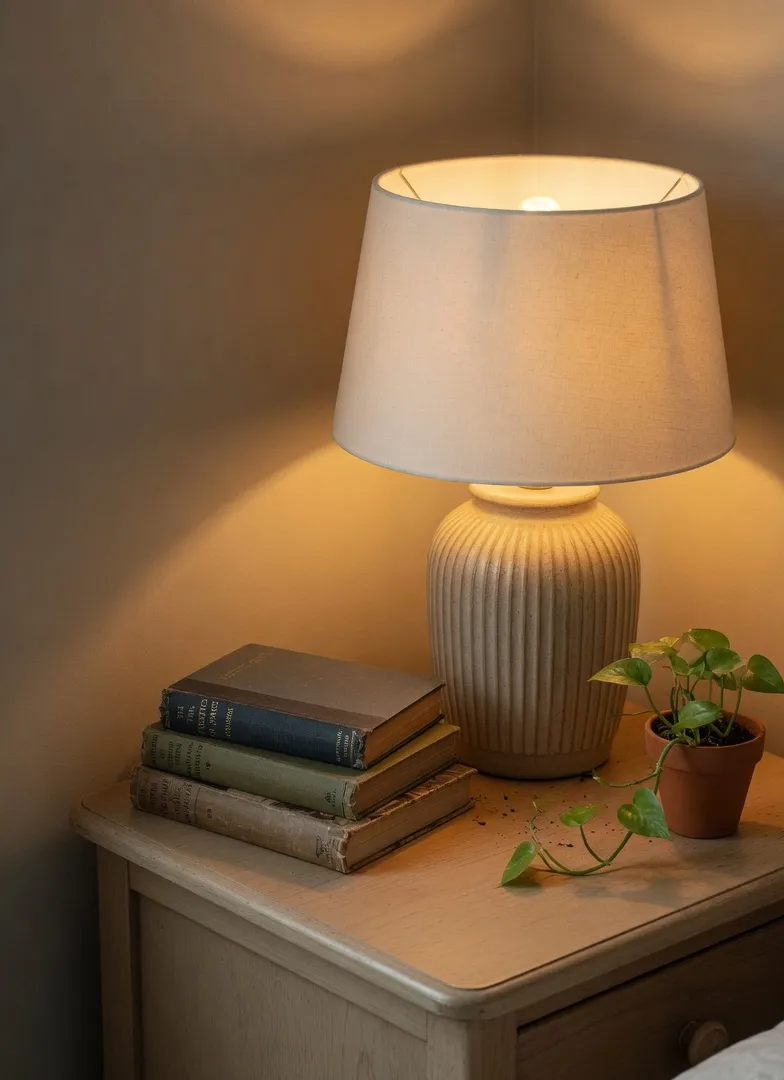
The replacement isn't complicated — it's just lower and warmer. You want small pools of amber light distributed around the perimeter of the room rather than one source flooding everything from above. 2700K is the number. Anything higher edges toward the kind of light you see in a dentist's waiting room; anything lower starts feeling like a photo set. 2700K reads as a warm evening glow.
Practically: one textured ceramic lamp on the nightstand (the Anthropologie-style terracotta and brass combination works — or thrift something with similar weight). A paper lantern floor lamp in the corner opposite the bed, which diffuses softly and costs almost nothing. If you can't hardwire wall sconces — and in a rental, you can't — the puck-light trick works: a battery-operated remote bulb inside a brass or aged iron wall sconce, stuck up with Command strips. Landlords will never know. You'll never go back to the overhead.
The cortisol drop when you switch from overhead to ambient lighting at night is real. Light at or below eye level signals your nervous system to start unwinding. It's not aesthetic advice, it's biology.
3. Expand the Space with Wood-Framed Leaning Mirrors
Small bedrooms have a specific problem that more furniture never solves: the eye has nowhere to travel. Everything sits at the same depth and the room reads as compressed.
A large leaning mirror fixes this without drilling a single anchor.
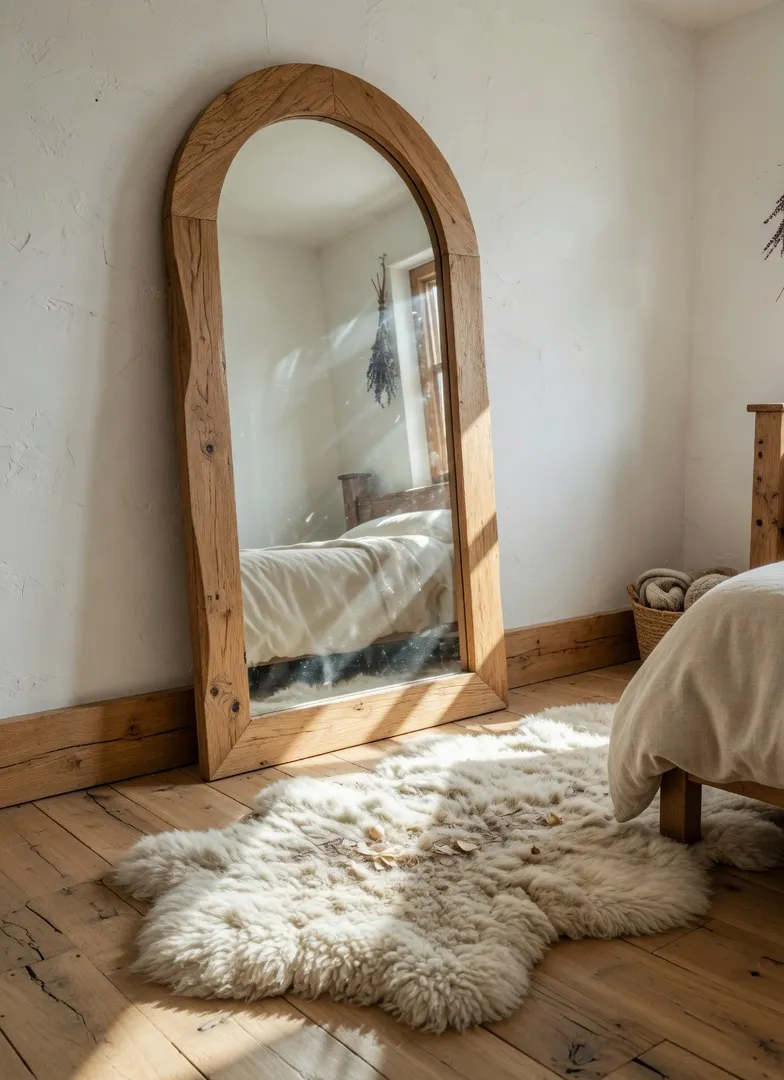
Framed in raw oak, walnut, or reclaimed wood — not plastic, not thin gilded metal — an oversized floor mirror does two things simultaneously. It doubles the perceived depth of the room by reflecting it. And it adds a grounded, heavy material (real wood grain, visible texture) that pulls the earthy palette into a vertical plane where you otherwise have just blank wall.
Position it opposite your window if you have decent natural light. The mirror will bounce that light into the corners that most rental bedrooms leave dim and ignored. If your room has no useful window — which happens, especially in city apartments — lean the mirror behind a floor lamp instead. The effect is similar: the warm glow multiplies.
The practical case for leaning over hanging: you can move it. Adjust it as the room evolves. Take it with you. A mounted mirror requires permission, wall patching, and the anxiety of hoping your Command strips hold a 30-pound object. A good leaning mirror, properly positioned, requires nothing but a floor.
Think of it as a window you get to place wherever you want. Because it basically is.
4. Anchor with Nature Inspired Bedroom Decor (Oversized Plants)
The windowsill cluster of succulents is a decorator's consolation prize. A dozen small plants in a row reads as clutter with ambitions, not as nature.
One large plant does what ten small ones can't.
Biophilic design — the term comes from biologist E.O. Wilson's 1984 work arguing that humans have an innate psychological drive to connect with living systems — is having a practical moment in 2026 interiors. The concept isn't new, but the application in rental bedrooms has become more specific: one architectural floor plant positioned to fill an awkward corner or frame a view. Not decoration. More like a presence.
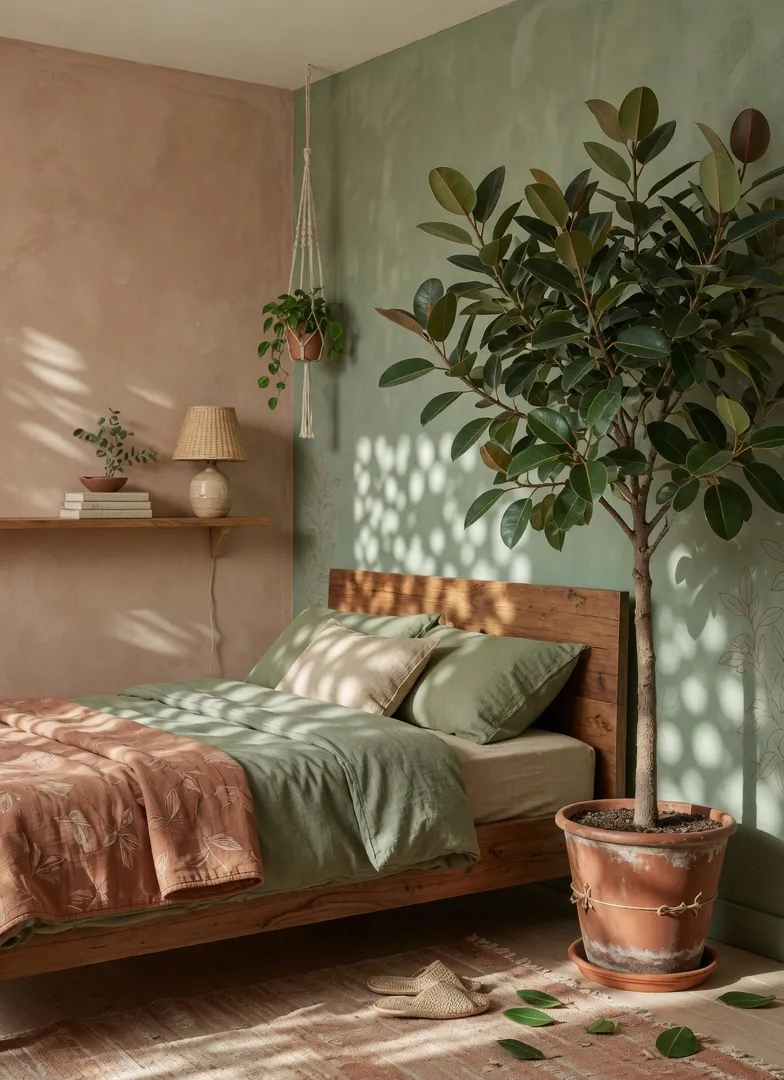
What qualifies as "architectural"? A Ficus Audrey with its broad, velvety leaves. A Monstera deliciosa once it's reached a decent spread. A mature olive tree — faux is completely acceptable if your apartment gets terrible light; the high-quality versions now have convincing branch structure and matte leaves that don't scream artificial from across the room. The test is whether you can see its silhouette from the doorway and feel the room shift slightly.
Pot it in unglazed terracotta or a woven water hyacinth basket. Not a plastic nursery pot. Not a white ceramic planter that looks like it came with a hotel room. The container is part of the earthy material palette.
Real plants are surprisingly affordable when bought young — a small Monstera from a local nursery runs $20–$40 and will double in size within a year. You're not buying the finished version; you're buying something that grows into the room with you.
5. Fix Ugly Floors with Cozy Organic Bedroom Styling
Rental floors are almost always a problem. Grey vinyl plank pretending to be wood. Beige carpet of ambiguous origin. Concrete that looked intentional in the listing photos and just looks cold in person.
You're not stuck with any of them.
Layering rugs is the single most underused rental trick — not because people don't know about it, but because they're afraid of "too much." There's no too much here if the materials are right.
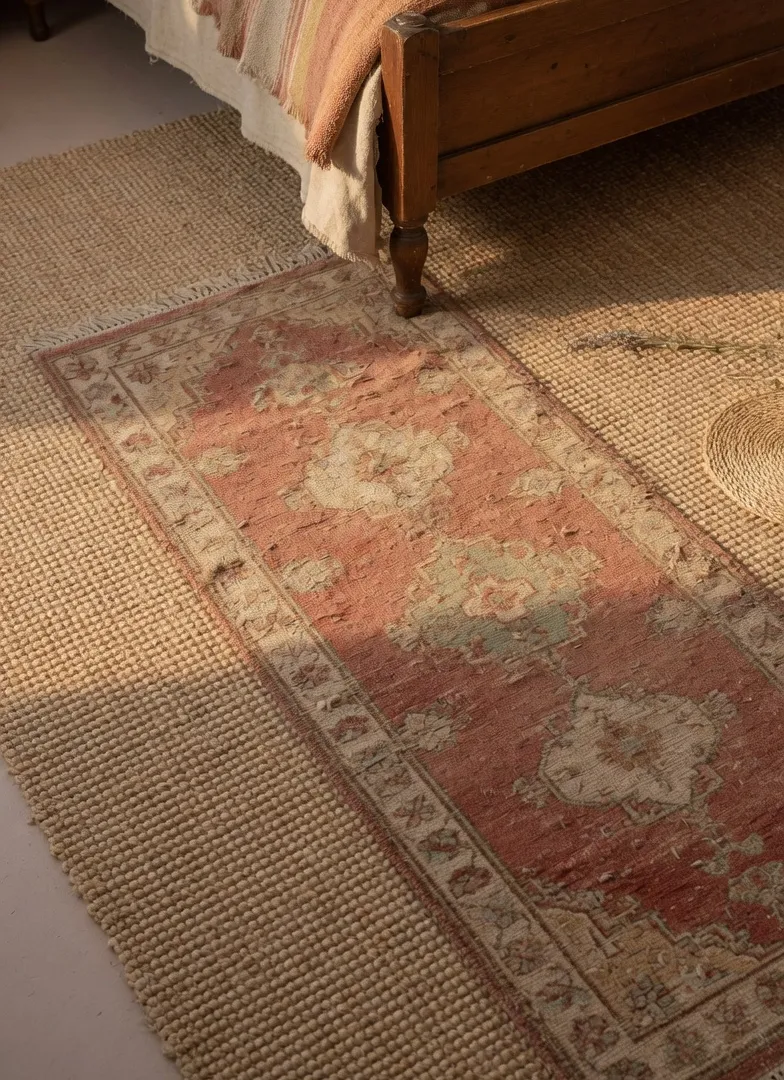
Start large with natural fiber: an 8x10 jute or sisal rug in a warm oatmeal or undyed tone. It costs $100–$180 at most major retailers and covers a lot of floor. The weave is rough — that's the point. That raw texture is where the earthy visual warmth comes from underfoot and, importantly, in photographs.
Then layer. A smaller, softer rug placed where you actually step out of bed — a faux sheepskin, a vintage-style distressed wool in dusty terracotta, anything that gives your feet something warm before they hit the morning. The layering doesn't have to match perfectly. It should look like it was gathered over time, not bought as a set.
One thing people don't try but absolutely should: layering a significant rug directly over existing wall-to-wall carpet. It works. The softness beneath actually helps the rug grip. Visually, it redraws the room's center of gravity around the bed, which is exactly where you want it.
6. Elevate Bare Walls Using Modern Earthy Bedroom Ideas
When painting is off-limits — which in most rentals it is — the instinct is to hang framed posters. Glossy glass. Clean edges. Everything looking purchased rather than personal.
It's not that prints are wrong. It's that shiny, flat-surface art reflects your ambient lamps back at you rather than absorbing that warmth into the wall. The room ends up with a glare source right at eye level from the bed.
Tactile wall pieces solve this. Heavy woven tapestry wall hangings absorb light. DIY textured plaster canvas — joint compound applied with a palette knife over a basic canvas board, painted in raw umber or warm cream — creates dimensional shadow that flat prints can't. Framed raw linen, unembellished, brings the textile palette to a vertical surface. These pieces don't compete with the light; they participate in it.
The practical hanging case: Command Strips made for heavy objects hold up to 16 pounds. Most woven tapestries or plaster canvases land under that. Test the weight before you commit, but in most cases, this is completely renter-safe.
One rule worth stating plainly: if you want a room to read as considered rather than assembled, replace anything shiny or high-contrast with something matte and textured. Gloss catches the eye. Matte lets the eye rest. An earthy bedroom is built on that distinction.

7. Warm Up the Space with Earthy Boho Bedroom Ideas (Rattan & Cane)
There's a point where a room becomes all weight. Every piece solid, dark-toned, low to the ground — which is great for grounding the space, but starts to feel like a furniture showroom closing in.
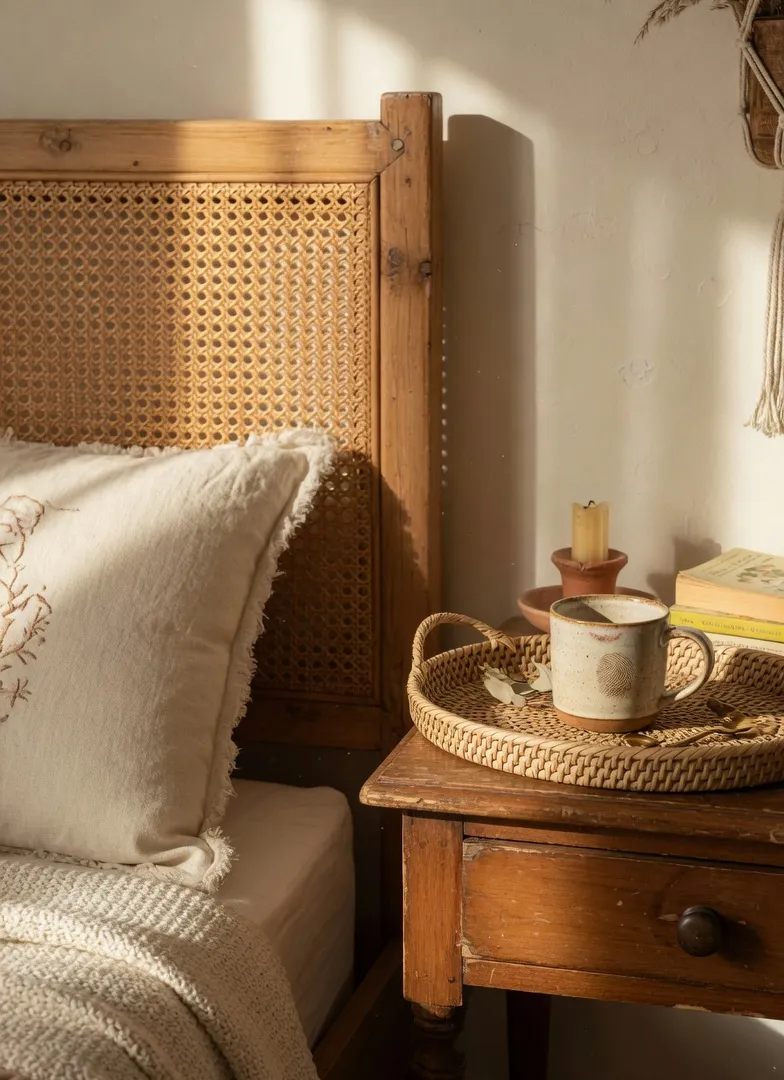
Rattan and cane webbing interrupt that in the best way. They're warm materials — organic, handworked — but visually light. You can see through them. The shadows they cast are interesting. They bring a sense of craft and slow process that neither painted wood nor upholstery can quite replicate.
The mistake is buying a whole matching set — rattan headboard, rattan nightstands, rattan everything. It tips into themed. One or two pieces, introduced where the room needs visual breathing room, is the move. A cane headboard if you're replacing yours anyway. A vintage rattan accent chair in the corner where a second lamp might go — the textures complement each other. A seagrass basket for your laundry or extra throw blankets: functional, cheap, earthy.
The sourcing note: new rattan furniture runs $200–$600 depending on the piece and brand. But rattan from thrift stores, Facebook Marketplace, and estate sales is often better quality — older pieces used tightly wound natural rattan rather than the looser, faster-to-produce versions common now. Expect to spend $40–$80 on a genuinely nice thrifted rattan chair if you're patient.
And if budget is tight: IKEA nightstands with cane webbing stapled to the drawer fronts. It's a 30-minute project and the result looks intentional.
3 Common Decor Mistakes That Kill the Earthy Vibe
Even with all seven pieces in place, a few habits quietly undo the work. Worth naming them directly:
Matching furniture sets. The bed, the nightstands, the dresser — all from the same collection, all the same wood tone. It looks like a display, not a room someone lives in. Mix your woods deliberately. Pair an oak bed frame with a vintage-painted nightstand. Let things be from different eras.
Cheap faux greenery. Plastic ivy strung around a mirror or along a shelf — the thin, shiny kind — doesn't read as earthy. It reads as a Halloween decoration trying to recover its dignity. If you're going faux, invest in one piece with believable texture (matte leaves, realistic branching structure). One good faux plant outperforms a dozen bad ones.
The 4000K bulb mistake. Buying "daylight" or "cool white" bulbs because they're the default on the shelf and wondering why the room looks clinical. Always check the Kelvin number. 2700K is warm white. 4000K is what they use in hospitals. The box will tell you — it just requires reading it.Bring It All Home
Earthy cozy bedrooms aren't built in one shopping run. The good ones take a few months — a piece found at an estate sale, linen upgraded when the old cotton finally wore out, a plant that started small and now takes up a corner properly. That accumulated quality is the whole point.
Start with the light. Everything else layers on top of that.
Frequently Asked Questions
About the Author: Elena Vance
Interior design enthusiast and DIY expert. Elena Vance has spent over a decade curating spaces that blend modern aesthetics with everyday functionality. Passionate about helping you create a home that tells your unique story.

