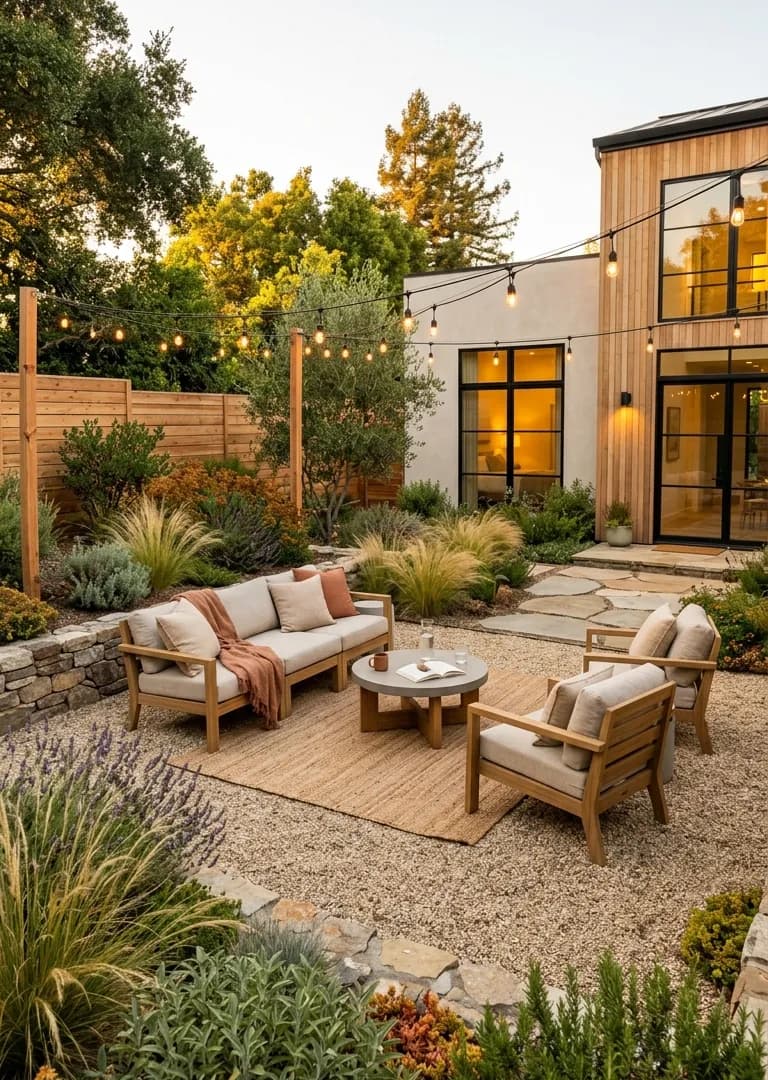
Modern Outdoor Garden Trellis Ideas for the Concrete Jungle


Most concrete patios fail the same way. The furniture arrives. A rug goes down. Then you look at the fence and the bare wall behind everything and realize the room has no ceiling, no sides — it's just furniture floating on a slab surrounded by hard edges that don't apologize for existing.
Vertical structure fixes this. Not eventually. Immediately — even a bare frame changes how a space reads before a single vine has grown an inch.
But here's where the trellis guides fail you: they show you what looks good in photos and skip the part where your pressure-treated pine warps into a buckled mess by year two, or your retractable bamboo frame gets flipped by a rooftop gust and takes the star jasmine with it. The frame you choose has to match the environment — not just the aesthetic.
These 8 outdoor garden trellis ideas are picked for concrete-heavy, architecturally modern urban spaces. Each one includes the material logic, the right vine pairing, and the specific failure condition worth knowing before you buy..
The Material Problem Nobody Talks About
Before picking a design, pick a material — because in urban micro-climates, the wrong one fails silently until it fails completely.
The decision comes down to three conditions: light exposure, moisture, and weight load. A shaded city courtyard traps dampness; raw wood rots there in 18 months. A rooftop needs lightweight materials — most balconies handle 50–100 lbs per square foot, and a mature climbing rose loaded with wet blooms after rain pushes that limit fast. A front-of-house trellis in full sun can use rich wood tones that would look wrong in a dark courtyard.
Choose the frame for where it lives first. Then choose the shape.
1. The Case for a Dark-Stained Wood Trellis Wall
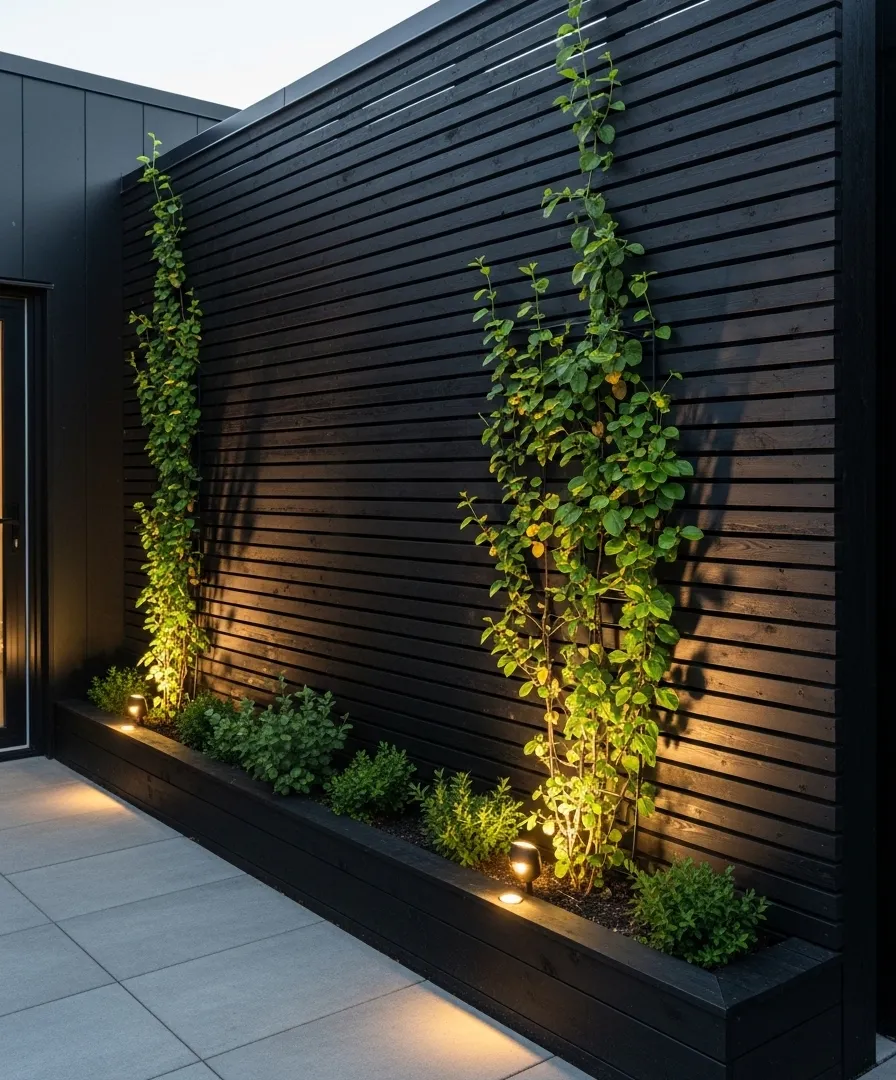
If diamond lattice feels too dated for your city home, horizontal slats change everything. Space them exactly 1 inch apart for a tight, contemporary rhythm that reads as architectural rather than agricultural. The material choice here is non-negotiable: use Ipe, thermally modified ash, or at minimum western red cedar. Standard pine—even pressure-treated—will warp and split within two to three seasons in a damp, shaded courtyard.
Stain it deep charcoal or matte black. Darker finishes hide city grime, exhaust dust, and water stains far better than natural wood tones. And the horizontal lines play a visual trick—they widen a narrow lot by pulling the eye sideways rather than up.
2. Maximize Space With Balcony Privacy Trellis Ideas
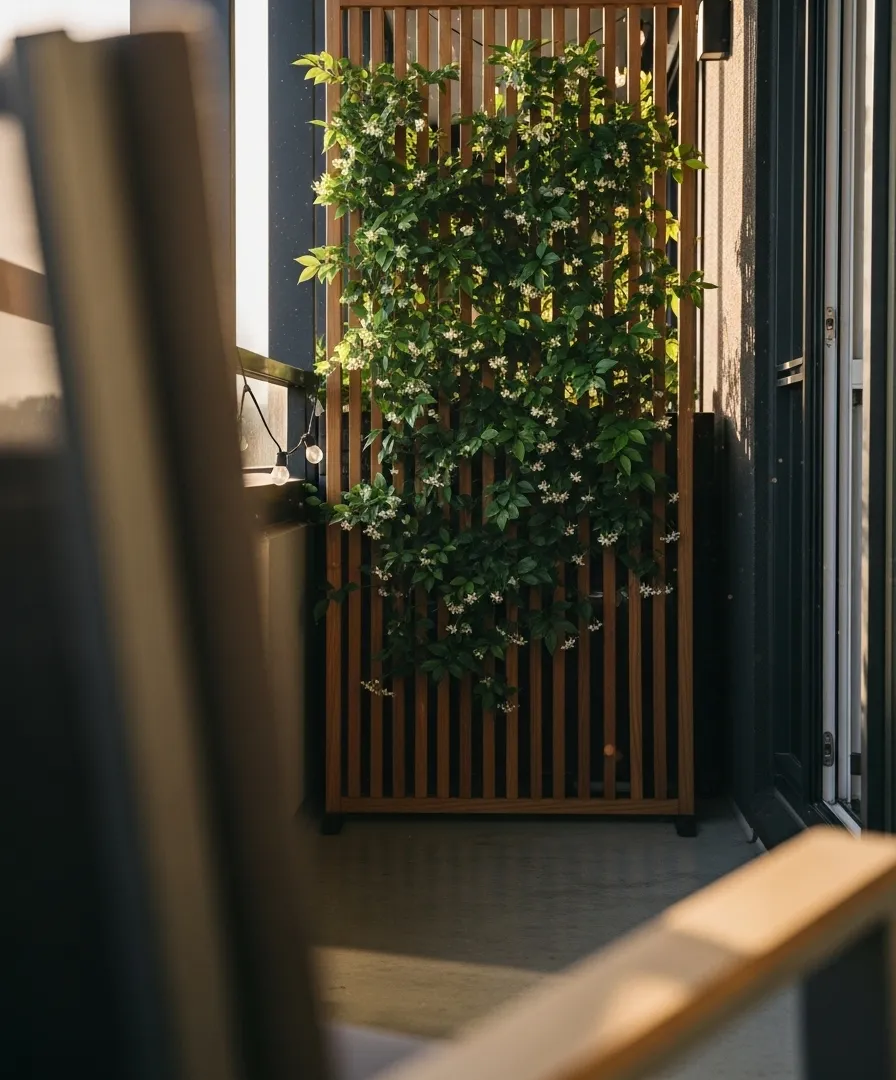
Your neighbors can practically hand you a coffee from their balcony. A solid canvas screen blocks the view but also kills the breeze and makes a small balcony feel like a cardboard box. A slatted trellis layered with evergreen climbers gives you privacy while letting city light filter through the leaves at night.
The critical detail most people miss: the base planter must be heavy. On a high-rise balcony, wind gusts can flip a lightweight planter easily. Use a fiberglass or concrete trough as your anchor—minimum 40 lbs when empty—and fill the bottom third with gravel before adding soil. Choose a polite, non-invasive evergreen climber like star jasmine or Confederate jasmine. They stay dense year-round without trying to eat your building.
3. The Invisible Support: Stainless Steel Wire Grid
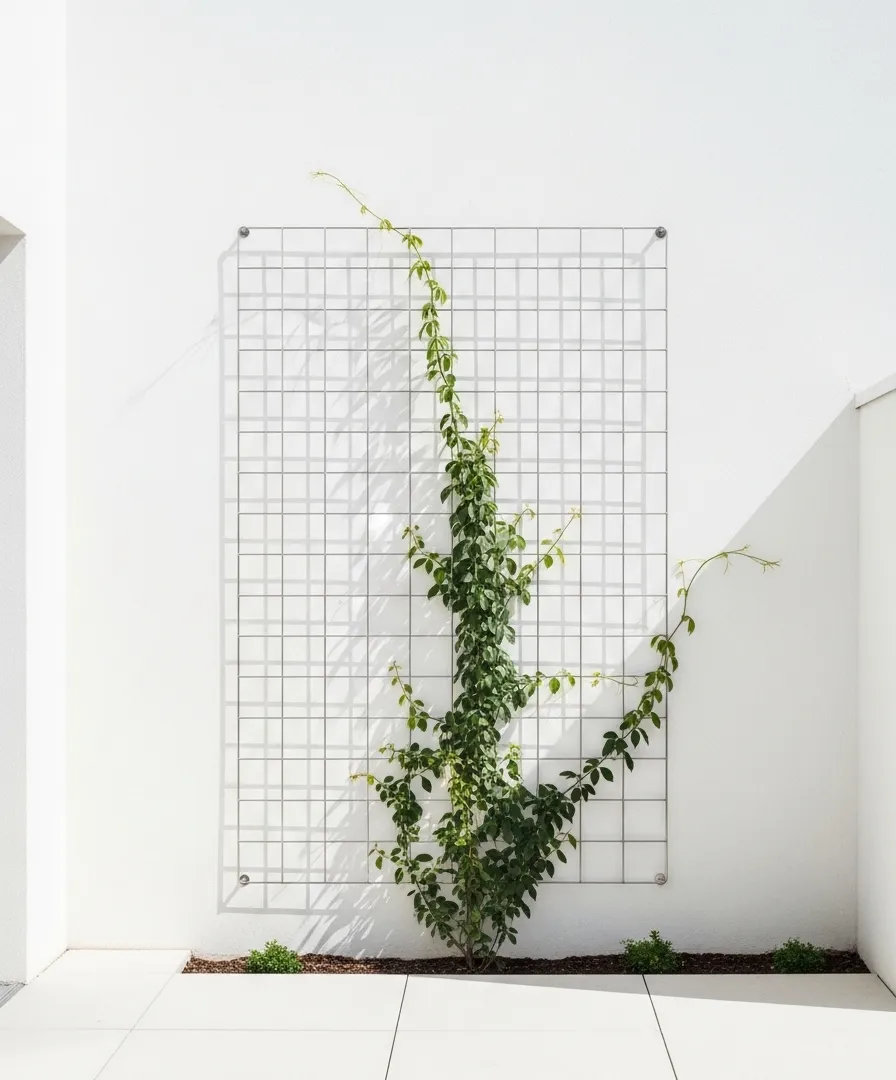
Minimalists, this one's yours. A stainless steel tension wire grid against a smooth concrete or painted brick wall provides climbing support while remaining almost invisible. The structure becomes geometric wall art when the vine hasn't fully grown in—thin, crisp lines against raw texture.
Buy a marine-grade stainless steel wire rope kit with stand-off hubs. Map out a square grid pattern, drill the anchor hubs with a masonry bit, and tension the wire using a turnbuckle at each terminus. Wire systems outperform wood in humid urban micro-climates because they never rot, never warp, and never need resealing.
4. Create Zones With Freestanding Trellis Ideas For Patio

A large, open concrete patio often feels like furniture floating in a parking lot. Freestanding trellis panels with integrated planter boxes act as movable room dividers—carving out a dining zone, a lounge corner, or a reading nook without pouring a single footer.
Choose powder-coated aluminum over iron. Aluminum won't rust even if the finish gets scratched, and it's light enough for one person to reposition. Load the base planter with gravel for ballast against rooftop wind. This approach gives you the enclosed, penthouse-garden atmosphere without fighting HOA rules or building codes.
5. Industrial Edge: Cheap DIY Trellis For Climbing Plants

Walk past the garden aisle entirely and head to plumbing. Half-inch copper pipes and standard elbow joints let you build a geometric climbing frame for under $30 in materials. No soldering required—strong epoxy holds the joints firmly enough for lightweight annual vines like sweet peas or morning glories.
The copper patinas naturally over six to eight weeks outdoors, developing that blue-green verdigris that looks deliberately expensive. Clean the pipes with steel wool first so the patina develops evenly. This is one of the few DIY projects that genuinely looks better than what you'd buy pre-made.
6. Soften Hardscapes With a Trellis Front Of House

Urban townhouses often present a massive, flat front elevation that feels sterile from the sidewalk. A vertical trellis breaks that monotony and bridges the gap between concrete and doorway. But here's where most people go wrong: they mount a flimsy arched lattice against a blocky modern facade. The styles clash immediately.
Match the trellis language to the architecture. For a modern home, use corten (weathering) steel or thick black aluminum with clean, straight lines. And stand the structure 3 inches off the wall—that air gap prevents climbing tendrils from worming into mortar joints and causing long-term masonry damage.
7. Introduce Geometric Elegance With a Metal Garden Trellis Design

Metal introduces a graphic permanence that wood can't match. A laser-cut steel panel acts as outdoor jewelry—even in the dead of winter when every vine is dormant, the geometric pattern holds its own as a piece of modern art against a bare wall. The shadow play from a laser-cut pattern on a sunny afternoon is genuinely dramatic.
For damp, shaded city yards where wood rots within a season, heavy-gauge powder-coated steel is the smartest long-term investment. Source architectural-grade laser-cut panels from a metal fabricator, not a craft supplier. The difference in material thickness—and therefore structural integrity—is enormous.
8. Urban Foraging: Vertical Veggie Walls for Small Spaces

Vegetables don't need a suburban yard. A tight stainless steel wire grid above a self-watering trough planter on a sunny balcony grows cucumbers, snap peas, and cherry tomatoes vertically. The brick wall behind the trellis acts as a natural heat sink—absorbing solar radiation during the day and releasing warmth at night, which accelerates fruiting.
Guide the main stems upward with soft silicone plant clips. Never use twist ties on vegetable stems; as the stem thickens, the metal wire cuts into the tissue and restricts water flow to the fruit above.
Quick tip: Use your sunny walls for vertical crops. The heat from the brick acts like a natural heater, speeding up growth in tight spaces.
9. Elevate the Vibe: How To Decorate A Trellis Outdoor

Heavily shaded courtyards where vines refuse to grow present a specific challenge. The solution: treat the trellis grid as a mounting surface for non-plant decor. LED neon flex rope bent into a custom shape, geometric glass terrariums, or weatherproof art pieces turn a basic wooden grid into an electric feature wall.
Paint the structure a dark, moody color first—charcoal or deep forest green—so the mounted pieces pop. The grid's internal structure naturally hides power cables, keeping the installation clean. This approach is particularly effective for ground-floor apartments that get fewer than four hours of direct sun.
10. The Renter’s Best Friend: Retractable Trellis Walls
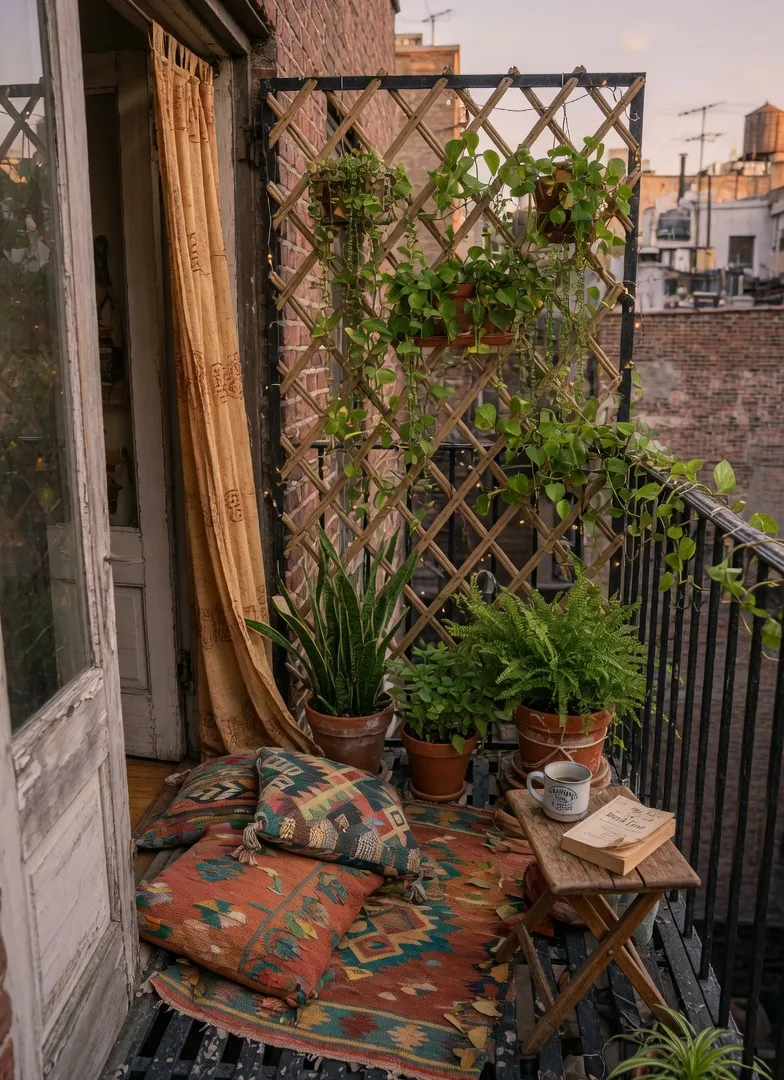
Lease agreements are the enemy of good outdoor design. When you can't drill into exterior brick, an expanding accordion willow or bamboo trellis becomes your primary tool. These lightweight grids stretch to fit awkward slivers of wall around AC units and utility meters.
Mount them with masonry brick clips that clamp onto mortar joints without drilling—each clip holds about 25 lbs. Pair with lightweight vines only: English ivy, pothos, or creeping fig. Never train wisteria or climbing roses on a retractable frame; they'll pull it off the wall within a single growing season.
11. Sleek Integration: Trellis Over Garage Door
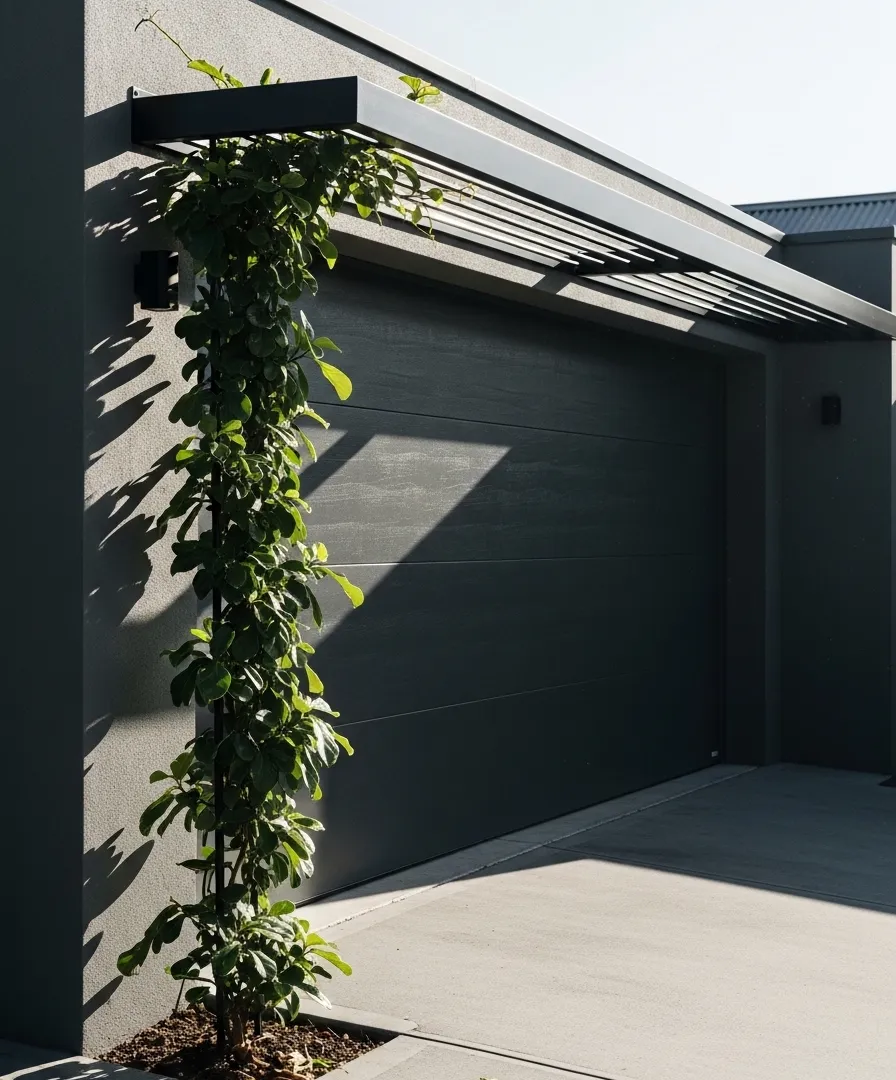
Modern townhome garages dominate the front elevation—a massive, flat block of material that feels harsh and industrial. A horizontal aluminum pergola-style trellis mounted directly above the garage door breaks that monotony and introduces organic shadow lines across the driveway.
Don't use cheap, unstained wood here. It warps quickly in the direct sun exposure above a garage and looks dilapidated within a year. Extruded aluminum bolted into the structural header is the right call. Plant a single, well-behaved vine in a sleek container beside the door—something controlled like a climbing hydrangea—and guide it up to the canopy.
12. Monochromatic Planting for Modern Frames
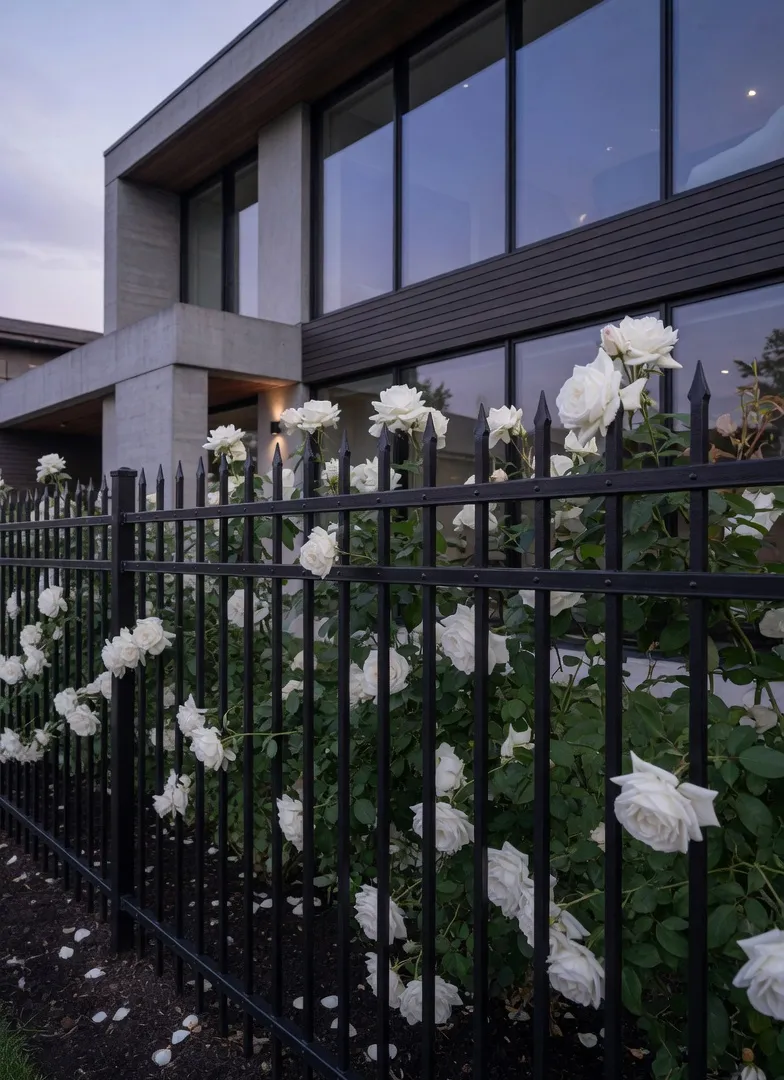
The structure is only half the design. The plant selection determines whether your trellis reads as sophisticated or chaotic. In a compact urban garden, a riot of random colors quickly looks messy. Restraint is the secret to an expensive, tailored outcome.
Pair a dark-framed structure—black or deep graphite—with blooms in a single color family. Stark white climbing roses on a matte-black steel frame feels impossibly chic. All-deep-purple clematis on dark wood reads moody and intentional. The key: prune aggressively so the architectural lines of the frame remain visible through the foliage. You want the geometry and the greenery to collaborate, not compete.
13. Reimagining Boundaries With a Horizontal Fence
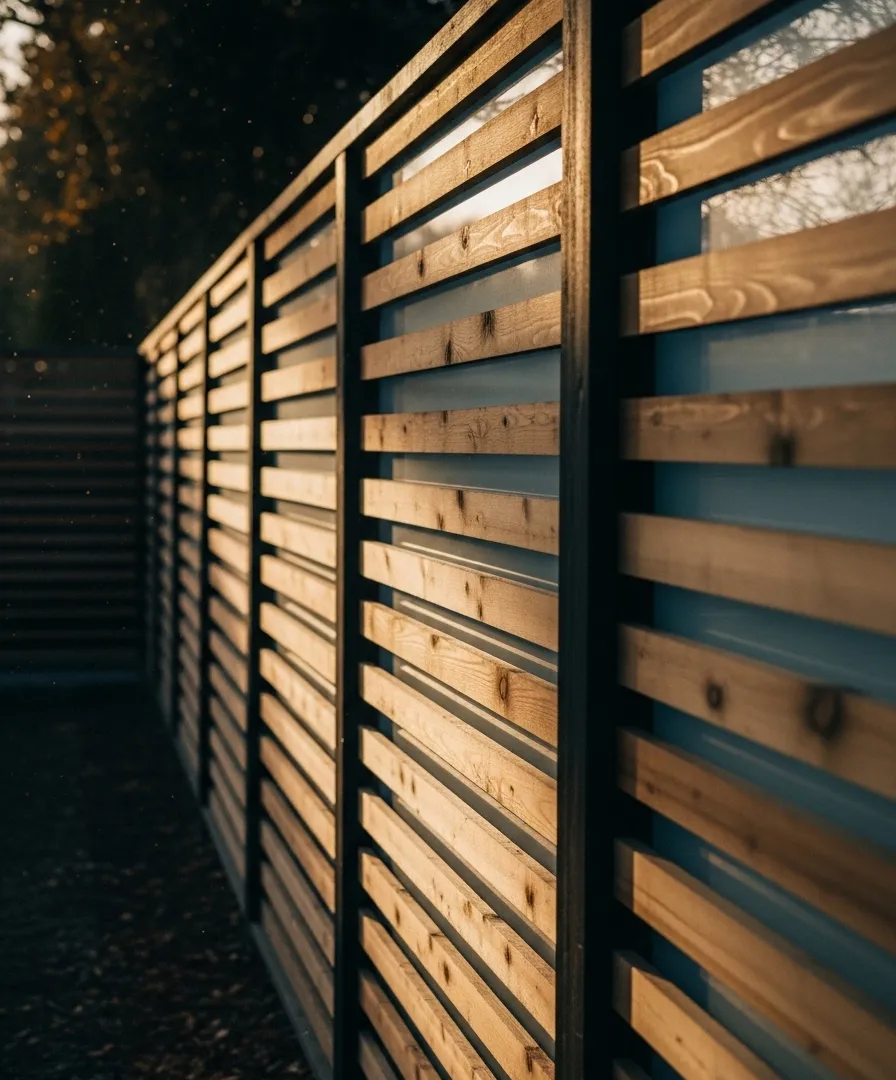
Urban yards are bowling alleys bordered by ugly fences. Replacing or cladding a standard stockade fence with horizontal slats completely changes the perimeter's character. The horizontal lines trick the eye into reading the yard as wider, and the gaps between slats allow crucial cross-breezes in dense, walled-in lots.
If replacing the entire fence isn't in the budget, here's a contractor's trick: paint the existing ugly fence flat black first, then mount a "floating" horizontal slat wall directly in front of it. The old fence vanishes into shadow behind your new wood, and you avoid the cost of demolition entirely.
14. Architectural Rooftop Climbing Rose Trellis Ideas
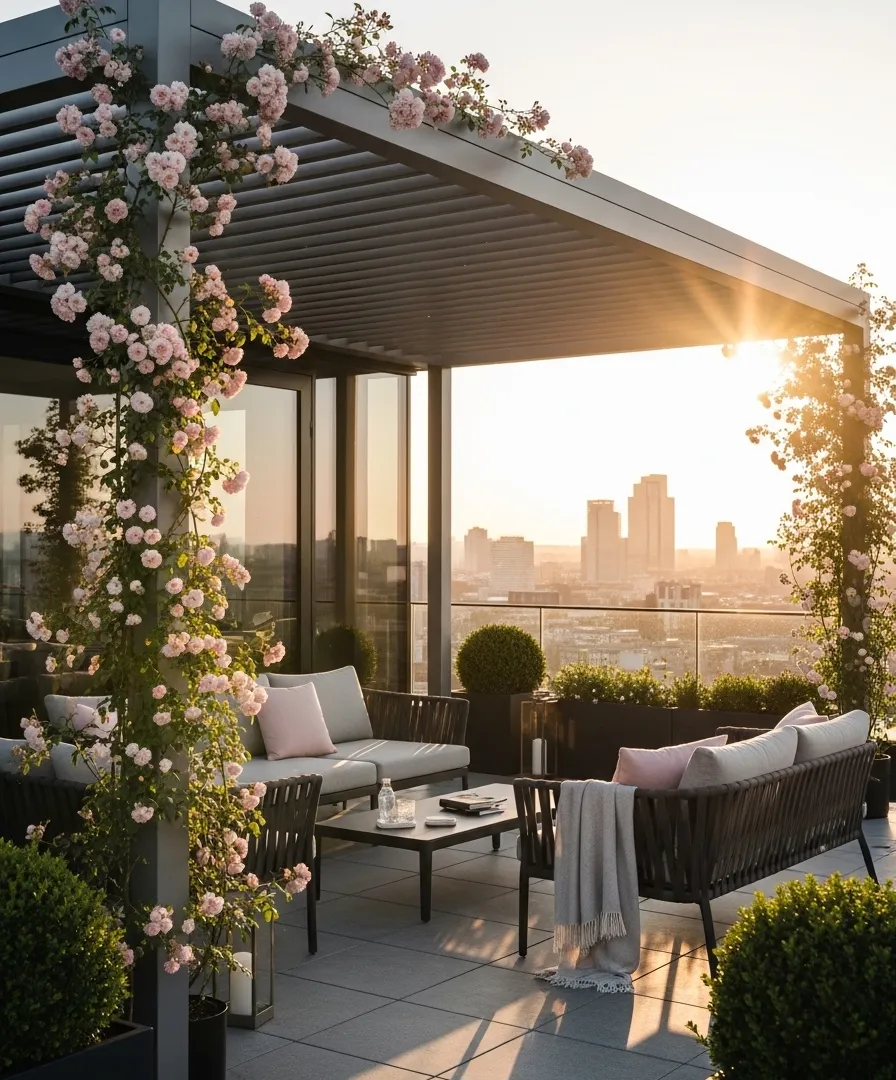
Climbing roses on a rooftop are deeply romantic—and deeply unforgiving if you skip the structural requirements. Roses have extensive root systems. Shallow rooftop pots starve them. Use massive, double-insulated fiberglass planters (minimum 24 inches deep, minimum 20 gallons) to give the roots volume and protect them from freeze-thaw cycles in winter.
The frame must be heavy-gauge steel, not lightweight aluminum. A mature climbing rose loaded with blooms after a rain can weigh significantly more than people expect. Tie the canes horizontally along the top of a pergola structure—horizontal training forces more lateral buds to break, which means dramatically more flowers than vertical canes produce.
15. Turn Walls Into Art With a Modular Geometric Trellis

When floor area is virtually nonexistent, walls have to work harder. But a bulky wooden grid on a clean exterior wall can make a modern building feel dated. Modular geometric trellises—interlocking metal hexagons, overlapping circles, or asymmetrical diamond shapes—blur the line between functional garden hardware and contemporary outdoor wall art.
Start with a kit of three to five modules. Mount them using wall-spacers to keep them slightly off the brick for airflow. As your ivy or jasmine grows, buy additional modules and expand the composition organically. The structure looks intentional from day one—you don't have to wait two growing seasons for the vine to cover up an ugly frame.
Final Thoughts for the Urban Gardener
Vertical structure is the single fastest way to take a concrete-heavy outdoor area from sterile to intentional. But the material you choose matters as much as the design. Powder-coated steel for heavy climbers. Aluminum for coastal or humid environments. Corten for that deliberately weathered front-of-house statement. Wire for minimalists who want the vine to be the entire show.
Pick the right frame for the right vine, anchor it properly, and stand it off the wall. Everything else is just patience and pruning.
Frequently Asked Questions
About the Author: Elena Vance
Interior design enthusiast and DIY expert. Elena Vance has spent over a decade curating spaces that blend modern aesthetics with everyday functionality. Passionate about helping you create a home that tells your unique story.