
12 Neo Deco Kitchen Ideas That Bring Timeless Glamour to Everyday Cooking


We spent the last decade making kitchens as clean and white as an operating room. It looked sharp. It also felt like nobody actually lived there.
There's a collective course correction happening right now, and it's landing squarely in the kitchen. People want architectural weight. They want warmth. They want a room that feels deliberately designed without looking like they hired a set decorator.
That's what Neo Deco does. It borrows the sweeping curves, rich materials, and moody palettes of 1920s Art Deco, then strips away the museum quality. You keep the glamour. You lose the stiffness.
Here's exactly how to bring it into the room where you actually spend most of your time.
How to Bring Neo Deco Kitchen Ideas to Life
1. Soften the Lines with Contemporary Art Deco Kitchen Cabinets
For years, kitchen islands have been rectangles. Cabinets have been squares. Every surface meets at a hard 90-degree angle. Neo Deco flips this entirely by reintroducing curves — and it's the single fastest way to make a kitchen look custom-built.
A curved island or rounded cabinet edges change how you move through the area. I've watched people walk differently around a pill-shaped island versus a rectangular one — they slow down, they lean in, they gather. The curves do something psychological that sharp corners don't.
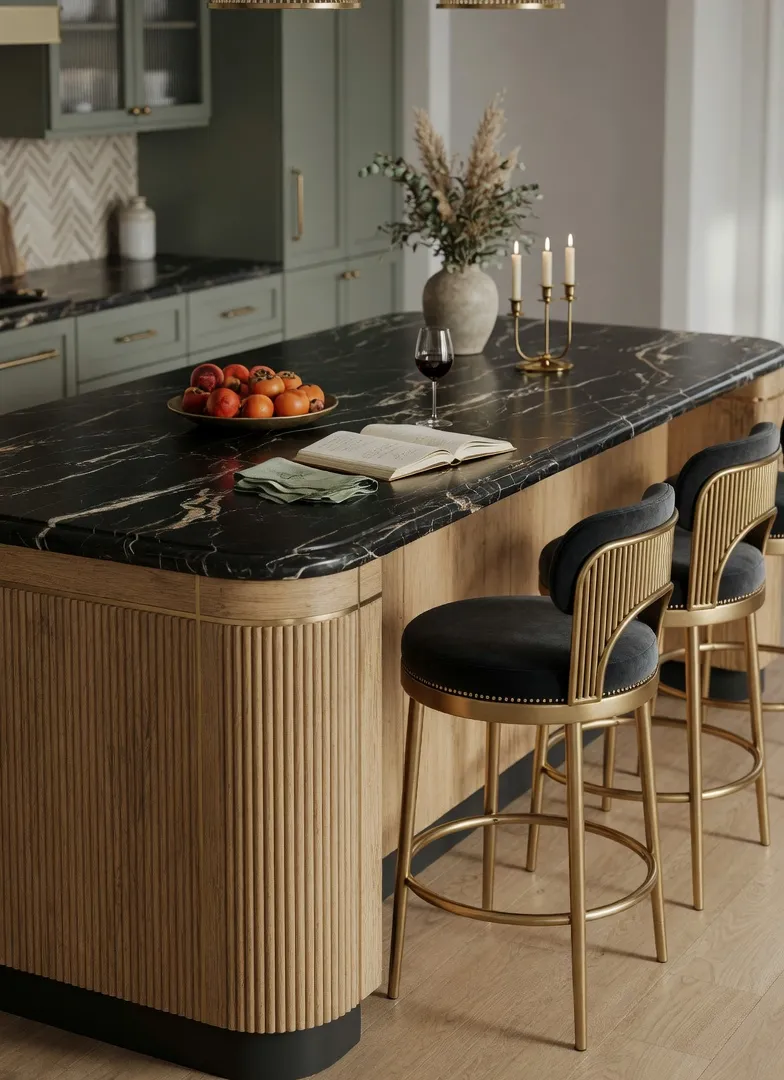
If a full renovation is on the table, opt for a pill-shaped island. But if you're renting or the budget is tight, introduce curves through arched barback stools or a rounded statement mirror over a coffee bar. The eye picks up on curves fast, and even one piece shifts the visual language.
2. Statement Marble for a Modern Luxury Kitchen Interior
If there's one non-negotiable in this aesthetic, it's dramatic, heavily veined stone. We're well past the era of quiet, subtle quartz. Neo Deco kitchens reach for stones that read like geological art — Breccia, Calacatta Viola, heavily striated Arabescato.
The mistake I see constantly is pairing a busy stone with equally complex cabinetry. When you put loud marble against carved, textured cabinet fronts, neither gets to breathe. Let the stone be the absolute star. Keep the surrounding wood or paint simple and understated.

f there's one non-negotiable in this aesthetic, it's dramatic, heavily veined stone. We're well past the era of quiet, subtle quartz. Neo Deco kitchens reach for stones that read like geological art — Breccia, Calacatta Viola, heavily striated Arabescato.
The mistake I see constantly is pairing a busy stone with equally complex cabinetry. When you put loud marble against carved, textured cabinet fronts, neither gets to breathe. Let the stone be the absolute star. Keep the surrounding wood or paint simple and understated.
3. Incorporate Kitchen Brass Accents and Fluted Textures
A room with solid colors and flat surfaces reads as blank, no matter how rich the materials. Neo Deco counters this by leaning hard into ribbed, reeded, and fluted details that catch light and cast micro-shadows throughout the day.
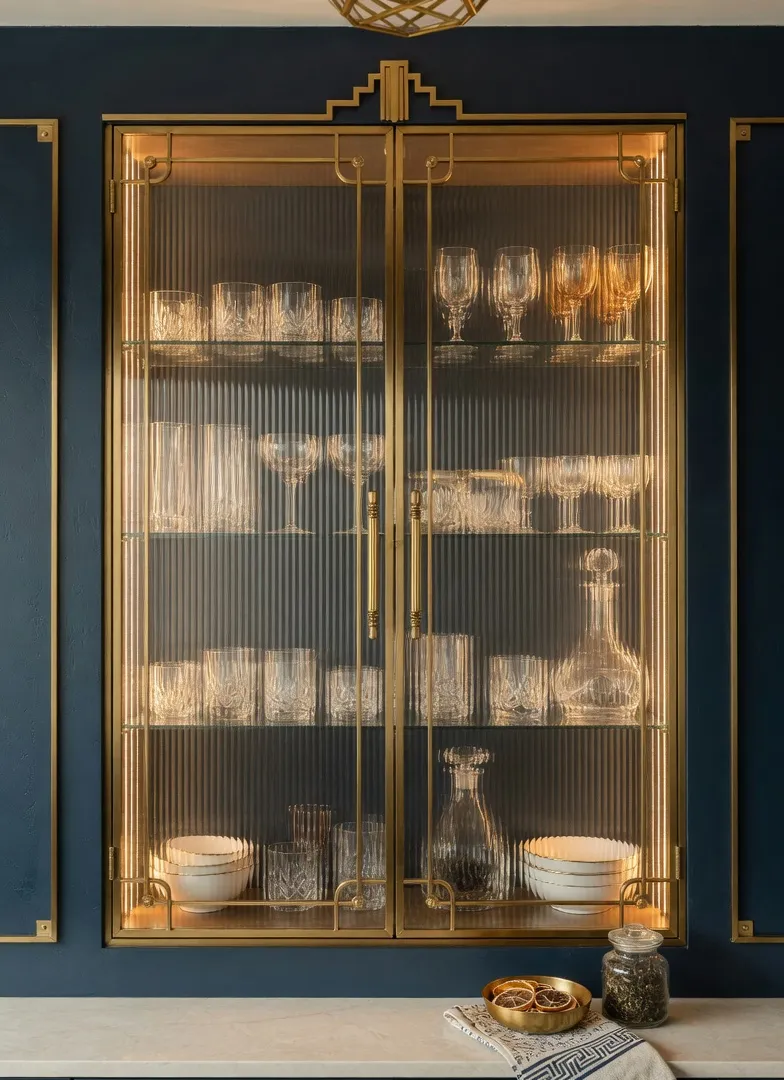
Fluted glass on upper cabinets is a particularly smart move. It adds visual depth and a sophisticated edge while softening the view of whatever's actually behind the door — which, honestly, is rarely Pinterest-ready. Ribbed wood paneling on the face of an island works the same way, adding a continuous vertical texture that catches the ambient kitchen light.
If you're not ready for new cabinet fronts, start with fluted wood trim applied to the base of an existing island. It's a weekend project that immediately shifts the room's register.
4. Warm Up with Unlacquered Brass Hardware
Chrome and matte black have dominated hardware for years. Both run cold. Neo Deco demands warmth, and unlacquered brass delivers it — but the specific detail that matters is the "unlacquered" part.
This is a living finish. It reacts to the oils in your hands, the moisture in the air, the water that splashes near the sink. Over six months, it develops a patina that's completely unique to your kitchen. That patina is intentional. It's the whole point.
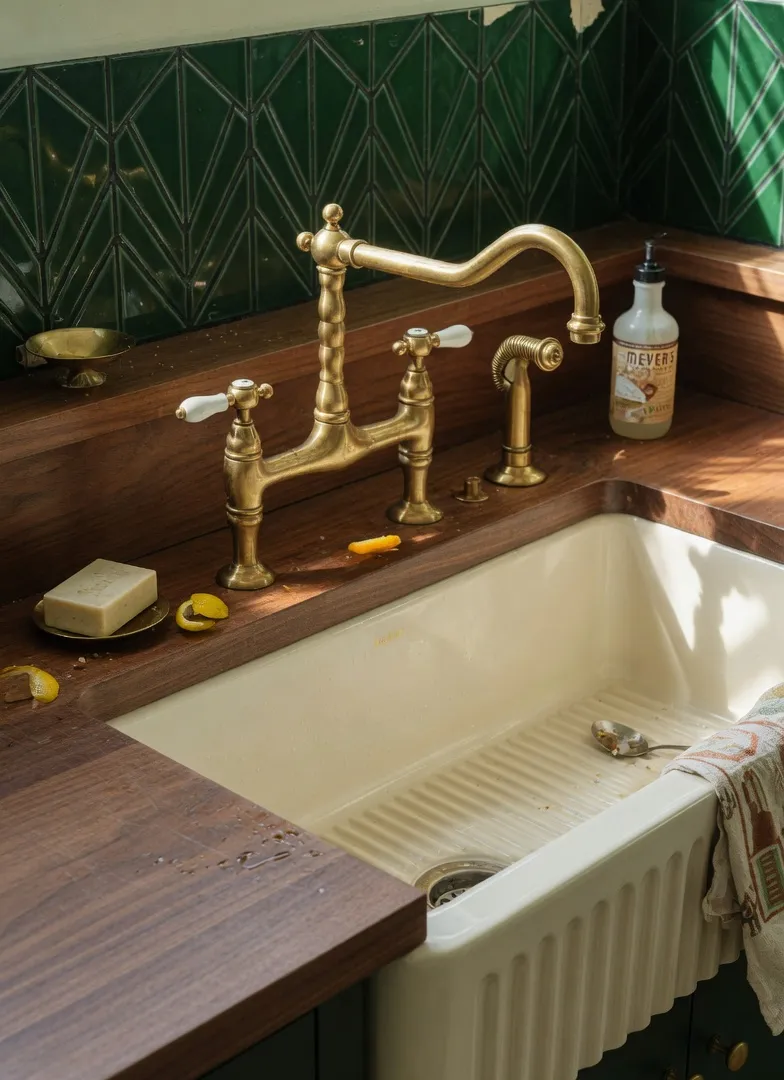
Here's the mistake that ruins it: buying cheap, shiny gold-tone hardware and expecting a high-end result. Fake gold pulls drag down every surface they sit on. Real, raw brass ages with a grace that lacquered imitations never achieve.
Swapping out cabinet pulls, knobs, and your faucet is a low-budget move that hits far above its weight. Add a brass gallery rail to an open wooden shelf for an instant vintage anchor.
5. Master Neo Deco Color Palettes for Kitchens
Color is coming back to kitchens, but not in a bright, primary way. The Neo Deco palette lives in muddy territory — dusty rose, deep emerald, rich plum, oxblood. These are complex hues with brown and grey undertones that shift throughout the day as the light changes.
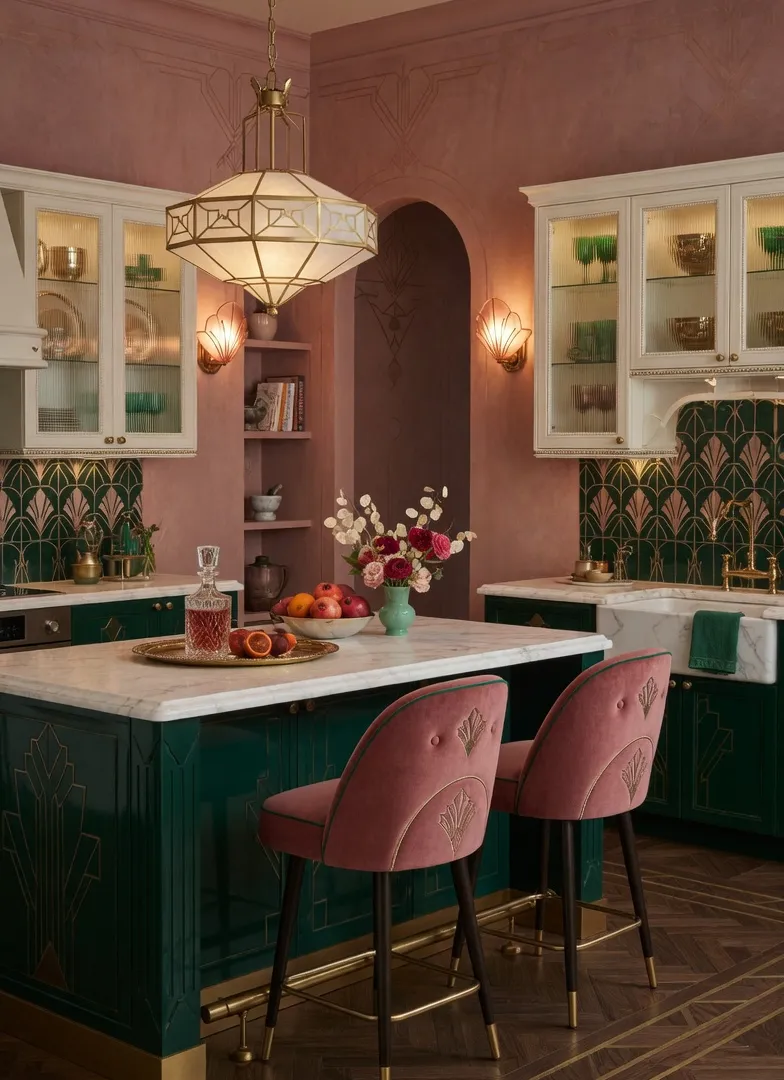
Most people default to white in a small kitchen, believing it makes the room bigger. I'd push back on that. Wrapping a compact kitchen in deep, saturated color actually blurs the edges, making it feel expansive and intentional at the same time. A tiny dark green kitchen with brass hardware reads as a deliberate jewel box, not a cramped afterthought.
Apply the 60-30-10 ratio to avoid visual fatigue: 60% warm neutral, 30% rich jewel tone on the lower cabinets, 10% metallic accent through hardware and fixtures.
6. Geometric Backsplash Tiles Design for a Subtle Nod
Traditional Art Deco loved bold geometric contrast — stark black and white sunbursts, hard zigzag patterns. Neo Deco takes those shapes and turns the volume way down.
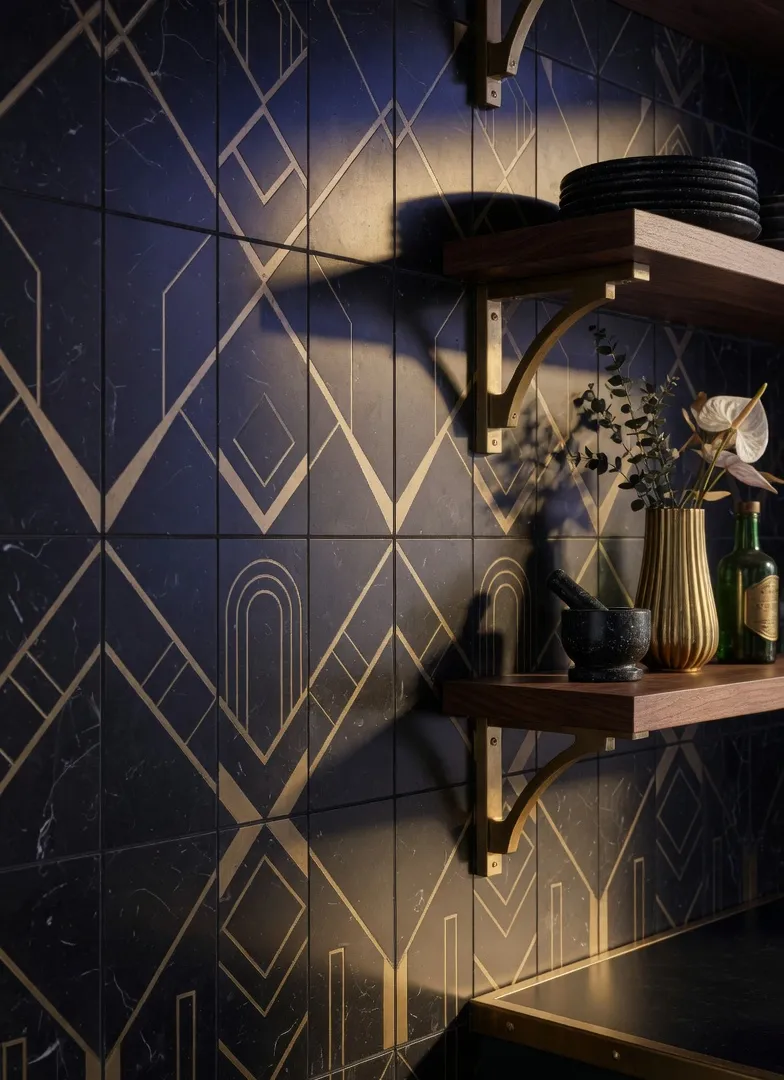
Instead of harsh, high-contrast zigzags, look for elongated hexagons, subtle arch motifs, or geometric inlays done in tonal colors. A textured white-on-white arch tile, or a natural marble mosaic with a fine brass inlay, provides the necessary architectural rhythm without overwhelming the eye over your morning coffee.
The geometry should feel intentional but never loud. A whisper of pattern consistently outperforms a shout.
7. Treat Lighting as Sculptural Art
In a Neo Deco kitchen, lighting stops being purely functional. We're moving past tiny, barely-there glass pendants and toward sculptural, oversized fixtures — milk glass globes, tiered alabaster shapes, heavy brass detailing.
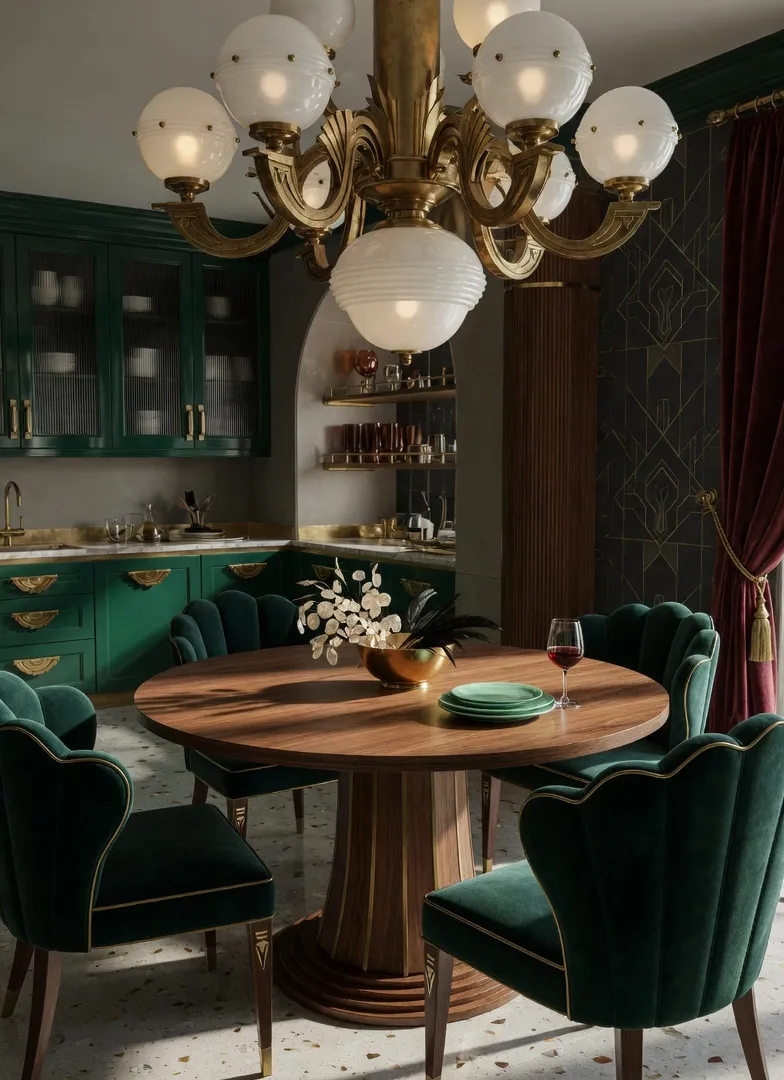
A very common sizing mistake: pendants too small for the island. When in doubt, go bigger. An oversized sculptural fixture acts as floating art during the day and casts a moody, concentrated glow at night. The scale matters enormously.
Swap out builder-grade island pendants for two oversized globe-style fixtures with brass arms. And always — always — install dimmers. A kitchen that operates at one brightness level all evening misses the entire atmospheric purpose of the aesthetic.
8. Conceal Clutter with Integrated Luxury Appliances
Nothing shatters the moody Neo Deco atmosphere quite like a massive stainless steel refrigerator staring at you from across the room. The 1920s aesthetic depended on seamless, monolithic surfaces, and exposed modern appliances directly contradict that.
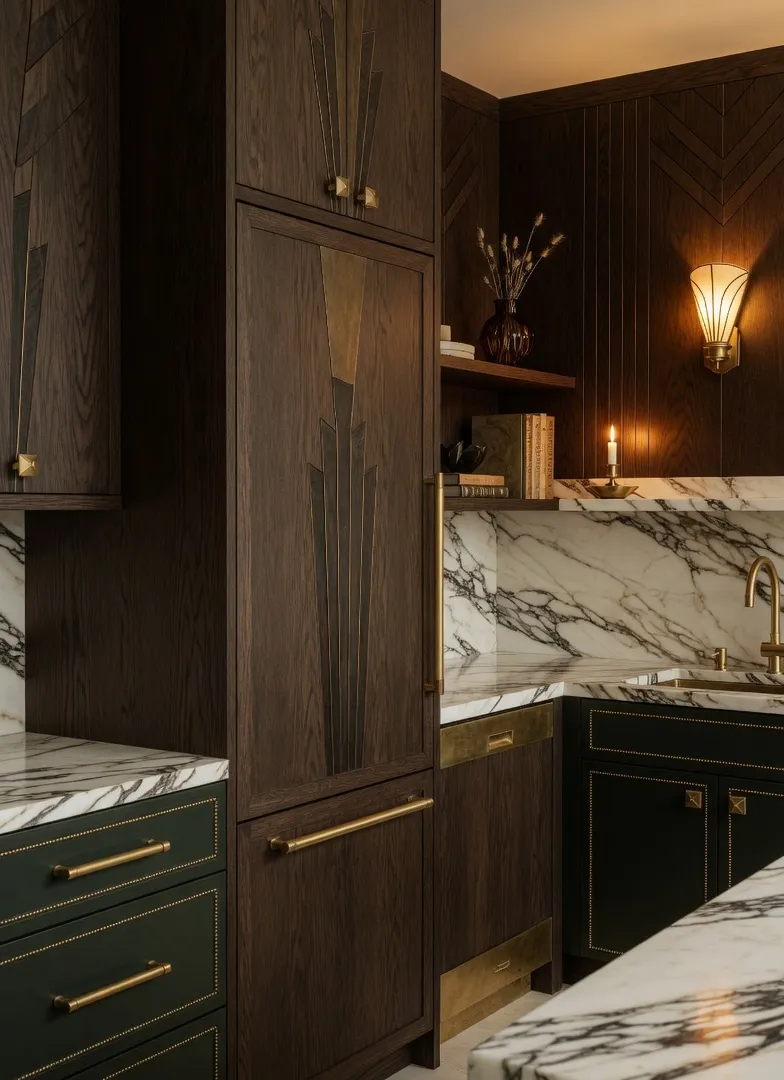
The specific mistake: spending heavily on custom cabinetry and statement stone, then letting standard stainless appliances visually cut the room in half. By hiding the fridge and dishwasher behind matched panels, the kitchen reads as a high-end living environment rather than a utilitarian prep zone.
When shopping for new appliances, look specifically for "panel-ready" options and work with your cabinet maker to match the fronts exactly.
True luxury in a kitchen is often what you don’t see.
9. Ground the Space with a Modern Checkerboard Floor
When you hear "checkerboard," you might picture a retro diner. Erase that entirely.
The Neo Deco version roots itself in old European grand hotels, relying on muted, earthy natural stone rather than glossy black and white vinyl. Swap in tumbled cream travertine alternating with deep oxblood or charcoal marble, and the pattern immediately shifts from basic to deeply sophisticated.
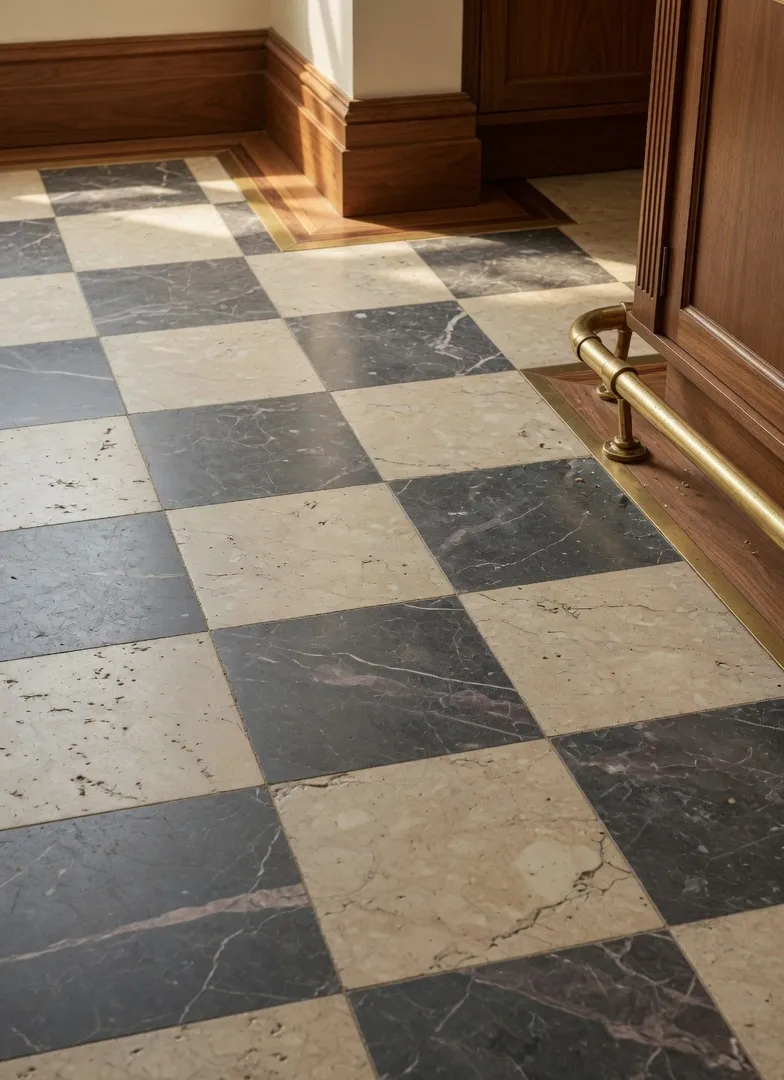
Choose oversized tiles — at least 12x12 — and lay them on the diagonal. Running the pattern diagonally through a narrow galley kitchen tricks the eye into reading the floor as wider than it is. Stick to matte finishes. Glossy checkerboard reads as diner. Honed stone reads as heritage.
Your floor should feel like it has a hundred years of beautiful history.
10. Elevate the Architecture with Sweeping Arches
The arch is the most recognizable Deco architectural signature, and in a kitchen dominated by horizontal countertops and vertical appliance fronts, even one arch breaks the rigidity in a way that feels expensive.
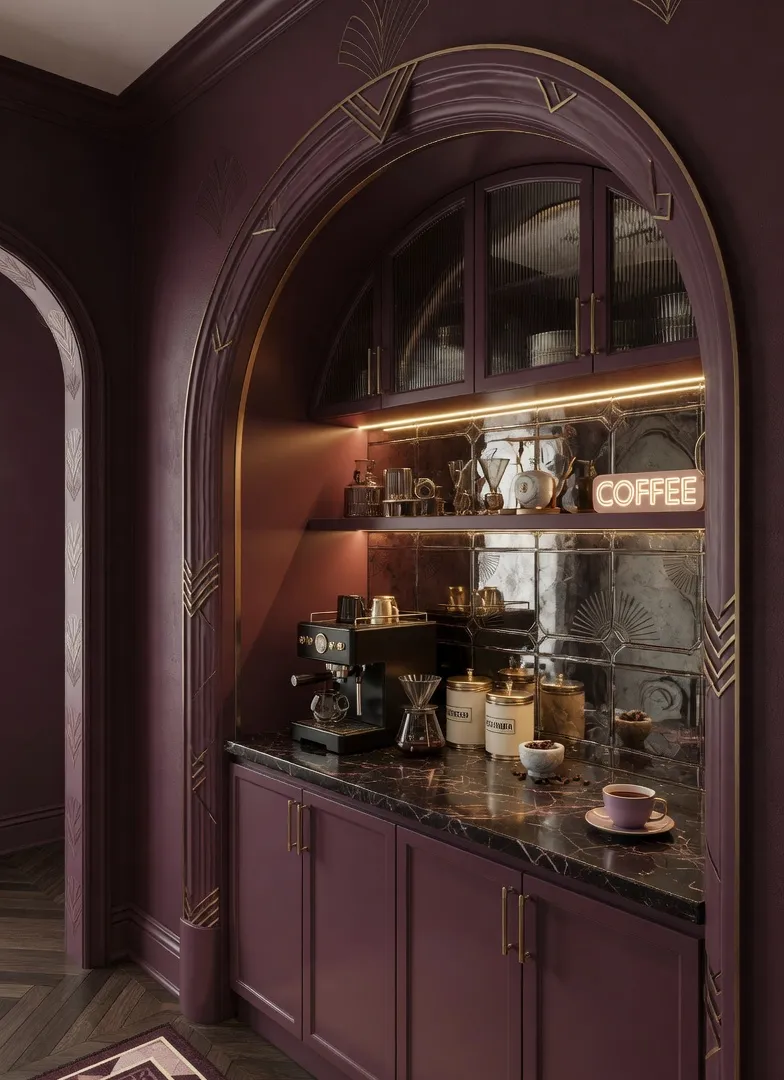
You don't need a grand archway between rooms to get the effect. An arched coffee niche, an arched range hood surround, or arched glass panels on upper cabinets — any of these instantly shifts how tall the ceiling feels and how custom the layout reads.
If renovating, frame an arched opening between the kitchen and dining area. If not, an arched brass mirror placed on open shelving does the same job in miniature: it interrupts the grid.
An arch turns a standard doorway into a true design moment.
11. Bring in Velvet Seating for Glamorous Kitchen Decor
Kitchens are packed with hard, cold surfaces. Stone, glass, metal, wood — acoustically, it's a nightmare. Practically, it makes the room feel uninviting for lingering.
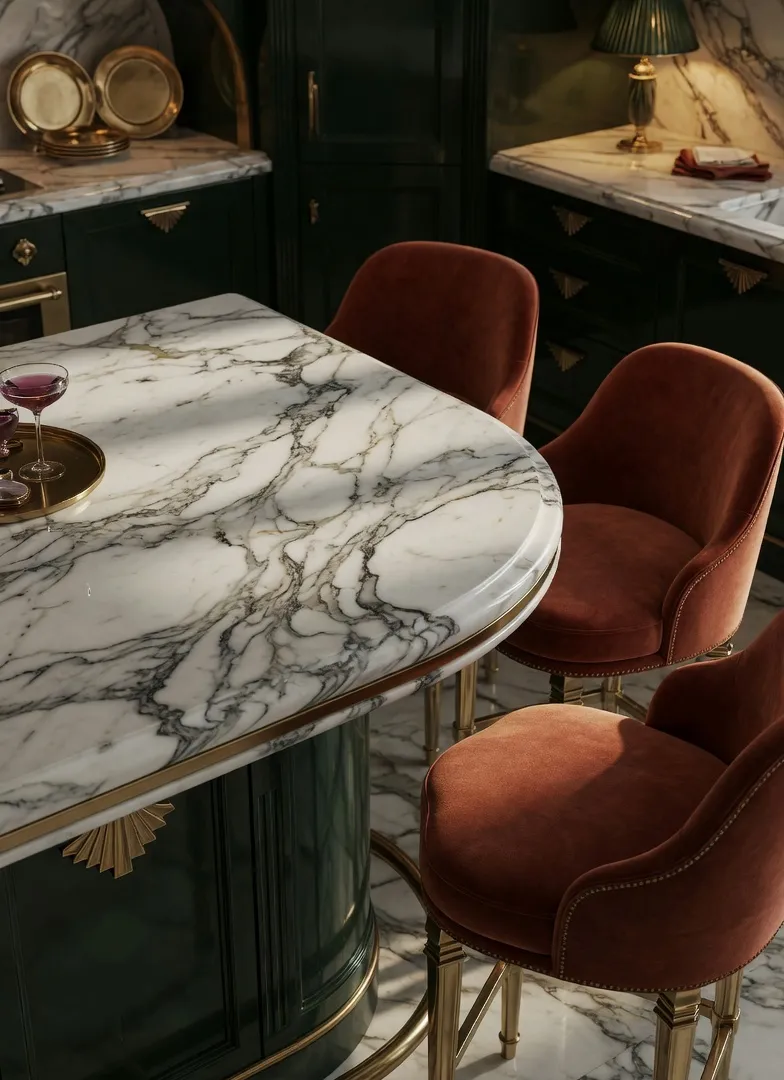
I watch people buy rigid metal or clear acrylic bar stools because they're "easy to wipe down." They are. They're also deeply uncomfortable and make the whole area feel sterile. Swapping in heavy, curved velvet seating in a rich jewel tone — emerald, plum, deep navy — immediately softens both the acoustics and the mood.
Look for counter stools with curved backs, performance velvet fabric (it's far more durable and stain-resistant than regular velvet), and slim brass legs. The right stool solves three problems at once: comfort, sound, and color.
A beautiful kitchen means nothing if no one wants to sit in it.
12. Make a Statement with a Custom Plaster Range Hood
The area above your stove is prime design territory, and it's almost always wasted on a standard stainless steel chimney hood. In a Neo Deco kitchen, that zone is the focal point — the visual hearth.
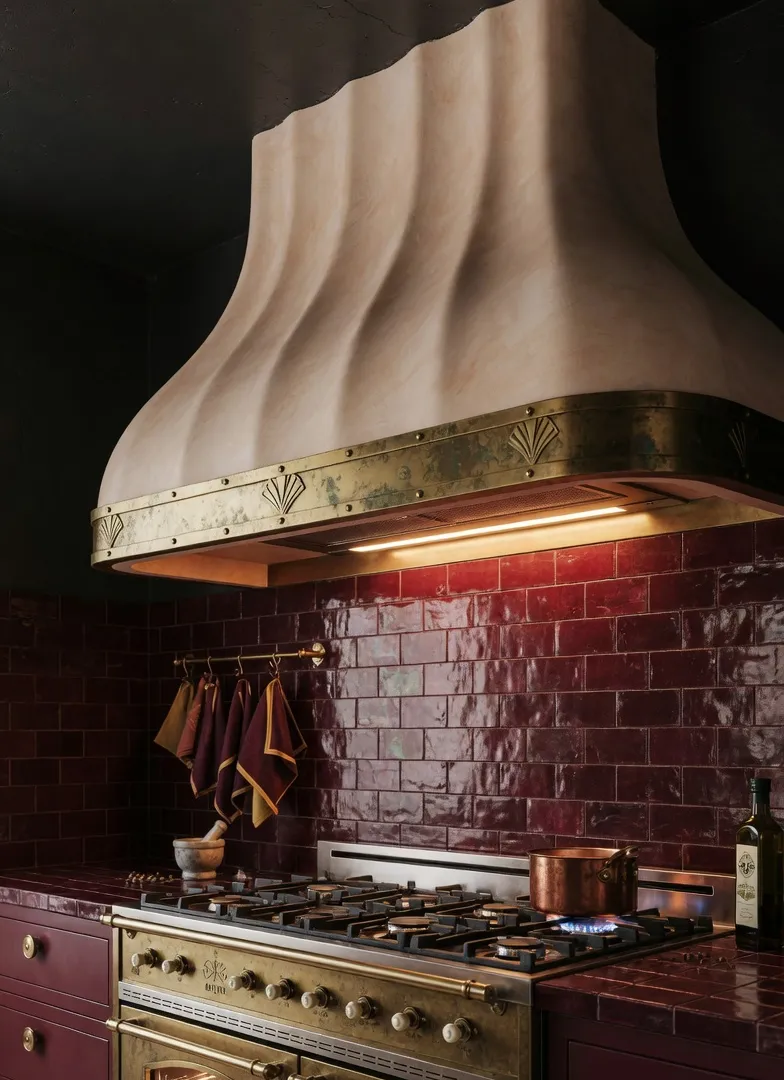
Instead of industrial metal, we're seeing a massive shift toward hoods finished in Roman clay, Venetian plaster, or wrapped in statement metal with brass strapping. A curved plaster hood blends into the walls organically, while a brass-trimmed version reads as vintage jewelry.
Here's the budget path: you can frame over a basic insert hood with drywall and coat it in a DIY Roman clay finish to achieve that soft, sculptural look without spending thousands. The plaster does the heavy lifting. The stainless disappears underneath.
Quick Tips for Achieving the Neo Deco Vibe
- Renters: Focus on what you can unscrew. Swap cabinet knobs for heavy brass pulls, change the pendant shades, drop a thick marble cutting board on the counter.
- Small kitchens: Lean into dark, moody palettes. A tiny plum or dark green kitchen with unlacquered brass reads as an exclusive jewel box.
- The mixing rule: If your marble is loud and veined, keep your arches and fluted glass minimal. Let one element dominate. When everything competes, nothing wins.
Your kitchen should be the room where you pour a glass of wine and stay long after dinner ends. Neo Deco gives it that weight — architectural warmth, material depth, a deliberate richness that doesn't ask you to keep it perfect. Start with one idea from this list. The rest will follow.
Frequently Asked Questions
About the Author: Elena Vance
Interior design enthusiast and DIY expert. Elena Vance has spent over a decade curating spaces that blend modern aesthetics with everyday functionality. Passionate about helping you create a home that tells your unique story.
